
More than 70 percent of viewers now choose online streaming over traditional TV for new releases. This dramatic shift affects not only how people watch movies and shows but also changes the entire entertainment industry. As digital premieres surge in popularity, audiences enjoy greater access and flexibility while studios find new ways to connect with fans around the world.
Table of Contents
- Defining Digital Premieres In Entertainment
- Types Of Digital Premieres And Platforms
- How Digital Premieres Change Viewing Habits
- Impact On Audiences And Industry Players
- Comparing Digital And Traditional Premieres
Key Takeaways
| Point | Details |
|---|---|
| Revolutionary Distribution Model | Digital premieres allow content to be launched directly on streaming platforms, bypassing traditional release methods. |
| Shift in Viewer Habits | Audiences now enjoy on-demand access, allowing for binge-watching and personalized viewing experiences. |
| Economic Changes | The competitive landscape of streaming services leads to increased consumer choice and price sensitivity among users. |
| Transformation of Industry | Digital premieres disrupt traditional release windows, demanding that studios adapt their strategies for audience engagement. |
Defining Digital Premieres in Entertainment
A digital premiere represents a revolutionary approach to content distribution where movies, TV shows, and entertainment experiences are launched directly through online streaming platforms, bypassing traditional theatrical or broadcast release models. According to research on understanding what is a movie premiere, digital premieres allow audiences unprecedented access and flexibility in consuming entertainment content.
According to Wikipedia’s research on Video on Demand (VOD), these digital premieres leverage systems that enable on-demand digital access to films and shows without scheduled broadcasts. This means viewers can now experience new content through premium VOD (PVOD) channels, often accessing films simultaneously or near their initial theatrical release. The simultaneous release model, also known as a day-and-date release, exemplifies this approach by making content available across multiple platforms concurrently.
Digital premieres offer several key advantages for modern entertainment consumers:
- Instant global access to new content
- Convenience of watching from home
- Typically lower cost compared to traditional theater experiences
- Greater flexibility in viewing schedules
- Reduced geographical distribution barriers
These digital distribution strategies represent a significant shift in how entertainment content reaches audiences, transforming traditional release windows and providing viewers with more control over their media consumption experience.
Types of Digital Premieres and Platforms
The world of digital premieres encompasses several distinct types of release strategies, each offering unique viewing experiences for modern audiences. According to research on what is a streaming premiere, these digital distribution models have fundamentally transformed how entertainment content reaches viewers.
According to Wikipedia’s research on Video on Demand (VOD), digital premieres can be categorized into multiple formats:
Here’s a comparison of key digital premiere types and their main features:
| Type of Digital Premiere | Example Platforms | Timing of Release | Typical Cost |
|---|---|---|---|
| Standard VOD | Amazon Video iTunes | Post-theatrical window | Rental/Purchase fee |
| Premium VOD (PVOD) | Apple PVOD Vudu | Simultaneous with theater | Higher rental price |
| OTT Streaming | Netflix Disney+ | On platform’s schedule | Subscription fee |
| Direct-to-Digital Release | Hulu Amazon Prime | Digital-only, immediate | Included/Low fee |
- Standard VOD: Traditional on-demand content access
- Premium VOD (PVOD): Early digital access often concurrent with theatrical releases
- Over-the-top (OTT) Services: Streaming platforms delivering direct digital premieres
- Direct-to-Digital Releases: Content launched exclusively through digital channels
One particularly innovative approach is the direct-to-digital release, which bypasses traditional theatrical distribution entirely. This model is especially prevalent for independent films, niche productions, and content creators seeking immediate global audience reach. These digital premiere strategies provide unprecedented flexibility, allowing filmmakers and studios to connect directly with viewers through platforms like streaming services, bypassing conventional distribution constraints.

The evolution of digital premieres represents a significant shift in entertainment consumption, offering audiences more choices, convenience, and immediate access to new content across multiple platforms and devices.
How Digital Premieres Change Viewing Habits
Digital premieres have fundamentally transformed how audiences consume entertainment, creating unprecedented shifts in media consumption patterns. Understanding why streaming premieres succeed today reveals a profound revolution in how viewers engage with content across various platforms.
According to research from the Granthaalayah Publication, streaming services offering on-demand premieres have drastically reduced traditional TV viewing. The emergence of binge-watching has become a dominant trend, with viewers increasingly consuming multiple episodes or entire seasons in single sessions. This shift not only changes viewing habits but also increases media literacy and cultural exposure, particularly among younger audiences.
Key transformations in viewing habits include:
- Shift from scheduled programming to on-demand access
- Increased control over viewing time and pace
- Personalized content recommendations
- Reduced dependency on traditional broadcast schedules
- Greater global content accessibility
Additional research indicates that AI-driven recommendations play a crucial role in enabling binge-watching behavior. Motivations like escapism and accessibility significantly influence these new consumption patterns, creating a negative correlation with conventional television viewing. Digital premieres have essentially democratized entertainment, giving viewers unprecedented freedom to choose what, when, and how they watch.
Impact on Audiences and Industry Players
Digital premieres have created a seismic shift in how both audiences and entertainment industry players interact, strategize, and monetize content. According to understanding why streaming premieres matter, this transformation is reshaping the entire media ecosystem.
Research from Deloitte reveals critical insights into consumer behavior, highlighting that audiences are increasingly using multiple paid streaming services while simultaneously experiencing price sensitivity. This dynamic creates complex challenges for streaming providers, who must balance content quality, pricing strategies, and user retention to prevent customer churn and service switching.
Key impacts on audiences and industry include:
- Increased consumer choice and content accessibility
- More competitive pricing models
- Rapid feedback loops through online reviews
- Shortened windows between theatrical and digital releases
- Greater negotiating power for consumers
Additional research demonstrates that the timing between theatrical and online releases significantly influences audience demand. Short release gaps can amplify the positive impact of online reviews, while longer gaps shift consumer attention toward review volume rather than review quality. This nuanced dynamic forces industry players to recalibrate their distribution strategies continuously, creating a more responsive and adaptive entertainment marketplace.
Comparing Digital and Traditional Premieres
The landscape of entertainment distribution has undergone a radical transformation with digital premieres challenging long-established traditional release models. Understanding why stream movie premieres matter for fans reveals the profound shifts happening in content consumption and distribution.
According to Wikipedia’s research on simultaneous releases, digital premieres fundamentally disrupt traditional theatrical-first models by offering content across multiple venues and digital platforms simultaneously. This approach enhances consumer choice while potentially diluting the traditional box office experience and altering the communal viewing paradigm.
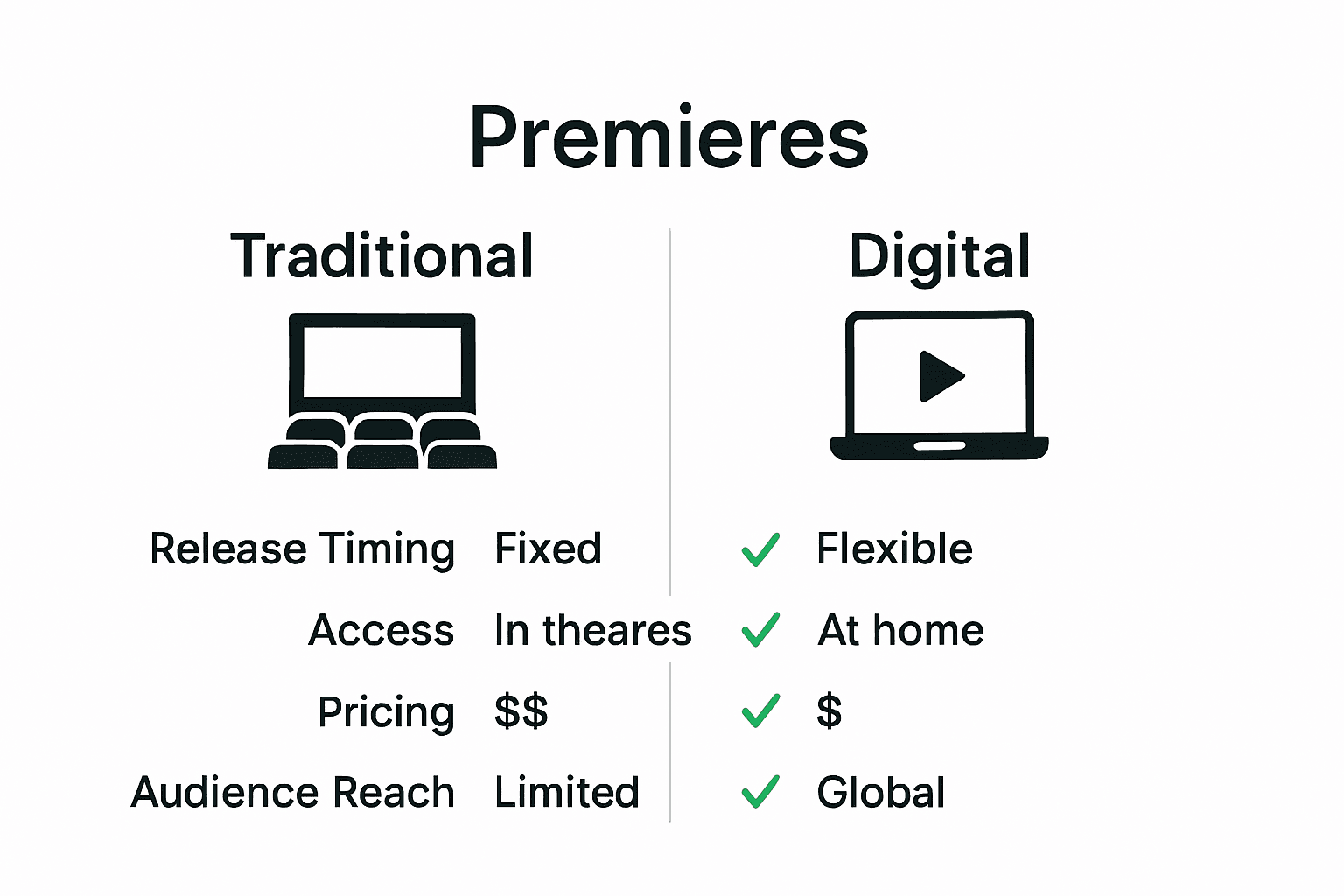
Key differences between digital and traditional premieres include:
- Viewing flexibility vs. scheduled screenings
- On-demand access vs. fixed broadcast times
- Global immediate availability vs. regional release windows
- Lower cost of access vs. theater ticket pricing
- Personalized viewing environment vs. shared theatrical experience
Traditional scheduled broadcast and theatrical windows are increasingly being replaced by on-demand access through Video on Demand (VOD) and Over-the-Top (OTT) platforms. Premium VOD models are compressing or eliminating exclusivity windows, fundamentally restructuring how audiences discover, access, and engage with entertainment content across different platforms.
Discover and Master Digital Premieres With Ease
Navigating the evolving world of digital premieres can feel overwhelming with so many release types and platforms competing for your attention. This article outlines key challenges like understanding release timing, distinguishing premium VOD from standard options, and adapting to on-demand viewing habits. If you want to fully enjoy the freedom and flexibility digital premieres offer without missing a beat, you need a reliable guide to keep you updated and informed.
Unlock seamless access to the very latest streaming premieres and TV schedules by visiting SpareTimeTV. We help viewers conquer confusion around simultaneous releases, find the best upcoming shows with detailed guides, and track trending movies on platforms like Netflix. Don’t settle for frustration or FOMO Keep ahead of your entertainment game today by exploring TV show schedules, streaming premieres, and movie listings in one easy place.
Frequently Asked Questions
What is a digital premiere in entertainment?
A digital premiere is a method of releasing movies, TV shows, and entertainment content directly on online streaming platforms, allowing viewers to access new content without requiring traditional theatrical releases.
How do digital premieres differ from traditional premieres?
Digital premieres offer on-demand access and flexible viewing options, whereas traditional premieres typically involve scheduled screenings in theaters, creating a more communal viewing experience.
What are the benefits of watching content through digital premieres?
Digital premieres provide instant global access, convenience, lower costs compared to theater tickets, and greater flexibility in viewing schedules.
What types of platforms host digital premieres?
Digital premieres can be accessed through various platforms including Video on Demand (VOD), Premium VOD (PVOD), Over-the-Top (OTT) services, and direct-to-digital releases, each offering unique viewing experiences.