
Expert Guide to Weekly Primetime Planning for TV Fans. More than 60 percent of TV viewers often feel overwhelmed by endless show choices each week. In a world where primetime options keep multiplying, knowing how to organize and prioritize your viewing is more valuable than ever. Whether you are aiming to make the most of family nights or carve out solo time, this guide will help you create a smarter, more satisfying primetime plan tailored to your interests and schedule.
Table of Contents
- Step 1: Assess Your Viewing Preferences
- Step 2: Gather Weekly Primetime Schedules
- Step 3: Prioritize Must-Watch Shows And Movies
- Step 4: Organize Primetime Content By Platform
- Step 5: Review And Adjust Your Weekly Plan
Quick Summary
| Key Point | Explanation |
|---|---|
| 1. Assess Your Viewing Preferences | Identify genres you enjoy and track viewing habits to understand your personal preferences. |
| 2. Gather Weekly Primetime Schedules | Use multiple resources to compile a comprehensive schedule for effective viewing planning. |
| 3. Prioritize Must-Watch Shows | Create a prioritization matrix to focus on content that matters most to you. |
| 4. Organize Content by Platform | Utilize a master spreadsheet to categorize shows by platform for better scheduling. |
| 5. Regularly Review Your Plan | Weekly reviews of your viewing schedule help adjust for changing preferences and discover new content. |
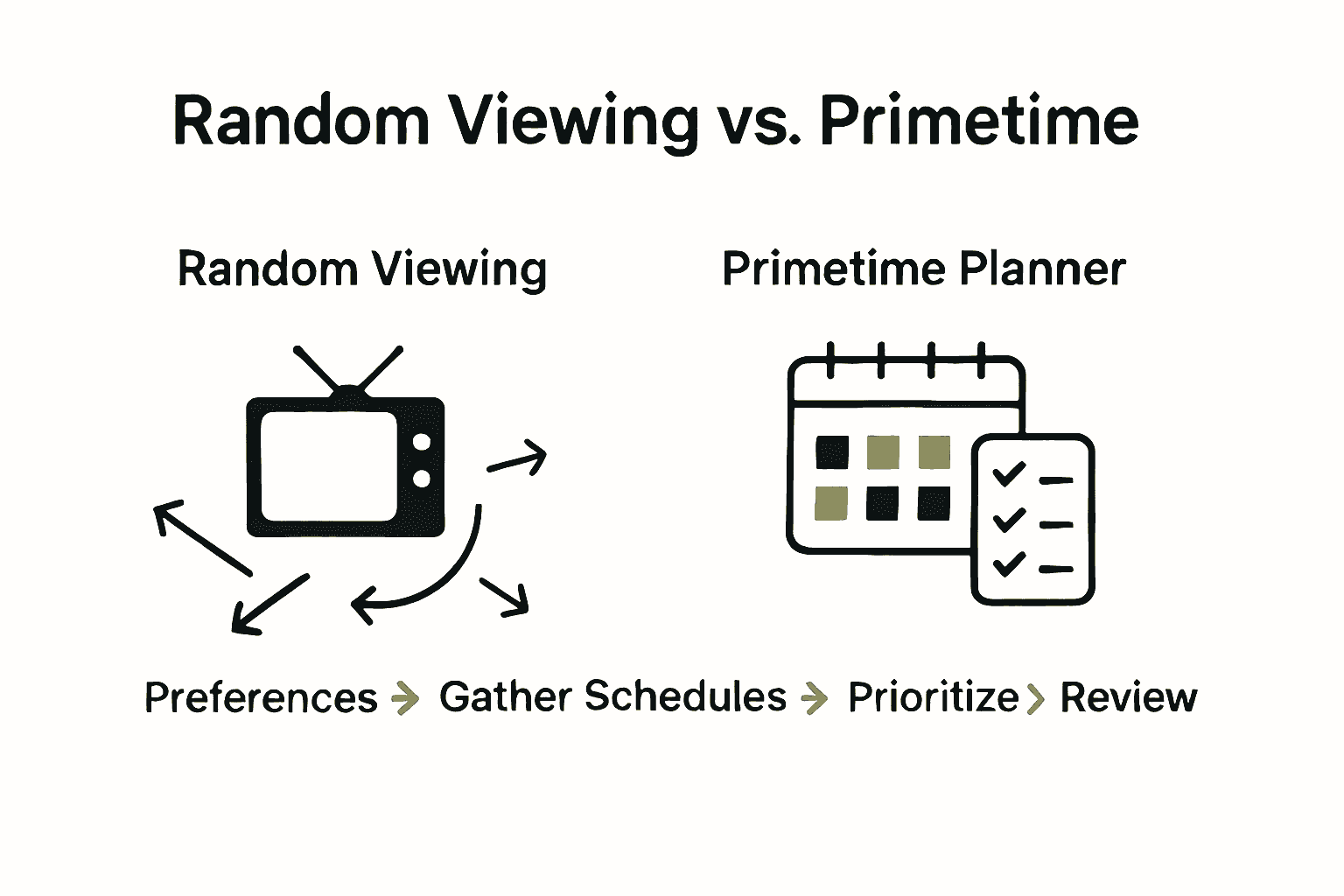 |
|
Step 1: Assess Your Viewing Preferences
Knowing your television viewing preferences is the first critical step in creating an effective primetime planning strategy. By understanding what types of shows truly capture your interest, you can optimize your entertainment experience and make smarter viewing choices.
Researchers have discovered fascinating insights into how viewers select their content. According to a study from Springer Research, television audiences can be segmented into distinct groups based on their viewing habits and preferences. This means your viewing choices are not random but part of a broader pattern that reflects your personal entertainment profile.
To effectively assess your preferences, start by asking yourself some strategic questions. What genres consistently grab your attention? Do you prefer drama, comedy, documentary, or reality shows? How much time can you realistically dedicate to watching television each week? Consider tracking your viewing habits for a week using a simple notebook or digital app. Note the shows you watch, how long you watch them, and most importantly how engaged you feel during each program.
The University of Leeds Research highlights that demographic factors like age, income, and personal background significantly influence viewing preferences. This means your unique background shapes your entertainment choices in ways you might not have recognized before.
Pro tip: Create a personal “viewing preference profile” that captures your top three favorite genres, preferred show lengths, and must-have elements in a television series. This profile will become your strategic guide for future primetime planning.
By the end of this assessment, you will have a clear understanding of your television viewing DNA. This foundational knowledge sets the stage for more intentional and satisfying entertainment experiences. Discover What to Watch on TV Tonight can help you take the next step in your viewing journey.
Step 2: Gather Weekly Primetime Schedules
Collecting comprehensive primetime television schedules is a strategic process that will help you maximize your entertainment planning. This step transforms random viewing into a deliberate and organized approach to your weekly television experience.
In the digital age, multiple resources can help you gather primetime schedules efficiently. According to Wikipedia’s TV Time, tracking platforms now offer users comprehensive television schedules that make planning easier than ever. These digital tools allow you to not just view schedules but also track shows you want to watch and discover new content.
Start by exploring multiple schedule sources to ensure comprehensive coverage. Network websites, streaming platforms, and dedicated entertainment websites often provide up to date primetime listings. Check your cable or satellite provider’s electronic program guide (EPG) as a reliable starting point. Many smart TVs and streaming devices also offer built in scheduling features that can simplify this process.
Interestingly, Radio Times demonstrates how comprehensive listings magazines have traditionally helped viewers navigate television schedules. While digital platforms now dominate, the core principle remains the same: helping viewers make informed viewing decisions.
Pro tip: Create a digital or physical master schedule where you consolidate primetime listings from different sources. Color code or categorize shows by genre to make your planning more visual and intuitive.

By systematically gathering weekly primetime schedules, you transform from a passive viewer into an active entertainment curator. How to Use Primetime Guides can provide additional insights into mastering this crucial planning step.
Step 3: Prioritize Must-Watch Shows and Movies
Prioritizing your television and movie viewing requires a strategic approach that transforms random entertainment consumption into a purposeful experience. This step helps you filter through countless options and focus on the content that truly matters to you.
Research from arXiv demonstrates that advanced ranking approaches can help viewers identify must-watch content by analyzing viewing patterns and personal preferences. The key is developing a personalized selection method that goes beyond surface level recommendations.
Start by creating a prioritization matrix with three critical columns: absolute must watch, potentially interesting, and background noise. For absolute must watch shows, consider factors like critical acclaim, personal passion for the genre, shows featuring favorite actors, or series with compelling storylines you cannot miss. Streaming platforms and review websites can provide valuable insights into which shows deserve top billing in your viewing schedule.
According to research from MDPI, personalized recommendations play a crucial role in helping viewers navigate the overwhelming amount of available content. Smart recommendation systems can help you refine your priorities by understanding your unique viewing preferences.
Pro tip: Allocate a specific time slot for your absolute must watch shows. Protect these slots like important appointments to ensure you do not miss key episodes or moments.
By systematically prioritizing your entertainment, you transform from a passive consumer to an active viewer who makes intentional watching choices.
TV Ranking can provide additional insights into identifying top shows that deserve your attention.
Step 4: Organize Primetime Content by Platform
Organizing your primetime content across different platforms transforms your viewing experience from chaotic to strategic. This step helps you create a comprehensive entertainment landscape that maximizes your viewing potential and minimizes missed opportunities.
Traditional broadcast networks like CBS demonstrate the importance of structured programming schedules. By understanding how major networks organize their content, you can develop a more systematic approach to managing your own viewing across multiple platforms.
Begin by creating a master spreadsheet or digital tracker that categorizes shows by platform. Divide your content into distinct columns: cable TV, network television, streaming services like Netflix and Hulu, and premium channels. Within each platform column, list your must watch shows with their specific broadcast or release times. This visual mapping allows you to quickly identify potential scheduling conflicts and plan accordingly.
Likewise, NBC showcases how professional networks strategically schedule content across different time slots. Apply this professional approach to your personal viewing by considering factors like show duration, repeat broadcast times, and potential overlap between platforms.
Pro tip: Color code your platform tracker. Use different colors for each streaming service or network to create a quick visual reference that makes scheduling intuitive and easy to understand.
By meticulously organizing your primetime content, you transform from a passive viewer to an active entertainment strategist. What Is a Streaming Platform can provide additional insights into navigating the complex world of digital entertainment.
Step 5: Review and Adjust Your Weekly Plan
Regular review and adjustment of your television viewing strategy ensures that your entertainment plan remains dynamic and aligned with your evolving preferences. This critical step transforms your primetime planning from a static schedule to a responsive and personalized experience.
Research from arXiv introduces an innovative framework using Gaussian mixture models to estimate household TV profiles, highlighting the importance of adaptability in viewing habits. This scientific approach suggests that our entertainment preferences are not fixed but continuously changing.
Set aside a specific time each week typically on Sunday evening or Monday morning to conduct a comprehensive review of your primetime plan. Evaluate the shows you watched compared to those you planned to watch. Note any unexpected discoveries interesting programs you stumbled upon or shows that did not meet your expectations. This retrospective analysis helps you refine future scheduling decisions and discover new content that might not have been on your original radar.
According to research from Frontiers in Neuroscience, visual quality preferences play a significant role in content selection. Consider not just the storyline but also production value and viewing experience when making adjustments to your weekly plan.
Pro tip: Maintain a simple feedback column in your viewing tracker where you rate each show on multiple dimensions like entertainment value, emotional engagement, and potential for future watching.
By consistently reviewing and adjusting your weekly plan, you become a more intentional and satisfied viewer. Complete Guide to Primetime Scheduling can offer additional strategies for mastering your entertainment experience.
Take Control of Your Primetime Viewing with SpareTimeTV
Planning your weekly TV schedule can feel overwhelming with so many shows, platforms, and time slots to juggle. The challenge of prioritizing must-watch programs and organizing diverse content across platforms often leads to missed favorites and decision fatigue. This expert guide highlights the importance of aligning your viewing preferences with detailed schedules and personalized priorities to turn chaos into a rewarding entertainment experience.

Discover how SpareTimeTV simplifies primetime planning by providing up-to-date TV guides, streaming schedules, and top-ranked show recommendations all in one place. With our easy-to-navigate tables and curated content, you can quickly create your personalized weekly plan, avoid scheduling conflicts, and never miss the best episodes again. Ready to master your viewing strategy? Start now with our Complete Guide to Primetime Scheduling and explore What to Watch on TV Tonight to jumpstart your primetime lineup today.
Frequently Asked Questions
How can I assess my television viewing preferences?
To assess your television viewing preferences, start by identifying the genres that most engage you, such as drama or comedy. Keep track of what you watch over a week, noting your level of engagement, to create a personal viewing preference profile that will guide your future choices.
What resources are available for gathering weekly primetime schedules?
You can gather weekly primetime schedules by exploring network websites, streaming platforms, and entertainment sites. Consider compiling a master schedule from multiple sources to ensure comprehensive coverage and simplify your weekly planning.
How do I prioritize must-watch shows in my weekly plan?
To prioritize must-watch shows, create a matrix categorizing them into three groups: absolute must watch, potentially interesting, and background noise. Focus on critical acclaim and personal interest to determine which shows deserve a fixed time slot in your schedule.
What is the best way to organize my primetime content across different platforms?
Organize your primetime content by creating a master spreadsheet that categorizes shows by platform, such as cable TV and streaming services. List your must-watch shows under each category along with their broadcast times to easily identify scheduling conflicts.
How often should I review and adjust my weekly primetime plan?
You should review and adjust your weekly primetime plan at least once a week, such as on Sunday evening or Monday morning. Evaluate your viewing experiences and make necessary adjustments based on new discoveries or shows that underwhelmed you, helping to refine your future scheduling choices.
What criteria should I consider when rating shows for my feedback column?
When rating shows in your feedback column, consider factors like entertainment value, emotional engagement, and production quality. Use a simple scoring system to quantify your ratings and track which shows resonate with you the most, facilitating better viewing choices in the future.