
Table of Contents
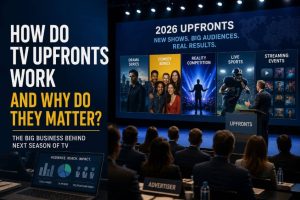
How Do TV Upfronts Work and Why Do They Matter?
Every spring, long before the fall television season begins, executives from America’s largest television companies gather in New York City to make some of the biggest business deals in the entertainment industry.
There are no Emmy Awards to hand out.
No television episodes premiere.
Most viewers never even know these events are taking place.
Yet during just a few days, billions of dollars in advertising commitments can be negotiated, new TV shows are introduced to advertisers, and the direction of the upcoming television season begins to take shape.
These events are known as the TV Upfronts, and they have influenced American television for more than sixty years.
While the way people watch television has changed dramatically because of streaming, the Upfronts remain one of the industry’s most important business events.
Short Answer
TV Upfronts are annual presentations where television networks and media companies unveil their upcoming programming to advertisers and advertising agencies. In return for purchasing commercial time months before the television season begins, advertisers often receive preferred pricing and premium advertising opportunities.
What Is TV Upfronts?
An Upfront is essentially a large-scale sales presentation.
Networks invite:
- advertisers
- advertising agencies
- media buyers
- business partners
- journalists
to preview upcoming programming.
During the presentations, executives reveal:
- new television series
- returning hits
- sports programming
- special events
- streaming initiatives
The goal is simple:
Convince advertisers to invest millions of dollars before the television season begins.
Why Were Upfronts Created?
The television business has always depended heavily on advertising.
Years ago, networks needed a way to finance expensive fall schedules before shows actually premiered.
Advertisers also wanted certainty.
Instead of waiting until September, companies could reserve commercial time months in advance.
Both sides benefited.
Networks received predictable revenue.
Advertisers secured access to the most desirable programming.
That basic model continues today, although it has evolved considerably.
When Do TV Upfronts Take Place?
Traditionally, the major Upfront presentations are held in May, shortly after broadcast networks announce their fall schedules.
Most major media companies—including broadcast networks and large streaming businesses with advertising-supported services—host presentations during the same general period.
Who Attends the Upfronts?
Although television fans often hear about Upfront announcements, the events are primarily business meetings.
Attendees include:
- advertising agencies
- major brands
- media buyers
- network executives
- studio executives
- journalists
- investors
- celebrities promoting new shows
Many presentations resemble live entertainment events.
Networks frequently bring actors, producers, athletes, and television personalities on stage to introduce upcoming programming.
What Happens During an Upfront Presentation?
Each company wants advertisers to believe it has the strongest programming lineup.
A typical presentation includes:
New TV series
Networks introduce upcoming dramas, comedies, and reality shows.
Returning hits
Popular series are highlighted to reassure advertisers.
Sports
Live sports remain one of television’s biggest advertising attractions because viewers are more likely to watch in real time instead of skipping commercials.
Streaming initiatives
Companies now promote both traditional television and streaming platforms together.
Celebrity appearances
Actors and producers often help generate excitement around new projects.
How Advertising Deals Are Made
Contrary to popular belief, advertisers do not necessarily sign contracts while sitting in the theater.
Instead, the presentations begin weeks of negotiations.
Media buyers evaluate:
- audience reach
- demographics
- sports rights
- streaming inventory
- pricing
- available commercial slots
The largest advertisers may commit tens or even hundreds of millions of dollars across multiple platforms.
Why Advertisers Buy Months in Advance
Television advertising inventory is limited.
Major events such as:
- NFL games
- award shows
- season premieres
- live competitions
cannot sell unlimited commercial time.
Buying early provides several advantages:
- preferred pricing
- premium placement
- guaranteed inventory
- long-term campaign planning
Advertisers also gain greater certainty when planning annual marketing budgets.
How Upfronts Affect TV Schedules
Many viewers assume fall schedules are finalized before the Upfronts.
In reality, the two processes influence one another.
Networks often announce:
- new dramas
- sitcoms
- reality competitions
- schedule changes
during their presentations.
The response from advertisers helps shape confidence in the upcoming television season.
Why Some Shows Never Reach Television
Not every series presented during the Upfronts eventually premieres.
Several things can happen after an announcement:
- production delays
- creative changes
- scheduling conflicts
- budget adjustments
- strategic decisions
Some projects are postponed until midseason.
Others are quietly canceled before audiences ever see them.
Why Upfronts Influence TV Renewals
Advertisers invest in audiences.
If returning series continue attracting viewers and advertising demand remains strong, networks have greater financial incentive to renew them.
However, renewal decisions also depend on:
- production costs
- streaming performance
- ownership
- international sales
Upfront commitments are important, but they are only one part of the decision-making process.
How Streaming Changed the Upfronts
Streaming has transformed the television advertising marketplace.
Today, many media companies present:
- broadcast television
- cable channels
- streaming services
- FAST channels
- digital video
as part of one advertising package.
Companies increasingly emphasize cross-platform campaigns rather than treating television and streaming as separate businesses.
Are Upfronts Still Important Today?
Some people predicted streaming would eliminate the Upfronts.
Instead, the events evolved.
Today advertisers care about more than traditional television ratings.
They want information about:
- audience measurement
- streaming reach
- business outcomes
- flexibility
- cross-platform campaigns
The conversations are different than they were twenty years ago, but the Upfronts remain one of the industry’s most important advertising marketplaces.
Upfronts vs. NewFronts
These events are often confused.
TV Upfronts
Focus primarily on television and premium video programming from major media companies.
NewFronts
Focus on digital publishers, online video platforms, creators, and technology companies.
As television and streaming continue merging, the distinction has become less pronounced than it once was.
Examples of Major Upfront Announcements
Over the years, the TV Upfronts have introduced hundreds of new series before they ever reached viewers. Some became long-running hits, while others lasted only a single season.
A few well-known examples include:
Lost (ABC) — 2004
ABC generated significant excitement at its 2004 Upfront presentation by introducing Lost, a high-budget mystery drama set on a deserted island. The series became one of the biggest television hits of the decade, helping redefine serialized network dramas and proving that ambitious storytelling could attract both viewers and advertisers.
This Is Us (NBC) — 2016
NBC presented This Is Us during its 2016 Upfronts as one of its major new dramas. After premiering that fall, the series became both a ratings success and an awards contender, running for six seasons and becoming one of the network’s signature shows.
Empire (FOX) — 2015
Before its January 2015 premiere, Empire was highlighted as one of FOX’s most promising new dramas. Its enormous ratings growth surprised many industry observers, turning it into one of broadcast television’s biggest success stories of the decade.
The Big Bang Theory (CBS) — 2007
CBS introduced The Big Bang Theory to advertisers during the 2007 Upfronts. Although the sitcom had a modest start, it gradually became one of television’s highest-rated comedies and eventually ran for 12 seasons.
Abbott Elementary (ABC) — 2021
ABC showcased Abbott Elementary during its Upfront presentation as part of its upcoming comedy lineup. The series quickly earned critical acclaim, won multiple Emmy Awards, and became one of broadcast television’s strongest recent comedy successes.
Modern Family (ABC) — 2009
When ABC unveiled Modern Family during its Upfront presentation, the network promoted it as a fresh take on the family sitcom. The series went on to win numerous Emmy Awards and became one of the defining comedies of its era.
Over the years, the Upfronts have introduced many successful television series before they became household names.
For television fans, many of the fall schedule announcements reported by entertainment websites each May originate from these presentations.
The Future of TV Upfronts
The Upfronts are likely to continue evolving rather than disappearing.
Future presentations will probably place even greater emphasis on:
- streaming advertising
- live sports
- audience measurement
- artificial intelligence
- personalized advertising
- cross-platform campaigns
While viewers may never watch an Upfront presentation themselves, the decisions made there will continue shaping what appears on television each season.
Why TV Upfronts Matter More Than Most Viewers Realize
The Upfront presentation is often the first-time advertisers, journalists, and industry executives see trailers and hear directly from the creative teams behind new series. While a strong presentation cannot guarantee success, it can generate excitement, secure advertising commitments, and build momentum months before a show’s premiere.
History also shows that not every highly promoted series becomes a hit. Every year, some shows introduced during the Upfronts are canceled after one season, while others exceed expectations and become long-running franchises. That uncertainty is one reason the Upfronts remain one of the television industry’s most closely watched business events.
Final Thoughts
TV Upfronts remain one of the most influential business traditions in the entertainment industry. Although audiences rarely see what happens behind the scenes, these annual presentations help shape television schedules, advertising strategies, and programming decisions for the year ahead.
Streaming has changed the way media companies present their content, but it has not eliminated the need for advertisers and networks to meet, negotiate, and plan together. Instead, the Upfronts have expanded into cross-platform showcases where broadcast television, cable, streaming, and live sports compete for advertising dollars.
Understanding how the Upfronts work offers a clearer picture of why networks announce new shows in May, why advertisers commit billions before a season begins, and how business decisions made long before a premiere can influence what ultimately appears on our screens.
Frequently Asked Questions
What is TV Upfronts?
TV Upfronts are annual presentations where television networks and media companies introduce upcoming programming to advertisers before the new TV season.
Why are they called “Upfronts”?
Advertisers purchase commercial inventory up front, months before programs begin airing.
Do TV shows premiere during the Upfronts?
No. Networks typically present trailers, clips, and announcements, but the shows premiere later.
Are streaming services part of the Upfronts?
Yes. Many major media companies now include their ad-supported streaming platforms alongside their broadcast and cable networks.
Why should TV viewers care about the Upfronts?
Because the Upfronts influence fall schedules, advertising strategies, promotional campaigns, and sometimes even which shows receive stronger long-term support from networks.
This topic is part of our guide explaining how television scheduling, economics, and production decisions work.
See the full overview in How TV Works.