
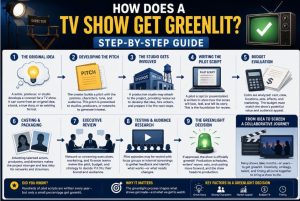
How Does a TV Show Get Greenlit? Step-by-Step Guide
Most viewers only see the final version of a TV show after it premieres on television or streaming. What many people do not realize is that getting a TV show approved is usually a long process involving writers, studios, producers, network executives, budgets, market research, and sometimes years of development.
In Hollywood, this approval process is commonly called getting a show “greenlit.”
Some TV series move through the process quickly, while others spend years in development before ever reaching audiences. Many projects never get made at all.
Short Answer
A TV show gets greenlit when a network, studio, or streaming platform officially approves the project for production after reviewing scripts, budgets, casting, market potential, and audience strategy.
What Does “Greenlit” Mean in Television?
In the television industry, a “greenlight” means a company has officially decided to move forward with producing a show.
Before that point, a project is usually considered:
- in development
- under review
- or in pilot consideration
Once greenlit, the production can begin hiring staff, building sets, filming episodes, and finalizing schedules.
For many creators, getting a greenlight is one of the hardest parts of the entire television process.
Step 1: The Original Idea
Most TV shows begin with a basic concept.
The idea may come from:
- a writer
- producer
- actor
- production company
- book adaptation
- true story
- international format
Sometimes networks themselves ask studios to develop certain types of shows based on trends or audience demand.
For example:
- police procedurals
- medical dramas
- reality competitions
- workplace comedies
often remain popular because networks know these genres can attract consistent viewers.
Step 2: Developing the Pitch
Once the basic concept exists, creators usually prepare a pitch.
A TV pitch may include:
- the premise
- main characters
- tone of the show
- long-term story ideas
- target audience
- visual style
Some projects also include a pilot script or presentation materials before meetings with studios or networks.
Pitch meetings are extremely important because executives often decide within minutes whether they believe a project fits their programming strategy.
Step 3: The Studio Gets Involved
In many cases, a production studio becomes attached before a network approves the series.
Studios help:
- finance development
- package talent
- hire writers
- attach producers
- prepare budgets
This is one reason viewers sometimes hear multiple company names connected to the same TV show.
For example:
- one company may produce the show
- another may distribute it
- a network or streamer may air it
Step 4: Writing the Pilot Script
The next major step is usually the pilot episode.
A pilot is the first episode created to demonstrate how the series would work.
The pilot helps executives evaluate:
- characters
- pacing
- storytelling
- tone
- audience appeal
Some pilots are filmed traditionally, while others are created as shorter presentations or proof-of-concept versions.
Many pilot scripts are written every year, but only a small percentage become full television series.
Step 5: Budget Evaluation
Even strong creative ideas can struggle if the budget is too expensive.
Networks and streaming platforms carefully analyze:
- production costs
- filming locations
- cast salaries
- special effects
- marketing expenses
High-budget projects require stronger confidence that the show can attract viewers or subscribers.
This is one reason why franchise television and recognizable intellectual property often receive more support. Known brands usually involve less financial risk.
Step 6: Casting and Packaging
Attaching recognizable actors, producers, or directors can significantly improve a project’s chances of being greenlit.
This process is often called “packaging.”
Networks and studios may feel more confident about a project if it includes:
- established actors
- successful producers
- experienced showrunners
- well-known directors
Star power can help generate media attention even before a show premieres.
Step 7: Executive Review
Once the pilot, script, budget, and creative package are prepared, executives evaluate the project internally.
This review may involve:
- network presidents
- studio executives
- marketing teams
- scheduling departments
- streaming strategy teams
Executives consider questions such as:
- Does this fit our brand?
- Can this attract advertisers or subscribers?
- Does it fill a gap in our schedule?
- Is the timing right?
- Does it appeal internationally?
This stage can involve multiple meetings and revisions before any final decision is made.
Step 8: Testing and Audience Research
Some networks and studios test pilots with focus groups or internal screenings.
Executives analyze:
- audience reactions
- pacing feedback
- character popularity
- confusion points
- marketability
This process helps companies decide whether changes are needed before approving a series order.
Sometimes pilots are heavily rewritten or recast after testing.
Step 9: The Greenlight Decision
If executives approve the project, the show officially receives a greenlight.
At this point:
- production schedules are finalized
- writers’ rooms may open
- sets are built
- filming begins
- marketing campaigns start developing
Depending on the platform, the order may include:
- one pilot episode
- a partial season
- or a full season commitment
Streaming services sometimes skip pilots entirely and order full seasons immediately.
Why Some Pilots Never Air
Many viewers are surprised to learn that hundreds of TV pilots are produced that never become series.
A project may fail because of:
- weak audience testing
- scheduling conflicts
- budget concerns
- executive changes
- lack of advertiser interest
- competition from similar shows
Sometimes pilots are considered good creatively but still do not fit a network’s strategy at that particular time.
Broadcast Networks vs Streaming Greenlights
The greenlight process changed significantly with streaming.
Traditional Broadcast Networks
Broadcast TV often follows a seasonal development cycle.
Networks traditionally:
- review pilots in spring
- announce schedules during upfronts
- premiere shows in fall or midseason
This system still exists, although it has become more flexible in recent years.
Streaming Platforms
Streaming services often operate differently.
They may:
- order full seasons immediately
- rely more on subscriber data
- target global audiences
- skip traditional pilot seasons entirely
Streaming platforms also use viewing analytics and recommendation data to evaluate potential projects.
Why Franchises Get Approved More Easily
One major trend in modern television is the dominance of franchises and reboots.
Networks and streaming services often prefer recognizable brands because they:
- reduce marketing risk
- attract existing audiences
- perform well internationally
- help streaming libraries grow
This is why spin-offs and franchise universes have become increasingly common.
How Streaming Changed Risk-Taking
Streaming platforms initially became known for taking bigger creative risks compared to traditional broadcast television.
However, as competition increased and production costs grew, even streaming services became more cautious with expensive projects.
Today, both networks and streaming companies focus heavily on balancing:
- audience growth
- financial risk
- international appeal
- long-term value
before approving shows.
How Long Does It Take for a Show to Get Greenlit?
The process can vary dramatically.
Some projects move quickly and receive approval within months.
Others may spend years in development before finally moving forward.
In some cases, TV shows are redeveloped multiple times with different casts, writers, or networks before receiving a greenlight.
Who Has the Most Power in the Process?
The answer depends on the project.
Power may shift between:
- studios
- networks
- streaming platforms
- producers
- showrunners
- major stars
Well-known creators and established franchises usually have an easier time getting approval compared to completely original projects from unknown creators.
Why the Greenlight Process Matters
The greenlight process shapes almost everything viewers eventually see on television.
It influences:
- what genres dominate TV
- why franchises continue expanding
- why some pilots disappear
- why certain ideas are rejected
- how streaming platforms compete
Understanding this process also explains why television often balances creativity with business decisions.
Final Thoughts
Getting a TV show greenlit is far more complicated than simply having a good idea. The process involves creative development, financial planning, audience strategy, casting, marketing, and executive approval all working together.
While television shows often portray executives making quick decisions behind closed doors, real greenlight decisions usually involve months or years of development and collaboration.
As streaming continues changing the entertainment industry, the process of approving television series is evolving as well. But one thing remains the same: networks and studios are always searching for the next show that can capture viewers’ attention in an increasingly competitive television landscape.
Frequently Asked Questions
What does greenlit mean in television?
A greenlight means a network, studio, or streaming platform officially approves a TV show for production.
Who decides if a TV show gets made?
The decision usually involves studio executives, network leadership, producers, and financial teams.
What is a TV pilot?
A pilot is a test episode created to demonstrate how a television series would work.
Do all TV shows make pilot episodes?
No. Some streaming platforms now order full seasons without producing a traditional pilot first.
Why do some pilots never become series?
Pilots may fail because of budget concerns, weak testing results, scheduling issues, or changes in network strategy.
This topic is part of our guide explaining how television scheduling, economics, and production decisions work.
See the full overview in How TV Works.