
TV Content Genres Explained: Complete Viewer Guide. Did you know that over half of viewers choose new shows based on genre alone? The way we label and organize TV content shapes everything from what we watch to how networks build their schedules. Genres act as a shortcut, matching people with stories that fit their mood. By understanding the unique patterns and conventions of television genres, you can discover new favorites and appreciate the storytelling choices behind every show.
Table of Contents
- Defining TV Content Genres And Their Importance
- Major TV Content Genres And Core Elements
- Subgenres, Hybrid Forms, And Crossovers
- How Genres Guide Viewing Choices And Discovery
- Evolving Trends In Genre Blending And Innovation
Key Takeaways
| Point | Details |
|---|---|
| Understanding Genres | TV content genres help categorize programming, allowing audiences to select content that aligns with their preferences. |
| Major Genres | Drama, comedy, reality TV, news, documentary, and variety shows each bring distinct storytelling approaches that shape viewer expectations. |
| Hybrid and Evolving Forms | Genres continuously evolve through blending elements, leading to innovative narratives that attract broader audiences. |
| Facilitating Discovery | Genres simplify content discovery on platforms by matching viewer interests and emotional expectations, enhancing the viewing experience. |
Defining TV Content Genres and Their Importance
Television genres are more than just labels – they’re a sophisticated system for organizing and understanding media content. According to Cambridge University, genres categorize programs by their production mode, which directly influences both content structure and stylistic approach. This classification serves a critical purpose: helping audiences quickly identify and select programming that matches their entertainment preferences.
At their core, TV genres represent recurring narrative patterns that audiences have come to recognize and appreciate. As research from Fiveable indicates, these genres are defined by specific elements like:
- Consistent setting types
- Recognizable character archetypes
- Predictable plot structures
- Specific emotional tone or narrative approach
Understanding these genres isn’t just academic – it’s practical for viewers, creators, and networks alike. Genre classification helps broadcasters target specific audience segments, enables viewers to find content matching their interests, and provides creators a framework for storytelling innovation. Whether you’re a casual viewer or a television enthusiast, recognizing genre characteristics can transform how you watch and appreciate TV programming.
For an even deeper exploration of TV programming categories, check out our guide on essential types of TV programming.
Major TV Content Genres and Core Elements
Television programming encompasses a diverse landscape of content genres, each with its unique storytelling approach and audience engagement strategy. According to research from the Library, the major television genres include drama, comedy, reality TV, news and current affairs, documentary, and variety shows. Each of these genres carries distinct characteristics that shape viewer expectations and content production.
Core Genres in Television Programming:
- Drama: Focuses on serious narratives and emotional character development
- Comedy: Designed to entertain through humor and lighthearted storytelling
- Reality TV: Showcases unscripted scenarios and real-life interactions
- News: Provides current information and investigative reporting
- Documentary: Explores real-world topics with in-depth analysis
- Variety Shows: Offers mixed entertainment formats with multiple segments
As Cambridge University explains, these genres are not just random classifications but practical groupings that significantly influence production modes and content creation. Each genre requires a unique approach to storytelling, casting, production techniques, and audience targeting.
 For instance, a documentary demands a different filming style and narrative structure compared to a sitcom or a reality show.
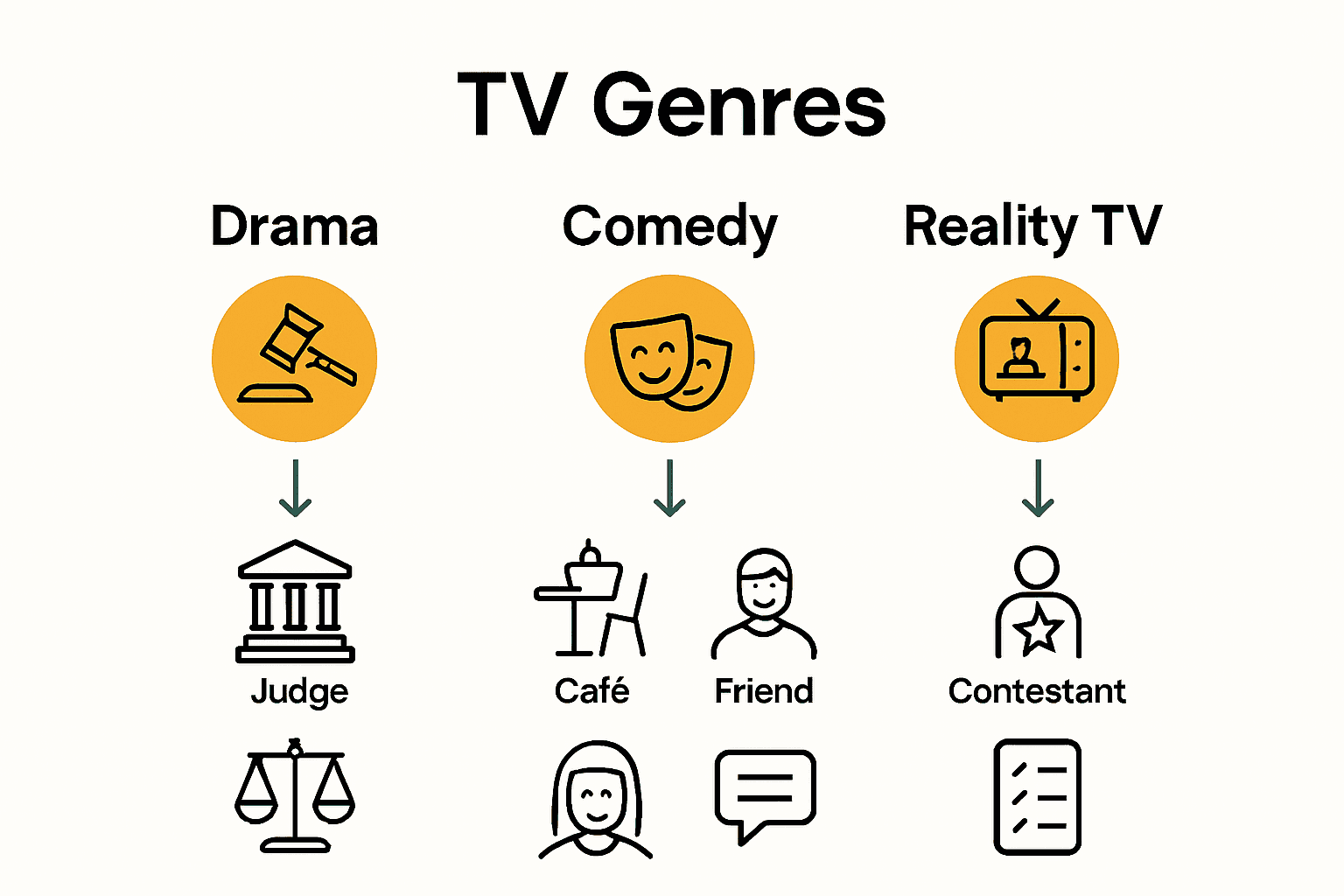
Here’s a summary comparing the major TV content genres and their core elements:
| Genre | Common Settings | Typical Characters | Key Narrative Elements |
|---|---|---|---|
| Drama | Homes Offices Courtrooms | Families Professionals | Emotional conflicts Serious tone |
| Comedy | Living rooms Cafés | Comedians Sidekicks | Humorous plots Lighthearted mood |
| Reality TV | Real locations Competitions | Hosts Everyday people | Unscripted moments Contests |
| News | Studios Field reports | Anchors Reporters | Fact-based Current events |
| Documentary | Real-world sites | Experts Subjects | In-depth analysis Educational |
| Variety Shows | Stages Studios | Performers Guests | Multiple segments Mixed formats |
To understand how different types of television content are distributed and produced, you might want to explore our guide on network TV, which provides deeper insights into how these genres are structured and delivered to audiences.
Subgenres, Hybrid Forms, and Crossovers
Television genres are not static categories but dynamic, evolving landscapes of storytelling. According to research from the Library, genres continuously transform by blending elements and creating innovative hybrid forms that challenge traditional boundaries. This evolution allows creators to craft more complex, nuanced narratives that appeal to broader audiences.
Fascinating Genre Hybrid Examples:
- Crime Drama: Merges investigative storylines with emotional character arcs
- Medical Comedy: Combines professional medical settings with humorous interactions
- Supernatural Thriller: Blends supernatural elements with intense dramatic storytelling
- Sci-Fi Documentary: Explores scientific concepts through narrative documentary techniques
- Romantic Comedy Drama: Integrates romantic relationships with deeper emotional explorations
Understanding these crossovers requires recognizing how different genre elements interact.
VIDEO:video_content] As [Fiveable explains, genres are defined by recurring elements like settings, character types, and plot structures. When these elements blend, they create rich, multidimensional storytelling experiences that transcend traditional genre limitations.
To explore how different television content types intersect and evolve, check out our guide on syndicated content, which offers deeper insights into how television programming adapts and transforms.
How Genres Guide Viewing Choices and Discovery
Genres serve as powerful navigation tools in the vast landscape of television content, helping viewers efficiently discover shows that match their personal preferences. According to research from Common Good Ventures, genres play a critical role in influencing TV ratings and trends by enabling viewers to find content that aligns closely with their interests and emotional expectations.
Key Ways Genres Facilitate Content Discovery:
- Emotional Matching: Connects viewers with content that resonates with their mood
- Time Investment Indication: Provides preview of potential show commitment
- Predictability of Experience: Offers familiar storytelling structures
- Personal Identity Expression: Reflects viewers’ entertainment preferences
- Algorithmic Recommendation: Helps streaming platforms suggest similar content
As Cambridge University explains, genres are more than simple classifications—they’re sophisticated systems that categorize programs by production mode, directly influencing both content style and audience expectations. This systematic approach helps viewers quickly filter through overwhelming entertainment options, making content selection more intuitive and personalized.
For viewers looking to expand their content discovery strategies, our ultimate streaming content discovery guide offers additional insights into navigating the complex world of modern television programming.
Evolving Trends in Genre Blending and Innovation
Television storytelling is undergoing a remarkable transformation, breaking traditional genre boundaries and creating unprecedented narrative experiences. According to Wikipedia, the recent Golden Age of Television is characterized by complex narratives that defy conventional genre classifications, pushing the boundaries of creative storytelling and audience expectations.
Emerging Genre Innovation Trends:
- Narrative Complexity: Multi-layered storytelling that transcends traditional genre limits
- Cross-Genre Experimentation: Blending elements from multiple genre types
- Character-Driven Narratives: Prioritizing character development over strict genre conventions
- Meta-Storytelling: Shows that comment on and deconstruct genre expectations
- Interactive Narrative Formats: Incorporating viewer choice and participation
As Wikipedia notes in its exploration of quality television, these innovative approaches often challenge audience expectations by incorporating elements from various genres to create unique and compelling content. This trend reflects a broader shift in television production, where creators are increasingly prioritizing storytelling complexity and emotional depth over rigid genre restrictions.
For viewers interested in exploring the latest trends in television content, our tips for finding trending series can help you navigate the exciting world of contemporary television programming.
Unlock the Full Potential of TV Content Genres with Sparetimetv.com
Struggling to navigate the complex world of TV genres and find the shows that truly match your tastes Understanding the recurring narrative patterns and hybrid forms explained in “TV Content Genres Explained” can feel overwhelming. You want to discover content that fits your mood and preferences without wasting time guesswork. This is where Sparetimetv.com comes in as your ultimate guide to mastering your viewing choices.

Explore detailed TV guides, primetime schedules, and streaming premieres all in one place. At Sparetimetv.com, we organize content by genre and popularity so you can easily identify the perfect drama or comedy series or even dive into trending reality TV shows. Don’t miss out on new releases or top-rated hits that align with your favorite genre styles. Start your personalized TV journey now by visiting our comprehensive guide on essential types of TV programming and learn how to navigate the diverse world of television content like a pro. When you are ready to simplify and enhance your TV watching experience, head over to Sparetimetv.com and turn genre knowledge into smart viewing decisions.
Frequently Asked Questions
What are the main TV content genres?
The main TV content genres include drama, comedy, reality TV, news, documentary, and variety shows, each with unique storytelling approaches and audience engagement strategies.
How do TV genres influence my viewing choices?
TV genres help viewers find shows that match their interests by providing emotional connections, indicating time investment, and offering predictable storytelling structures, making it easier to select content.
What are some examples of hybrid TV genres?
Examples of hybrid TV genres include crime dramas, medical comedies, supernatural thrillers, sci-fi documentaries, and romantic comedy dramas, blending elements from multiple genres for richer narratives.
Why are TV content genres important for creators and networks?
Genres provide a framework for storytelling innovation, helping creators focus their narratives and enabling networks to effectively target specific audience segments, ultimately guiding content production and marketing.