
Why Do Some TV Shows Skip a Year Between Seasons?
Table of Contents
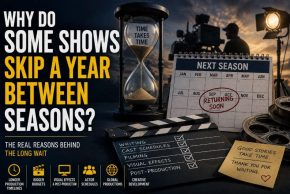
Why Do Some TV Shows Skip a Year Between Seasons?
For many years, television viewers knew what to expect. A show would premiere in the fall, air its season, take a summer break, and return the following year.
Today, that pattern is becoming less common.
Many popular streaming series now take two years or longer between seasons. Some viewers have become frustrated watching eight-episode seasons followed by long waits before new episodes arrive.
Shows that once returned every year may now disappear for eighteen months, two years, or even longer.
The question is simple:
Why does it take so long for some TV shows to return?
The answer involves much more than filming. Modern television production is far more complex, expensive, and global than it was just a decade ago.
Short Answer
Some TV shows skip a year between seasons because of longer production schedules, bigger budgets, visual effects requirements, actor availability, global filming locations, streaming business models, and extended post-production work.
Why Viewers Notice Longer Gaps Between Seasons
The issue has become especially noticeable during the streaming era.
Many viewers remember when popular network dramas regularly produced:
- 22 to 24 episodes per season
- yearly releases
- predictable schedules
Today, many streaming shows produce:
- 6 to 10 episodes
- longer production timelines
- unpredictable release schedules
As a result, audiences often feel like they are waiting longer while receiving fewer episodes.
Were TV Shows Always Released Every Year?
For most of television history, the answer was yes.
Traditional broadcast television depended on yearly schedules because networks needed fresh programming every season.
Networks sold advertising months in advance and relied on predictable schedules to keep viewers engaged.
This created strong pressure to produce new seasons quickly.
How Traditional Network TV Worked
Broadcast networks such as:
- ABC
- CBS
- NBC
- FOX
historically followed annual production cycles.
A typical network drama might:
- finish one season
- begin pre-production shortly afterward
- return the following fall
The system was designed around advertising and scheduling needs.
Because networks depended on a constant supply of content, yearly production became the industry standard.
Why Streaming Changed Production Schedules
Streaming platforms operate differently.
Unlike broadcast networks, streaming services are not tied to traditional television seasons.
Instead of needing content every September, streaming companies release shows throughout the year.
This flexibility allows longer production timelines.
It also reduces pressure to meet annual release schedules.
As a result, many streaming series receive more time for development and production.
Bigger Budgets Mean Longer Production Times
Modern television is more expensive than ever.
Many streaming dramas now feature:
- movie-quality cinematography
- international locations
- large casts
- complex action sequences
Producing these shows often requires significantly more preparation than traditional television.
A single season may involve months of:
- location scouting
- set construction
- costume design
- production planning
The larger the budget, the more complicated the process usually becomes.
Visual Effects Can Add Months of Work
One of the biggest reasons for delays is visual effects.
Fantasy, science fiction, and superhero series often rely heavily on:
- CGI environments
- digital creatures
- visual enhancements
- complex action scenes
Many effects are not completed until after filming ends.
In some cases, post-production can take nearly as long as filming itself.
This is one reason effects-heavy series often experience longer gaps between seasons.
Actor Availability Creates Scheduling Problems
Television actors are busier than ever.
In the past, many performers worked primarily on one television series.
Today actors frequently move between:
- television shows
- streaming projects
- movies
- international productions
Coordinating schedules for an entire cast can be extremely difficult.
Sometimes filming cannot begin until key actors become available.
Writers, Scripts, and Creative Development
Television production begins long before cameras start rolling.
Writers often spend months:
- developing storylines
- writing scripts
- revising episodes
- coordinating season arcs
Many streaming services prefer having most or all scripts completed before production begins.
This differs from some traditional network productions, where writing and filming occasionally happened simultaneously.
The result is often higher quality storytelling but longer development periods.
The Impact of Global Production
Many modern television series are filmed around the world.
Productions may involve:
- multiple countries
- international crews
- foreign permits
- global logistics
While these locations can improve production quality, they also increase complexity.
Weather, travel, regulations, and scheduling can all affect production timelines.
Why Streaming Services Are Not in a Hurry
One surprising factor is that streaming companies often face less pressure to release new seasons quickly.
Traditional networks depended on weekly ratings and advertising.
Streaming services focus more on:
- subscriber retention
- overall content libraries
- long-term engagement
A platform may have dozens of original series available at any given time.
Because of this, companies sometimes prioritize quality over speed.
How Audience Expectations Have Changed
Viewers have become accustomed to higher production values.
Audiences now expect:
- cinematic visuals
- sophisticated storytelling
- premium special effects
These expectations require more time and resources.
The same viewers who want faster releases often expect television that looks and feels like a feature film.
Meeting those expectations takes time.
Why Some Shows Return Faster Than Others
Not all television shows face the same challenges.
Series that typically return faster include:
- sitcoms
- reality competitions
- procedural dramas
- studio-based productions
These formats often use:
- recurring sets
- smaller visual effects budgets
- predictable production schedules
As a result, they can often maintain yearly releases more easily.
Are Long Gaps Hurting TV Shows?
Some industry observers believe long gaps can be risky.
Potential drawbacks include:
- audience forgetfulness
- reduced momentum
- weaker fan engagement
- increased competition
Viewers today have more entertainment options than ever before.
When a series disappears for multiple years, some audiences move on to other shows.
This has become a growing concern within the industry.
Will Two-Year Gaps Become Normal?
In many cases, they already have.
For high-budget streaming dramas, two-year gaps are increasingly common.
However, not every genre is moving in that direction.
Networks still value:
- yearly schedules
- consistent programming
- audience habits
The future will likely include a mix of both models.
Some shows will continue returning annually, while others may require much longer production cycles.
Why This Trend Reflects a Bigger Change in Television
The longer waits between seasons reflect a broader transformation in television.
The industry has shifted from:
Quantity
to
Quality
At least for many premium streaming productions.
Modern television often prioritizes:
- production value
- visual effects
- global audiences
- cinematic storytelling
These goals require more time than traditional television production models.
Final Thoughts
Some TV shows skip a year or more between seasons because television has changed dramatically. Streaming services, larger budgets, visual effects, international productions, and evolving audience expectations all contribute to longer production timelines.
While viewers may miss the days when shows reliably returned every year, modern television often operates more like filmmaking than traditional network production.
As streaming continues shaping the industry, long gaps between seasons may remain one of the defining characteristics of premium television.
Frequently Asked Questions
Why do Netflix shows take so long between seasons?
Many Netflix series require extensive writing, filming, visual effects work, and post-production before release.
Why did TV shows return every year in the past?
Broadcast networks relied on annual schedules driven by advertising and programming needs.
Are streaming shows more expensive than network shows?
Many streaming dramas have significantly larger budgets and more complex production requirements.
Do visual effects delay TV shows?
Yes. Effects-heavy series often spend months in post-production after filming ends.
Will TV shows eventually return to yearly schedules?
Some will, especially network procedurals and sitcoms. However, many premium streaming dramas will likely continue using longer production cycles.
This topic is part of our guide explaining how television scheduling, economics, and production decisions work.
See the full overview in How TV Works.