
Understanding the Role of Streaming Services in Entertainment
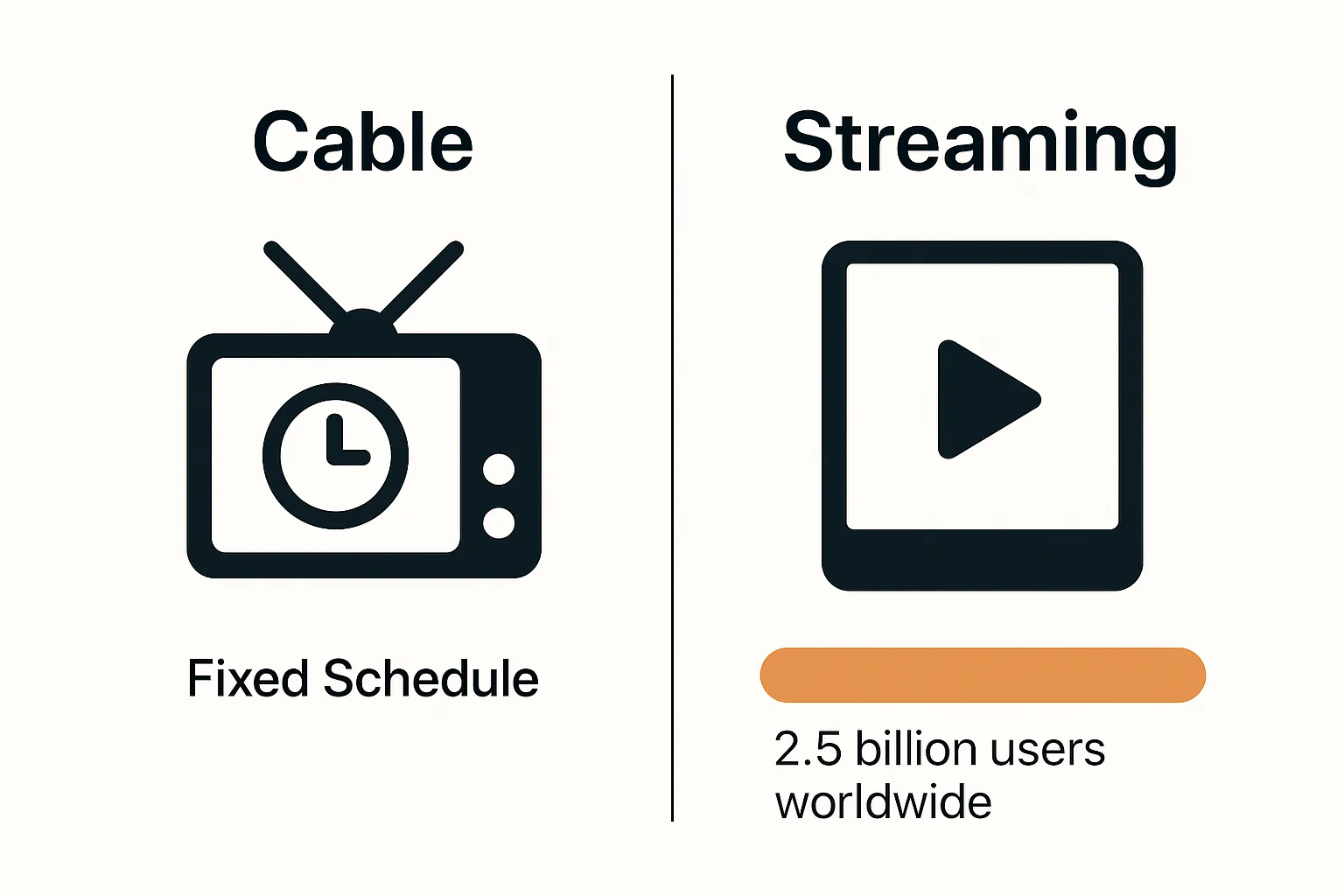
Streaming services have completely changed the way people watch TV and movies, with over 2.5 billion people around the world using them regularly. You might think this is just about ditching cable and watching shows online. The real punch is that these platforms are not only changing what we watch, but how stories get made and who gets to tell them.
Table of Contents
- What Are Streaming Services And How Do They Function?
- The Why: Impact Of Streaming Services On Viewership And Trends
- The Business Model: Subscription Vs. Ad-Supported Streaming
- Content Creation And Distribution In The Streaming Era
- The Future: Evolving Role Of Streaming Services In Media
Quick Summary
| Takeaway | Explanation |
|---|---|
| Streaming services reshape media consumption | They provide flexible access to entertainment on multiple devices, without geographical limits. |
| Subscription models offer predictable costs | Users pay a fixed monthly fee for unlimited access, enhancing viewing experience without disruptions. |
| Original content production is booming | Streaming services invest heavily in diverse programming, often bypassing traditional studios for direct commissioning. |
| Advanced technology powers personalized experiences | AI and machine learning are enhancing user recommendations and content delivery, improving engagement. |
| Convergence creates multifunctional entertainment ecosystems | Streaming platforms are evolving into spaces for content creation, social interaction, and traditional media blending. |
What Are Streaming Services and How Do They Function?
Streaming services represent a revolutionary approach to consuming digital media, fundamentally transforming how people access entertainment content. Unlike traditional broadcast methods, these platforms deliver audio and video content directly over the internet, allowing users to watch movies, television shows, and other media in real time without downloading entire files.
The Technical Foundation of Streaming
At its core, streaming technology works through a process of continuous data transmission. When you select content, the streaming service begins sending small data packets to your device, which are immediately decoded and played. This means you can start watching almost instantly, with the content arriving in a steady stream rather than requiring a complete download. Our guide on digital streaming provides more in-depth technical details about this process.
The technological infrastructure behind streaming involves several critical components:
- Content Delivery Networks (CDNs): Specialized server networks that cache and distribute media across global locations
- Adaptive Bitrate Streaming: Technology that adjusts video quality based on your internet connection speed
- Compression Algorithms: Methods that reduce file sizes without significantly compromising visual quality
User Experience and Content Accessibility
Streaming services have democratized media consumption by offering unprecedented flexibility. Users can access content across multiple devices – smartphones, tablets, smart TVs, and computers – without geographical restrictions. According to Statista’s global streaming report, over 2.5 billion people worldwide now use streaming platforms regularly.
These platforms typically operate on subscription models, providing users with unlimited access to vast libraries of content for a fixed monthly fee. This approach contrasts sharply with traditional cable television, offering greater choice, personalization, and on-demand viewing experiences.
Explore how streaming compares to traditional cable to understand the full scope of this technological shift.
The Why: Impact of Streaming Services on Viewership and Trends
Streaming services have fundamentally reshaped the entertainment landscape, creating unprecedented shifts in how audiences consume media. These digital platforms are not just alternative viewing methods but transformative forces that have redefined audience expectations and industry dynamics.
Changing Consumer Viewing Behaviors
Traditional television scheduling has been dramatically disrupted by streaming platforms. Viewers now expect on-demand content with complete season releases, allowing for uninterrupted viewing experiences.
 Learn more about the binge-watching phenomenon that has emerged from this new content consumption model.
Key shifts in viewing behaviors include:
- Preference for personalized content recommendations
- Reduced tolerance for scheduled programming
- Increased desire for diverse, global content options
- Greater control over viewing time and platform
Economic and Content Production Implications
Streaming services have become powerful content creators, investing billions in original programming. According to Nielsen’s media consumption report, original streaming content now represents a significant portion of viewers’ entertainment time. This has led to a content production revolution, with streaming platforms commissioning diverse, niche, and innovative productions that traditional networks might have overlooked.
The economic model of streaming has also democratized content creation. Smaller productions can now reach global audiences, breaking geographical and financial barriers that previously limited media distribution. Discover how television is evolving through these groundbreaking technological and creative shifts.
The Business Model: Subscription vs. Ad-Supported Streaming
The streaming industry has evolved sophisticated monetization strategies, primarily centered around two distinct business models that cater to different consumer preferences and market dynamics. Understanding these approaches reveals the complex economic landscape of digital media consumption.
Subscription-Based Streaming
Subscription Video on Demand (SVOD) represents the traditional streaming model, where users pay a fixed monthly fee for unlimited access to content libraries. Netflix pioneered this approach, creating a predictable revenue stream that allows platforms to invest heavily in original programming. Learn more about how TV shows generate revenue to understand the financial intricacies of these platforms.
Key advantages of subscription models include:
- Uninterrupted viewing experience
- No advertisement breaks
- Predictable monthly entertainment costs
- Access to exclusive original content
Ad-Supported and Hybrid Streaming Approaches
Advertisement-supported (AVOD) and hybrid streaming models have emerged as alternative revenue strategies. According to Statista’s global streaming report, these models are gaining significant market traction by offering lower-cost or free viewing options with integrated advertising.
Hybrid models combine subscription and ad-supported approaches, providing consumers with flexible choices. Platforms like Hulu offer tiered pricing where users can select between ad-supported cheaper plans and premium ad-free subscriptions. This strategy allows streaming services to capture broader audience segments and create more inclusive viewing experiences.
Below is a comparison of the main business models used by streaming services, highlighting their core features and benefits for viewers.
| Model | Cost Structure | Advertisements | Key Benefits | Example Platforms |
|---|---|---|---|---|
| Subscription (SVOD) | Fixed monthly fee | No | Ad-free viewing, unlimited access, exclusive original content | Netflix, Disney+ |
| Ad-Supported (AVOD) | Free or lower cost | Yes | Lower entry cost, wider access, accessible to all users | Pluto TV, Tubi |
| Hybrid | Tiered (subscription + ads) | Optional (in lower tiers) | User choice, flexible pricing, premium ad-free option | Hulu, Peacock |
Content Creation and Distribution in the Streaming Era
Streaming platforms have fundamentally transformed the landscape of content creation, production, and distribution, creating unprecedented opportunities for creators and challenging traditional media paradigms. These digital ecosystems have become powerful content engines that reshape how stories are conceived, produced, and consumed.
The Rise of Original Content Production
Streaming services have transitioned from content aggregators to major production powerhouses. They now invest billions in creating original programming, bypassing traditional studio systems and directly commissioning content from creators worldwide. Learn more about exclusive content strategies to understand this revolutionary approach.
Key characteristics of streaming-era content creation include:
- Global talent recruitment
- Shorter production cycles
- More diverse storytelling perspectives
- Increased creative experimentation
- Direct audience feedback mechanisms
Distribution and Global Reach
The digital nature of streaming has dismantled geographical barriers in content distribution. According to the World Intellectual Property Organization, streaming platforms enable direct-to-consumer digital delivery, allowing creators unprecedented control over international content rights and distribution.
This model allows niche content to find global audiences, democratizing media production and consumption. Discover how syndicated content works to further understand these complex distribution networks. Creators can now produce content with the potential for immediate worldwide visibility, a dramatic shift from traditional broadcast models that required complex international licensing agreements.

The Future: Evolving Role of Streaming Services in Media
Streaming services are no longer merely alternative entertainment platforms but are rapidly becoming the primary mode of media consumption. Their trajectory suggests a comprehensive transformation of how content is created, distributed, and experienced across global audiences.
Technological Integration and Innovation
Advancing technologies are positioning streaming platforms at the forefront of media innovation. Artificial intelligence and machine learning are becoming critical in personalizing content recommendations, predicting viewer preferences, and optimizing user experiences. Explore the future of television technology to understand these emerging trends.
Key technological developments include:
- Enhanced personalization algorithms
- Interactive and immersive content experiences
- Integration with smart home and IoT ecosystems
- Advanced content recommendation systems
- Improved streaming quality and reduced latency
Convergence of Entertainment Ecosystems
Streaming platforms are evolving beyond passive content consumption. According to PwC’s global entertainment report, these services are transforming into comprehensive entertainment ecosystems that blend traditional media, interactive experiences, and social engagement.
This convergence suggests streaming platforms will become multifunctional digital environments where entertainment, social interaction, and personalized content creation intersect. The boundaries between viewers, creators, and platforms are blurring, promising a more interactive and democratized media landscape.
This table outlines key technological innovations that are shaping the present and future of streaming services and their impact on user experience.
| Technology/Innovation | Description | Impact on User Experience |
|---|---|---|
| AI & Machine Learning | Personalized recommendations and user preference analysis | Content tailored to user interests |
| Adaptive Bitrate Streaming | Adjusts video quality based on internet speed | Smoother playback, fewer disruptions |
| Interactive/Immersive Content | New formats like interactive movies and AR/VR | More engaging and customizable |
| Smart Home/IoT Integration | Compatibility with smart TVs, speakers, and devices | Seamless, multi-device viewing |
| Improved Compression | Smaller files with maintained quality | Faster loading, less buffering |
Looking for Clarity in the Streaming Chaos? Find the Answers Here
Feeling overwhelmed by the fast-changing world of streaming services? This article highlights the confusion many viewers face with evolving platforms, new binge-watching habits, and keeping track of original content releases. When media trends change so quickly, it is hard to know when your favorite show comes out or what is trending across the big streamers. Many TV fans struggle to find a single source with up-to-date guides, recommendations, and schedules.
Take the guesswork out of your viewing. Visit SpareTimeTV.com to discover easy-to-use TV guides and the latest streaming premieres. Uncover top-rated shows, find detailed TV schedules and movie listings, and get instant access to what is hot and new. With our constantly updated platform, you stay organized and never miss out. Check it out now and enjoy entertainment made simple.
Frequently Asked Questions
What are streaming services?
Streaming services are platforms that deliver audio and video content directly over the internet in real time, allowing users to watch movies, TV shows, and other media without downloading entire files.
How do streaming services work?
Streaming services function by continuously transmitting small data packets over the internet. When a user selects content, it is immediately decoded and played, allowing for instant viewing without requiring a complete download.
What are the different business models of streaming services?
The main business models of streaming services include subscription-based (SVOD) and ad-supported models (AVOD). Subscription-based services charge a monthly fee for ad-free access, while ad-supported models offer free content with integrated advertisements.
How have streaming services changed consumer viewing behaviors?
Streaming services have shifted consumer viewing behaviors by promoting on-demand content, reducing tolerance for scheduled programming, and increasing demand for personalized recommendations and diverse global content options.
Recommended
- What is Digital Streaming? Understanding the Basics – Sparetimetv.com
- What is a Streaming Premiere? Understanding the Concept – Sparetimetv.com
- Understanding Why Streaming Premieres Matter – Sparetimetv.com
- The Future of TV – Sparetimetv.com
- Understanding Music Data Trends Explained for Industry Leaders – Blog – Music24.com