
TV schedules control much more than just what shows appear on screen. Primetime slots can cost advertisers up to $150,000 for just thirty seconds of airtime and yet the magic of TV scheduling goes far beyond big ad dollars. Most people think schedules are about rigid planning and routine. In reality, they are powerful tools that shape your habits, create shared social moments, and drive billions in creative investment behind the scenes.
Table of Contents
- What Are TV Schedules And Their Importance?
- The Impact Of TV Schedules On Viewing Habits
- How TV Schedules Influence The Entertainment Industry
- Key Concepts: Time Slots, Ratings, And Audience Psychology
Quick Summary
| Takeaway | Explanation |
|---|---|
| TV schedules shape viewer behavior | They influence how audiences plan their time and engage with content regularly. |
| Strategic scheduling maximizes ad revenue | Networks optimize show timings to attract advertisers and maximize financial gains. |
| Consistent programming builds viewer loyalty | Regular scheduling fosters anticipation, making viewers more likely to return for each episode. |
| Digital platforms maintain scheduling strategies | Streaming services mimic traditional scheduling to enhance viewer engagement and anticipation. |
| Time slots are carefully calculated | Networks analyze viewer data to allocate specific shows to optimal broadcast times for maximum impact. |
What are TV Schedules and Their Importance?
A TV schedule represents a strategic blueprint for how television networks organize and broadcast their programming throughout the day. These carefully curated timetables serve as the backbone of television entertainment, determining precisely when specific shows, movies, news segments, and other content will air.
The Core Purpose of TV Schedules
TV schedules are more than just a list of show times. They are complex planning tools that consider multiple critical factors:
- Audience Demographics: Networks strategically place programs to target specific viewer groups
- Viewership Patterns: Understanding peak watching hours and viewer preferences
- Advertising Revenue: Scheduling shows to maximize commercial exposure and potential ad income
Understanding the role of television programming reveals how these schedules function as intricate systems designed to capture and maintain viewer attention. They represent a delicate balance between entertainment, audience engagement, and financial strategy.
How TV Schedules Influence Viewer Experience
TV schedules play a pivotal role in shaping audience expectations and viewing habits. By providing predictable programming windows, networks create a sense of routine and anticipation. Viewers learn when their favorite shows will air, allowing them to plan their leisure time around specific broadcast times.
Modern TV schedules have evolved beyond traditional linear broadcasting. With the rise of streaming services like those detailed in our guide on linear TV, the concept of scheduling has become more flexible. Viewers now have multiple ways to consume content, from live broadcasts to on-demand streaming.
Strategic Importance for Networks and Advertisers
For television networks, schedules are strategic weapons. They help networks:
- Compete for viewer attention
- Optimize advertising revenue
- Create programming blocks that retain audience interest
- Test and rotate different show time slots
Advertisers rely heavily on these schedules to understand when their target audiences are most likely to be watching, allowing them to place commercials at the most effective times. A well-designed TV schedule can significantly impact a network’s financial success and market positioning.
This table outlines the primary factors networks consider when creating TV schedules, highlighting their strategic significance.
| Factor | Explanation |
|---|---|
| Audience Demographics | Target programs to specific viewer groups |
| Viewership Patterns | Analyze peak hours and preferences |
| Advertising Revenue | Maximize commercial exposure and income |
| Programming Blocks | Retain interest with themed or sequenced shows |
| Competitive Strategy | Counter rival networks with strategic scheduling |
The Impact of TV Schedules on Viewing Habits
TV schedules are powerful mechanisms that fundamentally shape how audiences consume entertainment. They do more than simply dictate broadcast times they actively influence viewer behavior, social interactions, and cultural consumption patterns.
Psychological Conditioning of Viewing Patterns
Television networks have mastered the art of creating psychological triggers that compel viewers to develop consistent watching routines. By strategically positioning shows at specific times, networks create anticipation and habit formation. Viewers begin to structure their personal schedules around their favorite programs, transforming television from mere entertainment into a ritualistic experience.
Research from Nielsen Media Research demonstrates that consistent scheduling can create powerful viewer loyalty. When audiences know exactly when a show will air, they are more likely to plan their evening around that specific timeslot, generating a predictable and reliable viewership.
Social and Cultural Impact of Scheduled Programming
TV schedules extend beyond individual viewing experiences and into broader social dynamics. Shared viewing experiences become cultural touchstones that connect people across different demographics. Water cooler conversations, social media discussions, and communal watching events are direct results of strategic programming schedules.
Interestingly, our guide on primetime television reveals how certain timeslots have become cultural phenomena. Primetime hours represent more than just broadcast windows they are social synchronization points where millions of viewers simultaneously engage with content.
Adaptation in the Digital Streaming Era
While traditional TV schedules maintained rigid broadcast times, modern streaming platforms have introduced unprecedented flexibility. On-demand viewing has transformed how audiences consume content, challenging conventional scheduling models. However, even in this digital landscape, the psychological impact of scheduled programming remains significant.
Streaming services now employ sophisticated algorithms that mimic traditional scheduling strategies. By releasing episodes at specific intervals or dropping entire seasons simultaneously, they continue to manipulate viewer engagement and create new forms of anticipatory viewing experiences.
The evolution of TV schedules demonstrates an ongoing negotiation between network strategies, technological capabilities, and audience preferences. What remains constant is the profound ability of scheduled programming to shape how we consume, discuss, and integrate entertainment into our daily lives.
How TV Schedules Influence the Entertainment Industry
TV schedules are far more than simple programming listings they are powerful economic and creative engines that drive the entire entertainment ecosystem. These carefully crafted timetables significantly impact content creation, distribution, financial strategies, and audience engagement across multiple platforms.
Content Development and Investment Strategies
Networks and streaming platforms use TV schedules as strategic tools for content investment. By analyzing viewer patterns, they make critical decisions about:
- Program Development: Identifying which types of shows perform best in specific timeslots
- Budget Allocation: Determining financial resources for new series based on scheduling performance
- Genre Positioning: Understanding audience preferences during different broadcast windows
Research from PwC’s Global Entertainment & Media Outlook reveals that strategic scheduling directly influences millions of dollars in production investments, making it a critical component of entertainment industry decision making.
Advertising and Revenue Generation
TV schedules serve as the primary mechanism for advertising revenue generation. Primetime slots represent the most valuable real estate in television broadcasting, commanding premium advertising rates. Networks carefully engineer these schedules to maximize commercial potential and attract high-value advertisers.
Interestingly, our guide on TV advertising demonstrates how scheduling influences not just when ads appear, but how much advertisers are willing to pay for specific audience demographics and viewing windows.
Industry Competitive Dynamics
Competition among networks and streaming platforms is fundamentally driven by scheduling strategies. Each platform attempts to capture audience attention through:
- Strategic show placement
- Counter-programming against competitor content
- Creating unique viewing experiences
The ability to anticipate and react to audience preferences through sophisticated scheduling has become a critical competitive advantage. Networks that master this art can significantly impact their market position, subscriber retention, and overall industry relevance.

Ultimately, TV schedules represent a complex interplay of creativity, technology, and economic strategy. They are not just timetables, but sophisticated instruments that shape how entertainment content is conceived, produced, distributed, and consumed in the modern media landscape.
Key Concepts: Time Slots, Ratings, and Audience Psychology
Understanding television scheduling requires a deep dive into the intricate interplay between time slots, audience measurement systems, and psychological engagement mechanisms. These interconnected elements form the foundation of how networks strategically design and optimize their programming approaches.
The Science of Time Slot Allocation
Time slots are not randomly assigned but carefully calculated broadcast windows designed to maximize viewer engagement. Networks segment their daily programming into strategic periods that correspond with audience availability and demographic patterns
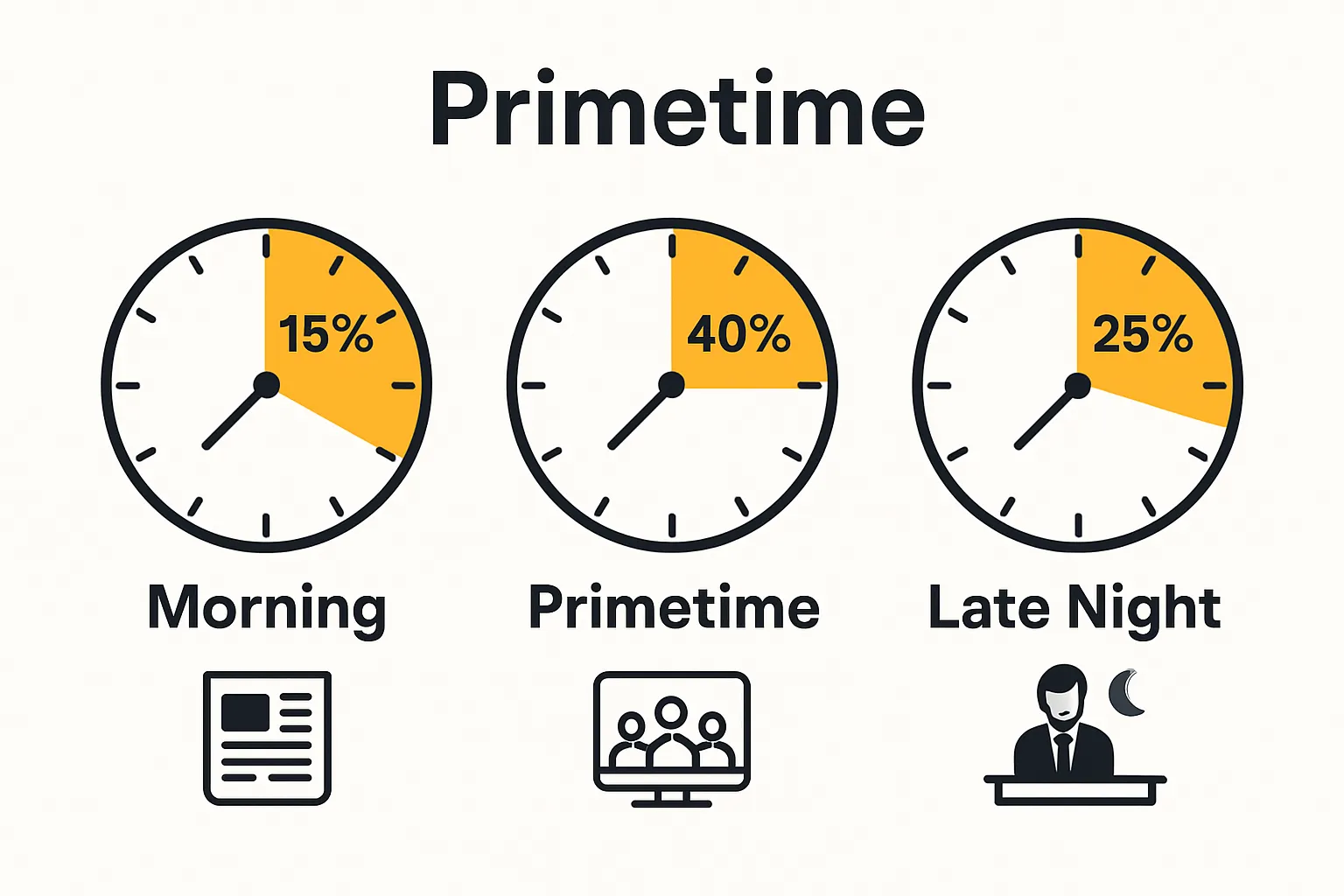 :
:
- Morning Slots: Targeting stay-at-home audiences and retirees
- Afternoon Slots: Focusing on daytime television consumers
- Primetime Slots: Capturing peak audience attention
- Late Night Slots: Engaging younger, more flexible viewers
Research from Nielsen Media Research demonstrates that these time allocations are meticulously engineered to match specific viewer behaviors and preferences.
The following table summarizes how different TV time slots target distinct audiences and serve strategic purposes within television scheduling.
| Time Slot | Target Audience | Scheduling Purpose |
|---|---|---|
| Morning | Stay-at-home viewers, retirees | Capture early viewers with news, talk shows |
| Afternoon | Daytime television consumers | Engage viewers with soaps, court shows, talk |
| Primetime | General, peak-age audiences | Maximize viewership and ad revenue |
| Late Night | Younger, flexible viewers | Retain audience with talk shows, niche content |
Ratings: The Currency of Television Programming
TV ratings represent the critical metric that determines a show’s success and financial viability. Our comprehensive guide on Nielsen ratings reveals these measurement systems are far more than simple viewership numbers they are complex algorithms that track audience engagement, demographics, and viewing patterns.
Key rating components include:
- Total number of viewers
- Demographic breakdown
- Viewing duration
- Comparative performance against competing programs
Psychological Triggers in Audience Engagement
Audience psychology plays a profound role in how viewers interact with television schedules. Networks leverage sophisticated understanding of human behavior to create anticipation, routine, and emotional connection. By strategically positioning shows and creating narrative structures that encourage consistent viewing, they transform passive watching into an active, immersive experience.
Interesting psychological mechanisms include:
- Creating narrative cliffhangers
- Establishing predictable yet exciting viewing patterns
- Designing content that feels personally relevant
The convergence of time slots, ratings, and psychological understanding represents a sophisticated ecosystem where technology, creativity, and human behavior intersect. Networks that masterfully navigate these elements can transform simple broadcast schedules into powerful engagement platforms that captivate and retain audience attention.
Frequently Asked Questions
What is the purpose of TV schedules?
TV schedules serve as a strategic blueprint for how networks organize their programming throughout the day. They determine when specific shows, movies, and news segments will air, helping networks target audiences and maximize viewership.
How do TV schedules influence viewer habits?
TV schedules create routine and anticipation for viewers, influencing their leisure time and viewing patterns. Consistent scheduling leads to viewer loyalty, as audiences tend to plan their activities around their favorite shows.
What factors do networks consider when creating TV schedules?
Networks consider audience demographics, viewership patterns, and potential advertising revenue when creating TV schedules. This complex planning ensures that programs are aired at times that maximize engagement and financial success.
How has the rise of streaming services affected TV schedules?
Streaming services have introduced flexibility to TV schedules by offering on-demand viewing options. However, they continue to use scheduling strategies, such as releasing episodes at specific intervals, to engage viewers and maintain anticipation.