
Understanding TV Show Trends in 2025: What to Expect
TV shows have come a long way from the black-and-white days of sitcoms with predictable endings. Now, streaming platforms use advanced algorithms to serve highly personalized recommendations and binge-worthy narratives. But here is the surprise. Streaming platforms now use machine learning to predict your next favorite show with stunning accuracy. This shift is not just changing how we watch TV but how stories are told, opening up wild new possibilities for creators and viewers alike.
Table of Contents
- The Evolution Of TV Shows: A Historical Perspective
- Key Trends Shaping TV Content And Viewership
- The Impact Of Technology On TV Show Production
- Why Diverse Storytelling Matters In 2025
- Future Predictions: Where Are TV Shows Headed?
Quick Summary
| Takeaway | Explanation |
|---|---|
| Television has evolved to complex narratives | Early TV shows had simple, episodic formats; now, narratives span multiple episodes and seasons. |
| Binge-watching is a new norm | Streaming platforms like Netflix allow viewers to watch entire seasons at once, reshaping viewing habits. |
| Diversity in storytelling drives engagement | Inclusive narratives resonate more with audiences, leading to higher engagement and broader viewership. |
| Technology fosters interactive experiences | Emerging technologies like VR enable viewers to participate in storylines, creating immersive experiences. |
| Artificial intelligence transforms content creation | AI helps in script analysis and generation, enhancing production efficiency and creativity. |
The Evolution of TV Shows: A Historical Perspective
Television has undergone a remarkable transformation since its inception, shifting from simple entertainment to a complex narrative medium that reflects and shapes cultural discourse. Historical media research reveals that TV shows have dramatically evolved across several key eras, each representing significant technological and storytelling innovations.
From Linear Storytelling to Complex Narratives
In the early days of television, shows followed a rigid episodic format where each episode presented a complete story with minimal ongoing plot connections. Sitcoms like “I Love Lucy” and procedural dramas dominated, offering predictable narratives that reset at the end of every episode. Audiences expected straightforward storytelling without complex character arcs or intricate plotlines.
The late 20th century marked a significant shift. Shows began experimenting with serialized storytelling, where narratives stretched across multiple episodes and even entire seasons. Series like “Hill Street Blues” and “The Sopranos” pioneered this approach, introducing multilayered characters and storylines that demanded sustained viewer engagement. This transformation reflected broader societal changes, with audiences craving more nuanced, intellectually challenging content.
Technological Innovations Driving Storytelling
Streamlining technologies fundamentally reshaped TV consumption. Streaming platforms like Netflix revolutionized how viewers interact with content, enabling:
- Binge-watching entire seasons
- On-demand access to diverse global content
- Personalized viewing experiences
- Algorithmic content recommendations
These technological advancements allowed creators unprecedented storytelling freedom. Shows like “Black Mirror” and “Stranger Things” emerged, representing narrative experiments impossible in traditional broadcast models. Discover more about how TV series have transformed our entertainment landscape through technological innovation.
Today, TV shows are no longer passive entertainment but active cultural dialogues. They tackle complex social issues, challenge conventional narratives, and provide platforms for diverse storytelling.
Below is a comparison table outlining how TV show production and storytelling have evolved across key eras, highlighting major technological and narrative advancements.
| Era | Storytelling Approach | Technological Innovations | Notable Examples |
|---|---|---|---|
| Early Television | Simple episodic, linear plots | Basic cameras, set designs | I Love Lucy |
| Late 20th Century | Serialized, interconnected arcs | Enhanced filming, multi-camera setups | Hill Street Blues, The Sopranos |
| Streaming Era | Multi-season complex narratives | Streaming platforms, on-demand access | Black Mirror, Stranger Things |
| Modern/2025 Forward | Interactive, immersive stories | AI, VR, advanced CGI, cloud workflows | The Mandalorian (production) |
Key Trends Shaping TV Content and Viewership
The television landscape continues to evolve rapidly, driven by technological innovations, changing viewer preferences, and sophisticated content creation strategies. Global media research indicates a profound transformation in how audiences consume and interact with television content.
Personalization and Algorithmic Content Curation
Modern viewers expect tailored entertainment experiences that reflect their individual preferences.
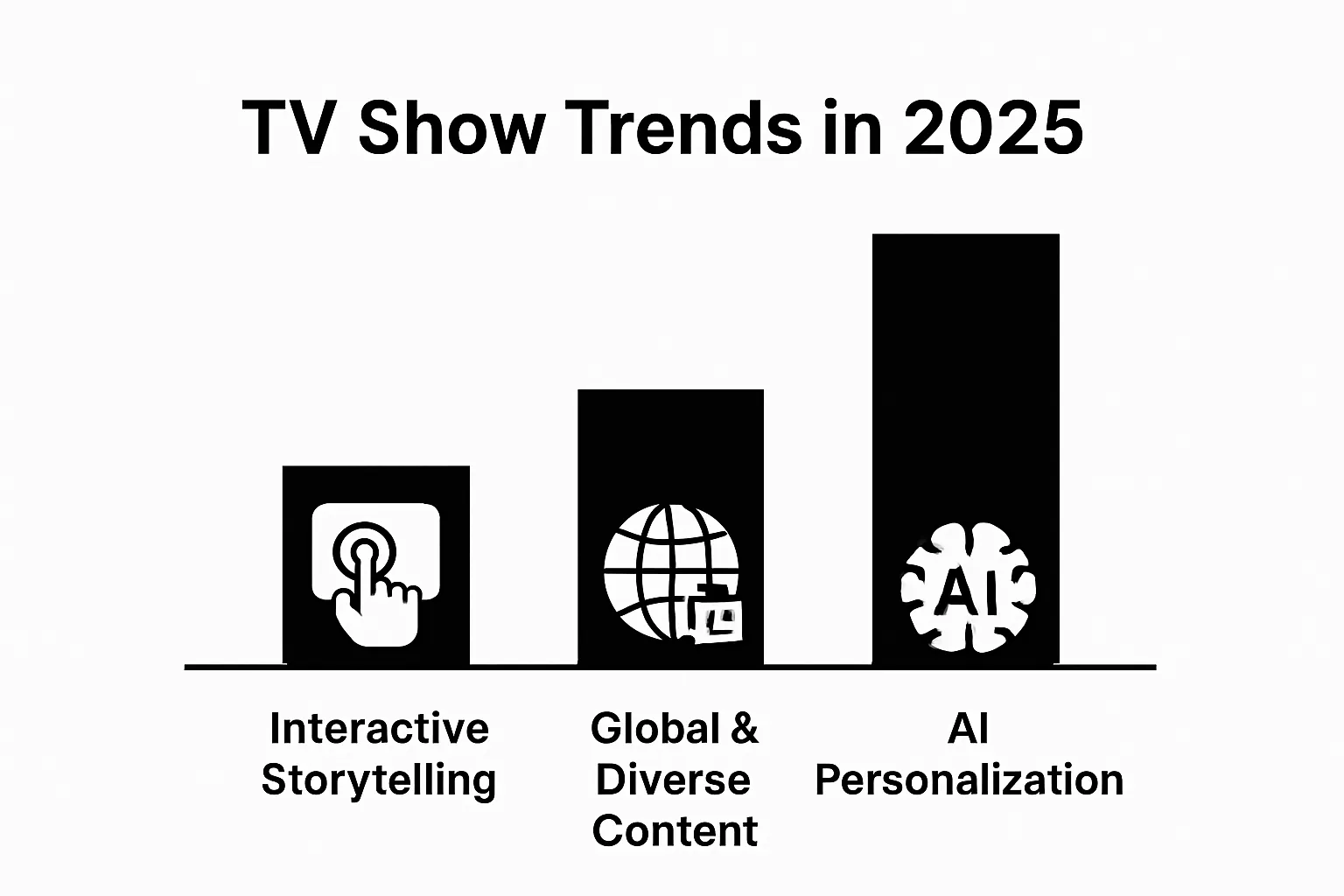 Streaming platforms now leverage advanced algorithms to analyze viewing habits, creating hyper-personalized content recommendations. Machine learning technologies track user behavior, genre preferences, and viewing patterns to suggest shows with unprecedented accuracy.
This trend extends beyond simple recommendations. Platforms are developing interactive features that allow viewers to influence storylines, creating a more engaging and participatory viewing experience. Learn more about emerging TV trends that are reshaping entertainment consumption.
Diversity and Global Content Representation
Television is experiencing a significant shift towards more inclusive storytelling. Networks and streaming services are actively investing in content that represents diverse cultural perspectives, moving beyond traditional narrative frameworks. This trend reflects broader societal demands for authentic representation across genres.
Key characteristics of this trend include:
- Increased representation of underrepresented communities
- Multilingual content with global appeal
- Narratives exploring complex cultural identities
- Production collaborations across international markets
Emerging Technology and Interactive Experiences
Emergent technologies are fundamentally reimagining television consumption. Virtual reality, augmented reality, and interactive storytelling platforms are creating immersive experiences that blur traditional boundaries between viewer and content. These innovations promise to transform passive viewing into active engagement, allowing audiences to become part of the narrative experience.
As technology continues to advance, television will likely become an increasingly dynamic, personalized, and interactive medium, reflecting the complex, interconnected nature of modern global entertainment.
This table summarizes the major trends shaping TV content and the key characteristics associated with each, providing a quick reference for understanding current and emerging directions in the television landscape.
| Trend | Key Characteristics |
|---|---|
| Personalization & Algorithmic Curation | AI-driven recommendations, interactive features, individualized viewing experience |
| Diversity & Global Representation | Multilingual content, complex cultural identities, international collaborations |
| Emerging Tech & Interactive Experiences | VR/AR integration, immersive storytelling, active audience participation |
| Advanced Production Technologies | Virtual sets, real-time rendering, cinematic production quality in TV |
| AI in Content Creation | Automated script analysis/generation, predictive audience insights, digital actors |
The Impact of Technology on TV Show Production
Technological innovations are dramatically transforming television production, creating unprecedented opportunities for storytelling, visual effects, and audience engagement. Digital media research reveals a complex ecosystem of emerging tools and techniques reshaping how TV shows are conceived, created, and delivered.
Advanced Production Technologies
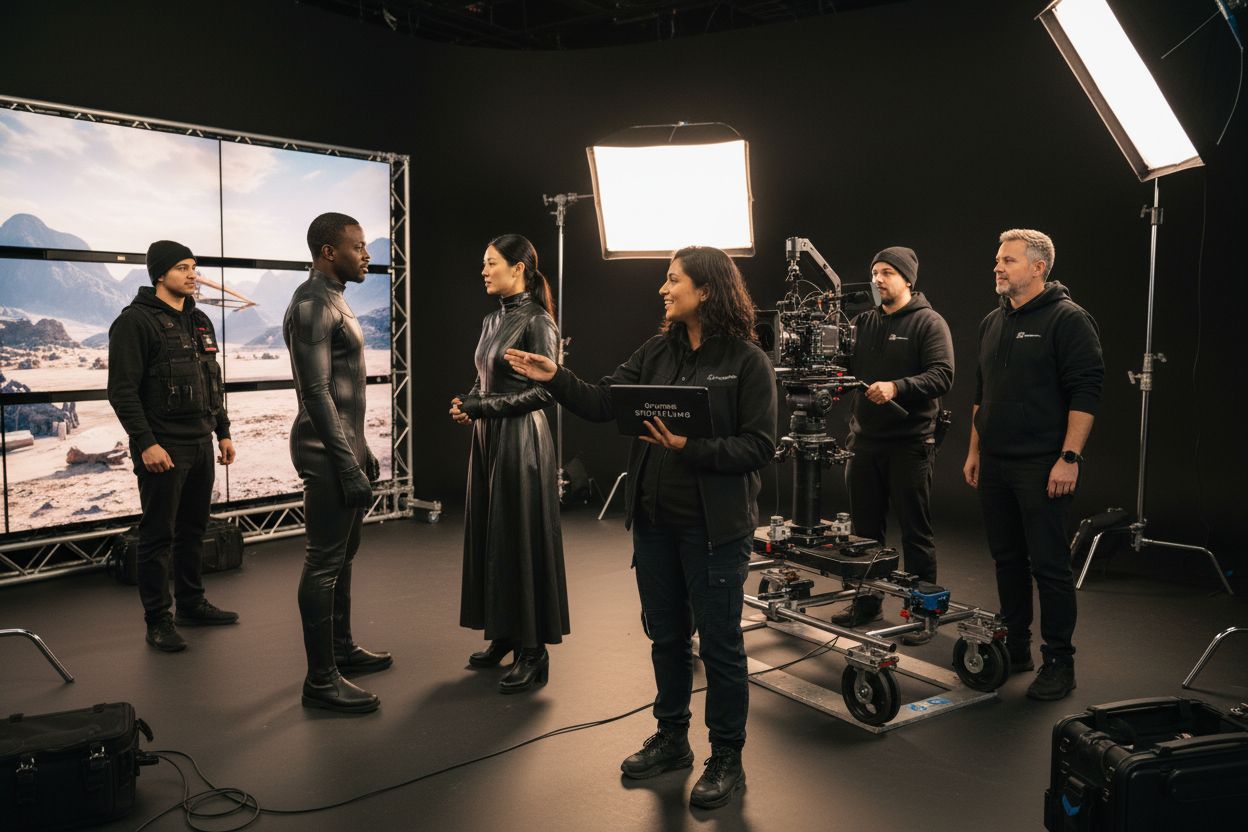
Modern television production has transcended traditional filmmaking techniques. High-resolution digital cameras, sophisticated computer-generated imagery (CGI), and advanced motion capture technologies enable creators to realize complex visual narratives previously impossible. Cinematic quality is no longer restricted to big-screen productions. Shows like “The Mandalorian” demonstrate how virtual production environments can create entire worlds with unprecedented realism and efficiency.
The integration of real-time rendering technologies allows directors to visualize complex scenes instantaneously, reducing production time and increasing creative flexibility. Green screen technologies have evolved into immersive LED volume stages, where entire backgrounds can be generated digitally during filming, eliminating traditional post-production constraints.
Remote Collaboration and Cloud-Based Workflows
The COVID-19 pandemic accelerated technological adaptation in television production. Remote collaboration tools and cloud-based workflows have become standard, enabling global teams to work seamlessly across different locations. Explore the future of TV production and how technology is breaking traditional production barriers.
Key technological capabilities now include:
- Real-time video editing across global locations
- Cloud-based asset management and sharing
- Virtual production meetings and script development
- Distributed visual effects rendering
Artificial Intelligence in Content Creation
Artificial intelligence is emerging as a transformative force in TV production. Machine learning algorithms assist in script analysis, predicting audience engagement, and even generating initial script drafts. AI-powered tools can now analyze historical viewing data to provide insights into potential storylines, character development, and narrative structures.
Advanced neural networks are being employed to create hyper-realistic digital actors, potentially revolutionizing casting and character representation. As these technologies continue to evolve, the boundaries between human creativity and technological assistance will become increasingly blurred, promising an exciting future for television production.
Why Diverse Storytelling Matters in 2025
Diversity in storytelling has transformed from a progressive ideal to a critical business and creative imperative. Global media research reveals that inclusive narratives are not just socially responsible but economically strategic, reflecting the complex demographic realities of contemporary audiences.
Cultural Representation and Audience Connection
In 2025, television serves as a powerful medium for authentic cultural representation. Audiences demand narratives that reflect their lived experiences, moving beyond tokenistic representation to nuanced, multilayered storytelling. Shows that genuinely explore diverse perspectives attract broader viewership and create deeper emotional resonance.
This shift goes beyond racial and ethnic diversity. Contemporary storytelling encompasses intersectional narratives that explore complex identities, including experiences related to gender, sexuality, disability, and socioeconomic backgrounds. Discover more about inclusive media trends that are reshaping entertainment landscapes.
Economic and Creative Advantages
Diverse storytelling is not just a moral imperative but a significant competitive advantage. Research consistently demonstrates that inclusive content generates:
- Higher audience engagement rates
- Increased international market penetration
- More robust critical acclaim
- Enhanced brand reputation for streaming platforms
Breaking Traditional Narrative Constraints
Traditional storytelling often relied on narrow, stereotypical character representations. Contemporary television challenges these limitations by presenting complex, multidimensional characters from historically marginalized communities. This approach not only provides more accurate representation but also unlocks innovative narrative possibilities.
As global interconnectedness increases, television becomes a critical platform for cross-cultural understanding. Diverse storytelling allows audiences to experience perspectives different from their own, fostering empathy, challenging preconceptions, and creating a more nuanced global dialogue through the powerful medium of visual storytelling.
The following table highlights the main advantages of diverse storytelling in TV for 2025, focusing on both cultural impact and business benefits.
| Advantage | Description |
|---|---|
| Cultural Representation | Authentic, multilayered narratives reflecting lived experiences of varied communities |
| Audience Connection | Deeper emotional resonance and broader engagement across demographic groups |
| Economic Benefits | Higher audience engagement, increased market reach, stronger critical and brand success |
| Creative Innovation | Breaking stereotypes, enabling new storytelling formats, showcasing complex identities |
| Social Responsibility | Promotes empathy, challenges preconceptions, advances cross-cultural understanding |
Future Predictions: Where are TV Shows Headed?
Television is undergoing a radical transformation, driven by technological innovations, changing viewer behaviors, and evolving storytelling paradigms. Entertainment industry forecasts suggest a complex, multifaceted future where traditional boundaries between content creation and consumption continue to blur.
Immersive and Interactive Storytelling
The next frontier of television focuses on breaking the fourth wall of passive viewing. Emerging technologies are enabling viewers to become active participants in narrative experiences**,** with interactive storytelling formats allowing audience members to influence plot trajectories. Shows will increasingly incorporate elements of choose-your-own-adventure mechanics, leveraging advanced AI and branching narrative technologies.
Virtual and augmented reality platforms are poised to revolutionize how audiences experience television. Imagine watching a crime drama where you can virtually walk through crime scenes or participate in investigative processes. Explore the cutting edge of TV innovations that are reshaping entertainment consumption.
Personalization and Algorithmic Content Creation
Artificial intelligence will play an increasingly sophisticated role in content generation and recommendation. Predictive algorithms will not just suggest shows but potentially co-create narrative experiences tailored to individual viewer preferences. Key developments include:
- Hyper-personalized content recommendations
- AI-assisted script generation
- Dynamic narrative adaptation based on viewer interactions
- Real-time content modification
Global and Cross-Platform Storytelling
Television in 2025 will transcend traditional geographic and platform limitations. Multilingual productions, simultaneous global releases, and seamless cross-platform experiences will become standard. Streaming services will invest heavily in content that can simultaneously appeal to diverse international audiences, breaking down cultural and linguistic barriers.
The future of television is not about passive consumption but active engagement. As technology continues to evolve, the line between viewer and creator will become increasingly blurred, promising an unprecedented era of interactive, personalized, and globally connected storytelling experiences.
Stay Ahead of 2025 TV Trends—Never Miss What Matters
Are you feeling overwhelmed with the rapid changes in TV show trends and the flood of new streaming content? The article on “Understanding TV Show Trends in 2025” highlights just how fast viewing habits, technology, and diverse storytelling have reshaped what audiences expect, making it harder than ever to keep up. If you want to avoid missing out on the biggest premieres, top-rated series, or breaking entertainment updates, you need one reliable source.

Sparetimetv.com provides everything covered in the latest trends—personalized TV guides, structured updates on streaming premieres and movie listings, and the most current schedules for major networks and platforms. With our up-to-date TV guides and schedules, you get quick access to what is trending now and what’s coming next. Explore detailed features on new releases and future predictions so you can plan your viewing and enjoy television just the way you like it. Discover why more fans are turning to Sparetimetv.com to transform the way they choose what to watch. Visit now and stay ahead in the evolving world of TV entertainment.
Frequently Asked Questions
What are the key trends in TV shows expected in 2025?
Major trends include immersive and interactive storytelling, advanced personalization through AI, global and cross-platform storytelling, and an emphasis on diverse and inclusive narratives.
How will technology impact the way we experience TV shows in 2025?
Technological advancements, such as virtual and augmented reality, as well as AI-driven content creation, will allow viewers to engage more actively with narratives and influence storylines in real-time.
Why is diversity in storytelling important for TV shows?
Diversity in storytelling promotes authentic cultural representation, engages broader audiences, and enhances emotional connection. It also provides economic advantages by attracting higher viewership and critical acclaim.
What role does AI play in the future of TV show production?
AI is expected to assist in script generation, optimize content recommendations, and create dynamic narratives tailored to individual viewer preferences, significantly transforming the production and consumption of TV shows.