
Understanding What is Nielsen Rating and Its Impact
Nielsen Ratings decide what ends up on your TV screen and which shows get canceled, yet most people have no idea how these numbers are created.
Turns out only about 5,000 to 10,000 carefully selected households shape what the entire country ends up watching. You might expect everything is measured digitally and automatically, but the backbone of this system is still a small group with specialized meters in their living rooms—meaning your favorite show’s fate could rest with just a few thousand remote controls.
Table of Contents
- What Is Nielsen Rating And Its Purpose
- The Importance Of Nielsen Ratings In The Entertainment Industry
- How Nielsen Ratings Are Collected And Analyzed
- Key Concepts Behind Nielsen Ratings: Ratings, Shares, And Trends
- Real-World Impact Of Nielsen Ratings On TV Shows And Movies
Quick Summary
| Takeaway | Explanation |
|---|---|
| Nielsen Ratings measure viewer engagement | Nielsen Ratings provide a percentage of potential viewers watching a specific program, vital for assessing audience interest. |
| Ratings influence programming decisions | Television networks rely on Nielsen Ratings to determine show cancellations, renewals, and scheduling based on viewership data. |
| High ratings equate to higher advertising revenue | Programs with strong Nielsen Ratings attract premium advertising rates, crucial for financial viability in the media industry. |
| Demographic insights guide content creation | Nielsen Ratings offer detailed demographic breakdowns, helping networks create targeted programming that resonates with specific audience segments. |
| Ratings adapt to include digital platforms | Nielsen has evolved to incorporate data from streaming services, ensuring its relevance in a changing media landscape. |
What is Nielsen Rating and Its Purpose
Nielsen Ratings represent a critical measurement system in the television and media industry that tracks audience viewership and provides comprehensive data about television program consumption. Originally developed by Arthur C. Nielsen Sr. in the 1930s, this methodology has become the standard for understanding media consumption patterns across the United States.
Understanding Nielsen Rating Mechanics
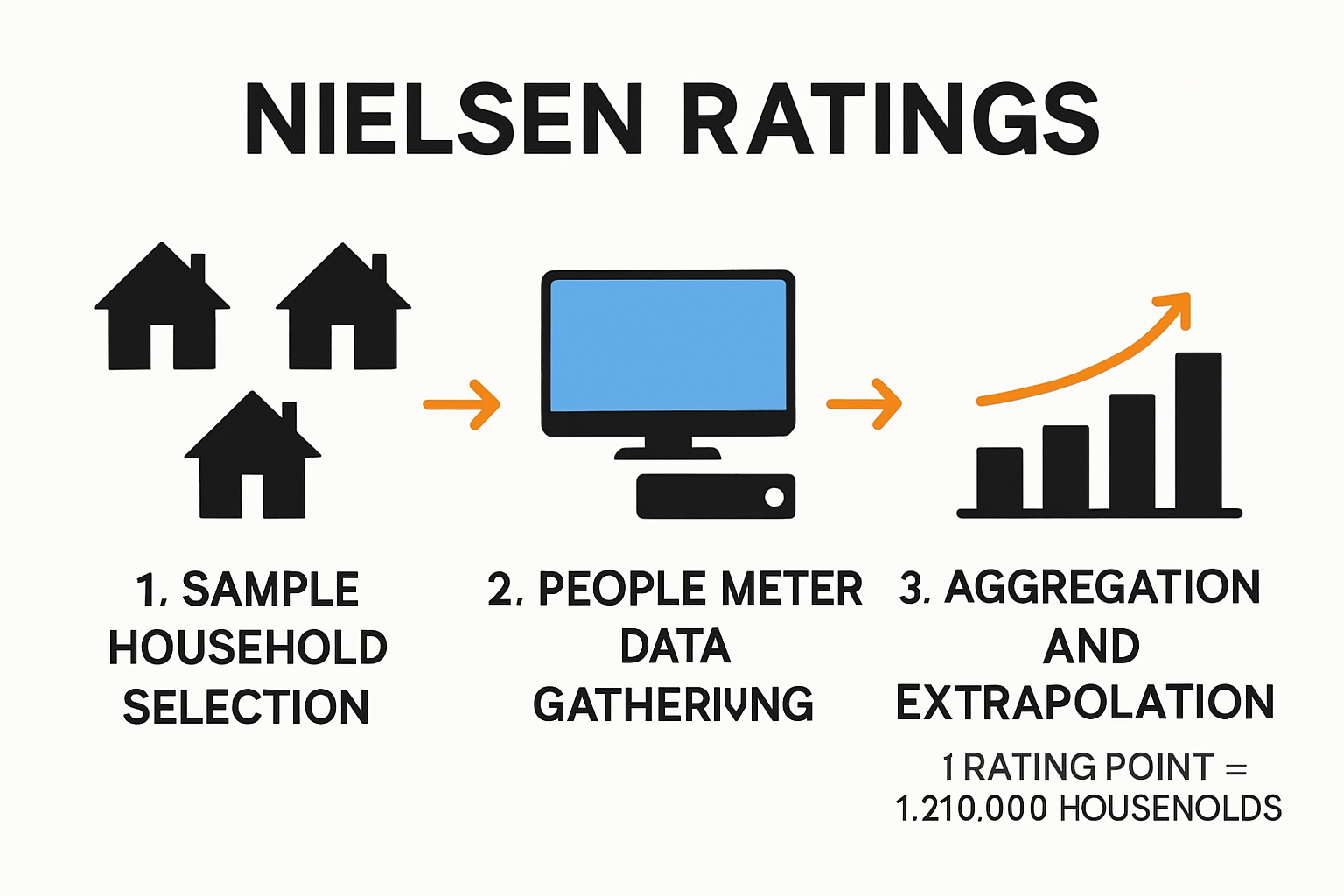
The Nielsen Rating system works by collecting data from a carefully selected representative sample of households. These households are equipped with specialized tracking devices that monitor what shows are being watched, when they are watched, and by whom. Key aspects of the Nielsen Rating process include:
- Randomly selecting a statistically representative group of households
- Using electronic measurement devices to track viewing habits
- Converting raw viewership data into percentage ratings
- Extrapolating sample data to estimate national viewership
The percentage generated represents the proportion of total potential viewers who watched a specific program. For instance, a Nielsen Rating of 10 means approximately 10% of all potential television viewers were watching that particular show during its broadcast time.
Purpose and Industry Impact
Nielsen Ratings serve multiple crucial functions in the media and advertising ecosystem. Networks, advertisers, and content creators rely on these ratings to make strategic decisions about programming, advertising rates, and audience targeting. According to Nielsen Media Research, the ratings provide an authoritative measurement of audience engagement that directly influences millions of dollars in advertising revenue.
Television networks use Nielsen Ratings to determine which shows should continue, be canceled, or receive prime time slots. Advertisers utilize these ratings to decide where to place their commercials, understanding that higher-rated shows offer more exposure and potentially better return on investment. The ratings essentially serve as a currency in the television advertising marketplace, translating viewer attention into economic value.
While digital streaming platforms have challenged traditional Nielsen measurement methods, the company has evolved to include digital and streaming viewership in its comprehensive tracking, ensuring its continued relevance in the modern media landscape.
The Importance of Nielsen Ratings in the Entertainment Industry
Nielsen Ratings play a pivotal role in shaping the television and media landscape, serving as a critical barometer of audience engagement and content performance. Beyond mere numbers, these ratings represent a complex ecosystem that influences programming decisions, advertising strategies, and ultimately, the financial health of entertainment networks.
Economic Impact and Content Valuation
The economic significance of Nielsen Ratings cannot be overstated. Television networks rely on these metrics to determine the financial viability of their programming. A show’s rating directly translates into advertising revenue, with higher-rated programs commanding premium advertising rates. Networks invest millions in producing content, and Nielsen Ratings provide the crucial data that helps them understand which shows resonate with audiences.
Key economic considerations include:
- Measuring potential advertising revenue
- Evaluating show sustainability
- Determining production budgets
- Identifying audience demographic trends
Strategic Programming and Audience Insights
Networks use Nielsen Ratings as a strategic tool for understanding viewer preferences. These ratings offer detailed insights into audience behavior, helping content creators and network executives make informed decisions about programming. Explore our comprehensive guide on TV rankings to understand how these ratings influence television programming.
The data goes beyond simple viewership numbers. Nielsen Ratings provide granular information about demographic breakdowns, viewing habits, and audience engagement. This information is crucial for networks seeking to develop content that appeals to specific target audiences.
Cultural and Industry Influence
According to Nielsen Media Research, these ratings do more than measure viewership they reflect broader cultural trends and viewer preferences. A high Nielsen Rating can transform a relatively unknown show into a cultural phenomenon, while consistently low ratings can lead to a show’s cancellation.
The ratings system has evolved with technological changes, now incorporating streaming and digital platforms. This adaptation ensures that Nielsen remains a relevant and powerful tool in understanding media consumption in an increasingly fragmented entertainment landscape. By providing a standardized measurement of audience engagement, Nielsen Ratings continue to be an indispensable resource for networks, advertisers, and content creators alike.
How Nielsen Ratings are Collected and Analyzed
Nielsen Ratings represent a sophisticated data collection and analysis process that transforms raw television viewership information into actionable insights for the entertainment industry. The methodology combines advanced technological tracking with rigorous statistical sampling techniques to provide comprehensive audience measurement.
Sample Selection and Household Representation
The foundation of Nielsen Ratings lies in creating a statistically representative sample of households that accurately reflects the broader television-watching population. This selection process is meticulous, involving careful demographic consideration to ensure diversity across geographic regions, income levels, age groups, and viewing preferences.
Key elements of sample selection include:
- Random household recruitment
- Comprehensive demographic screening
- Ensuring geographic and cultural diversity
- Maintaining a representative cross-section of viewers
Selected households are equipped with specialized electronic measurement devices called People Meters that track every television viewing instance. These devices record precise details such as who is watching, what program is being viewed, and the exact duration of viewing.
Data Collection and Technology
Nielsen employs multiple technological approaches to gather viewing data. Explore our comprehensive overview of TV ratings tracking to understand the evolution of these measurement techniques. The primary method involves installing sophisticated electronic tracking devices in selected households that automatically log viewing habits.
Modern Nielsen measurement goes beyond traditional television, incorporating streaming platforms, digital devices, and on-demand content. The technology captures:
- Live television viewing
- Recorded program consumption
- Streaming platform engagement
- Multi-device viewing patterns
Statistical Analysis and Extrapolation
According to Tulane University’s Media Research Department, the raw data collected is transformed through complex statistical algorithms. These algorithms extrapolate the sample data to estimate national viewership, accounting for variables like population demographics, viewing time, and content type.
The final Nielsen Rating represents a percentage of total potential viewers, with each rating point equating to approximately 1.1 million television households in the United States. This precise methodology allows networks, advertisers, and content creators to make informed decisions about programming, advertising strategies, and audience targeting.
To better understand how the Nielsen Ratings process works from selection to statistical analysis, here are the main components organized for quick reference:
| Stage | Description |
|---|---|
| Sample Selection | Statistically chosen households represent geographic, demographic, and cultural diversity. |
| Household Representation | Selected households use People Meters to track who watches and what is viewed. |
| Data Collection | Electronic tracking devices automatically log live TV, recorded, and streaming program viewing. |
| Technology | Incorporates tracking of traditional TV, streaming platforms, and multiple devices. |
| Statistical Analysis & Extrapolation | Raw data is processed using algorithms to estimate national viewership, accounting for all population variables. |
Key Concepts Behind Nielsen Ratings: Ratings, Shares, and Trends
Nielsen Ratings utilize several complex metrics to provide comprehensive insights into television viewership. Understanding these key concepts is crucial for interpreting the intricate landscape of media consumption and audience engagement.
Understanding Ratings and Shares
Nielsen Ratings represent the percentage of total potential viewers watching a specific program. Key characteristics of ratings include:
- Calculated as a percentage of total television households
- Each rating point represents approximately 1.1 million households
- Directly reflects the proportion of viewers for a particular show
- Used to determine program popularity and advertising value
In contrast, Share measures the percentage of televisions in use during a specific time slot that are tuned to a particular program. Check out our comprehensive guide on TV ranking trends to understand how these metrics evolve over time.
Interpreting Viewership Trends
Viewership trends reveal critical insights into audience behavior and media consumption patterns. According to EBSCO Research Communications, these trends help networks and advertisers understand shifting audience preferences.
Significant trend analysis factors include:
- Demographic viewing patterns
- Time-based consumption changes
- Cross-platform media engagement
- Seasonal viewing variations
Advanced Measurement Techniques
Modern Nielsen measurement goes beyond traditional television ratings, incorporating advanced techniques to capture comprehensive audience data. The system now tracks multiple viewing platforms, including streaming services, on-demand content, and digital devices.
The complexity of these measurement techniques allows for nuanced understanding of viewer behavior. By analyzing ratings, shares, and trends, media professionals can make informed decisions about programming, advertising strategies, and content development. This multi-dimensional approach ensures that Nielsen Ratings remain a critical tool in understanding the ever-evolving media landscape.
Here is a comparison of the key Nielsen concepts: ratings, shares, and trends. This summary helps clarify their distinct meanings and uses in the media industry.
| Concept | What It Measures | Calculation Basis | Main Use |
|---|---|---|---|
| Rating | Percentage of total potential TV households watching a program | % of all households with TVs | Gauges program popularity and sets ad value |
| Share | Percentage of TVs in use during a time slot tuned to a program | % of active TVs during broadcast | Measures competitiveness during specific time slots |
| Trend | Changes in viewer patterns and demographics over time | Time-based, across episodes/seasons | Tracks audience behavior and informs programming |
Real-World Impact of Nielsen Ratings on TV Shows and Movies
Nielsen Ratings serve as a powerful determinant in the entertainment industry, directly influencing the lifecycle of television shows and movies. These seemingly abstract numbers can spell the difference between a show’s survival and cancellation, making them a critical factor in media decision-making.
Programming Survival and Network Decisions
Television networks rely heavily on Nielsen Ratings to make critical programming choices. A show’s rating becomes its lifeline, determining whether it continues to receive production funding or faces immediate cancellation. Key factors in these decisions include:
- Consistent viewership numbers
- Demographic appeal
- Cost of production versus audience engagement
- Potential for advertising revenue
Explore our in-depth analysis of TV ratings through the decades to understand how these metrics have evolved and shaped television history. Networks typically give shows a limited window to prove their worth, with low-performing programs often being swiftly replaced.
Financial Implications and Advertising Dynamics
According to NPR’s Media Research, Nielsen Ratings directly translate into financial outcomes for television productions. Advertisers use these ratings as a primary metric for determining where to invest their marketing budgets.
The financial ecosystem driven by Nielsen Ratings involves:
- Setting advertising rates
- Determining show sponsorship potential
- Evaluating return on investment for networks
- Predicting long-term content viability
Cultural and Creative Consequences
Beyond pure economics, Nielsen Ratings profoundly impact the creative landscape of entertainment. Shows with high ratings receive more resources, creative freedom, and opportunities for expansion. Conversely, low-rated programs might face creative constraints or premature termination.
This rating system creates a feedback loop where audience preferences directly influence future content creation. Successful shows spawn similar programs, while unique or niche content might struggle to find sustained support. The result is a dynamic entertainment ecosystem where viewer engagement becomes the primary currency of creative survival.

Unlock the Power of TV Ratings for Smarter Viewing Choices
Are you frustrated by confusing TV schedules or uncertain about which shows are truly worth your time? Understanding Nielsen Ratings can highlight what audiences are really watching, but translating that data into actual viewing decisions is not always easy. Nielsen concepts like ratings, shares, and trends are powerful tools, but only if you know where to find up-to-date, organized information. This is where guessing or relying on old habits could make you miss out on top-rated or trending titles.

Experience a new way to stay on top of television and streaming trends with Sparetimetv.com. Our detailed TV ranking pages bring the world of Nielsen Ratings to your fingertips, showing you real-time lists of the most popular primetime programs and streaming hits. With our regularly updated TV guides and movie schedules, you can stop relying on guesswork and start watching what matters now. Visit Sparetimetv.com today for an easier, smarter approach to TV and movie selection.
Frequently Asked Questions
What is a Nielsen Rating?
Nielsen Ratings are a measurement system that tracks television viewership and assesses audience engagement by sampling households to provide insights into program consumption.
How does Nielsen collect viewership data?
Nielsen collects data from a statistically selected group of households equipped with electronic measurement devices called People Meters, which monitor viewing habits, including what shows are watched and by whom.
Why are Nielsen Ratings important for television networks?
Nielsen Ratings are crucial as they determine programming decisions, influence advertising rates, and reflect audience preferences, helping networks understand which shows to continue, cancel, or promote.
How have Nielsen Ratings evolved with digital platforms?
Nielsen has adapted its measurement techniques to include data from streaming services and digital content, ensuring comprehensive tracking of audience engagement across various viewing platforms.