
What is a Clip Show? Understanding This TV Format
A clip show might seem like television’s shortcut, built from recycled scenes and fleeting moments from earlier episodes. Yet get this. Some of the most viewed TV compilations have drawn in over 20 million live viewers during their first airing. It turns out these episodes are not lazy filler at all. Instead, they turn memory into entertainment and let us experience our favorite stories again with brand new meaning.
Table of Contents
- Defining A Clip Show: What Is It And How It Works
- The Purpose Of Clip Shows: Why They Matter In TV
- The Structure Of Clip Shows: How They Are Structured
- Cultural Impact Of Clip Shows: Audience Reception And Trends
Quick Summary
| Takeaway | Explanation |
|---|---|
| Clip shows remix existing footage | They curate past episodes to create a new narrative experience for viewers. |
| Cost-effective program strategy | Clip shows allow producers to save on production costs by using already shot material. |
| Enhances viewer engagement | These compilations connect viewers emotionally with significant series moments. |
| Transform fragmented moments into narratives | They provide cohesive storytelling through thematic connections and meta-commentary. |
| Serve varied narrative purposes | Clip shows can recap complex stories, celebrate milestones, and introduce new viewers. |
Defining a Clip Show: What is it and How it Works
A clip show is a television program format that compiles and repackages previously aired footage from an existing series, presenting segments from past episodes in a new, thematically connected narrative. Unlike standard reruns, clip shows intentionally curate specific scenes to create a fresh viewing experience that revisits memorable moments, highlights, or explores a particular theme within the show’s history.
The Mechanics of Clip Show Construction
Clip shows are strategically designed to achieve multiple objectives. They serve as both nostalgic retrospectives and cost-effective programming solutions. By assembling existing footage, television producers can create entirely new episodes without the extensive production costs associated with filming original content. According to the Library of Congress, these programs involve carefully selecting “short segments” or “television program clips” that represent the most engaging aspects of a series.
The construction of a clip show typically involves several key processes:
- Reviewing extensive archives of existing episode footage
- Identifying thematically relevant or particularly memorable scenes
- Crafting a narrative framework that connects these disparate clips
- Adding new transitional commentary or context
Purposes and Variations of Clip Shows
While often perceived as a budget-friendly programming strategy, clip shows serve multiple purposes in television production. They can function as:
- Retrospective celebrations of long-running series
- Recap episodes for complex narrative storylines
- Introductory summaries for new viewers
- Commemorative episodes marking significant milestones
Some clip shows go beyond simple compilation, incorporating new narrative elements like host commentary, behind-the-scenes insights, or comedic recontextualization of previous scenes. This approach transforms the clip show from a mere montage into an engaging, reflective viewing experience that offers audiences a unique perspective on familiar content.
To clarify the varied objectives and creative approaches of clip shows discussed above, here is a table contrasting the main purposes and key variations found in television clip shows.
| Purpose / Variation | Description |
|---|---|
| Retrospective Celebration | Honors a series by revisiting memorable moments, often for anniversaries or show milestones. |
| Recap for Complex Storylines | Summarizes intricate plot arcs to help viewers recall or catch up with ongoing narratives. |
| Introductory Summary for New Fans | Introduces new viewers to the show quickly by highlighting key events and character developments. |
| Budget-Friendly Programming | Fills programming slots cost-effectively without shooting new episodes. |
| Milestone Commemoration | Marks special events (e.g., 100th episode) with curated, themed collections of past scenes. |
| Host Commentary/Behind-the-Scenes | Includes new content (e.g., cast or creator insights) to provide added value beyond simple clips. |
The Purpose of Clip Shows: Why They Matter in TV
Clip shows represent a unique television format that transcends mere recycling of existing content, serving critical narrative and audience engagement functions within the entertainment landscape. These carefully curated compilations offer more than nostalgic retrospectives, functioning as strategic communication tools that connect viewers with a series’ broader context and emotional resonance.
Economic and Creative Storytelling Strategies
From a production perspective, clip shows provide television networks with a cost-effective programming solution.
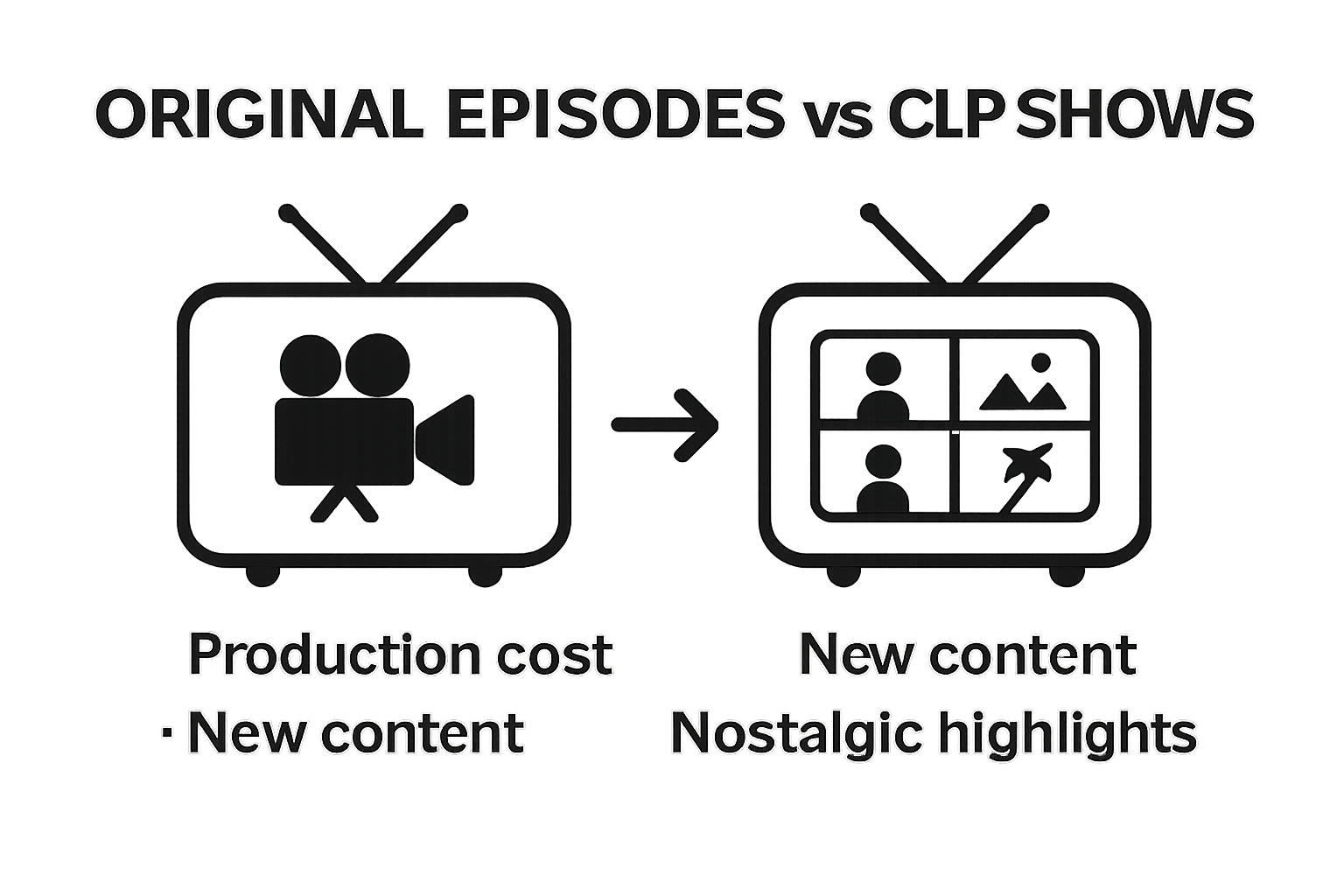 By repurposing existing footage, producers can generate new content without the substantial expenses associated with original episode production. Research from learning video studies suggests that such compilations can actually enhance viewer comprehension and retention of key narrative elements.
The strategic purposes of clip shows include:
- Reinforcing complex narrative arcs
- Introducing new viewers to established storylines
- Celebrating milestone moments in a series
- Providing budget-friendly programming alternatives
Audience Engagement and Narrative Reflection
Beyond economic considerations, clip shows serve profound psychological and emotional functions for audiences. They offer viewers an opportunity to revisit and recontextualize memorable moments, creating a meta-narrative experience that goes beyond traditional episodic storytelling. By exploring our guide on TV series dynamics, audiences can understand how such compilation formats contribute to the broader media landscape.
Clip shows also function as powerful storytelling devices that:
- Highlight character development trajectories
- Create thematic connections across multiple episodes
- Provide narrative summaries for complex storylines
- Generate renewed interest in long-running series
Ultimately, clip shows represent more than a programming convenience. They are sophisticated narrative tools that transform fragmented television experiences into cohesive, meaningful storytelling experiences, bridging past and present for engaged viewers.
The Structure of Clip Shows: How They Are Structured
Clip shows exhibit a nuanced organizational framework that transforms fragmented television moments into cohesive narrative experiences. Unlike standard episode formats, these compilations require intricate planning and strategic content selection to maintain viewer engagement and narrative coherence.
Architectural Elements of Clip Show Construction
According to Wikipedia, clip shows typically incorporate a “frame story” where cast members recall and recontextualize previous events through carefully selected flashback sequences. This structural approach allows producers to create a meta-narrative that provides additional commentary and perspective on existing content.
The primary architectural components of clip shows include:
- Narrative framing device
- Thematic segment selection
- Transitional commentary
- Retrospective analysis
Organizational Strategies for Content Compilation
Producers employ multiple strategies when organizing clip show content, each designed to achieve specific narrative and viewer engagement objectives. Learn more about television programming techniques to understand the broader context of these compilation approaches.
Clip shows typically follow several key organizational principles:
- Chronological narrative progression
- Thematic character journey exploration
- Emotional moment highlights
- Comprehensive series storytelling
The selection and arrangement of clips require meticulous attention to storytelling dynamics. Producers must balance viewer nostalgia with meaningful narrative progression, ensuring that each compiled segment contributes to a larger understanding of the series’ emotional and narrative landscape. This approach transforms clip shows from mere content recycling into sophisticated storytelling experiences that offer audiences a unique retrospective lens.
Here is a table summarizing the core structural features and organizational strategies used in constructing clip shows, as discussed in the article.
| Structural Feature/Strategy | Role in Clip Show Construction |
|---|---|
| Narrative Framing Device | Sets up a context or story to connect previously seen clips and provide continuity. |
| Thematic Segment Selection | Groups clips by storyline or theme to give the episode coherence and narrative focus. |
| Transitional Commentary | Adds new dialog or narration to guide the audience and link diverse segments together. |
| Chronological Organization | Orders clips by episode or character progression to summarize overall series development. |
| Emotional Highlight Focus | Includes scenes meant to evoke nostalgia or strong reactions, anchoring viewer engagement. |
| Retrospective Analysis | Offers cast/creator reflections or meta-commentary, deepening the viewer’s understanding. |

Cultural Impact of Clip Shows: Audience Reception and Trends
Clip shows represent more than mere television programming. They serve as complex cultural artifacts that reflect and shape audience perceptions, transforming how viewers understand and interact with narrative media. These compilation episodes offer a unique lens through which audiences reexamine and reinterpret television storytelling.
Audience Engagement and Narrative Memory
An empirical study on TV series consumption highlights how compilation formats influence cultural knowledge and audience interpretation. Clip shows function as narrative memory repositories, allowing viewers to revisit and recontextualize significant moments within a series’ broader storytelling landscape.
Key audience engagement mechanisms include:
- Nostalgic emotional reconnection
- Comprehensive narrative synthesis
- Collective memory preservation
- Critical retrospective analysis
Sociocultural Interpretation and Media Consumption
Clip shows demonstrate remarkable adaptability across different television genres and cultural contexts. Explore the evolution of television programming to understand the broader implications of these compilation formats. They serve as sophisticated communication tools that transcend simple content recycling, enabling audiences to develop more nuanced understandings of complex narrative arcs.
The sociocultural dimensions of clip shows manifest through:
- Generational storytelling transmission
- Cultural narrative preservation
- Audience participation and shared experience
- Critical reflection on media representation
Ultimately, clip shows represent a dynamic interaction between producers, audiences, and existing narrative content. They transform fragmented television experiences into cohesive cultural conversations, inviting viewers to engage with media in more reflective and interpretive ways.
See TV Clip Show Classics and Never Miss a Series Milestone
Do you ever find yourself trying to recall iconic TV moments or needing a quick refresher on your favorite series after reading about the power and impact of clip shows? Clip shows thrive on nostalgia and carefully curated highlights, yet searching for broadcast schedules, top-rated episodes, or upcoming streaming premieres can leave fans frustrated and in the dark about when and where to watch these recap specials.
Let Sparetimetv.com be your trusted companion for all things TV and movies. Here, you can explore detailed primetime guides, streaming updates, and curated rankings that make finding your next binge as easy as possible. Stay ahead of new and classic clip show episodes, discover the latest trending titles on platforms like Netflix, and quickly access upcoming schedules. Visit Sparetimetv.com right now to keep your TV experience connected and organized. Dive into nostalgia and never miss a highlight again.
Frequently Asked Questions
What exactly is a clip show in television?
A clip show is a television program format that compiles and repackages previously aired footage from an existing series, presenting segments from past episodes in a thematically connected narrative.
What are the main purposes of clip shows?
Clip shows serve multiple purposes, including as nostalgic retrospectives, budget-friendly programming alternatives, recap episodes for complex storylines, and celebratory summaries marking significant milestones in a series.
How are clip shows constructed?
Clip shows are constructed by reviewing extensive archives of existing episode footage, selecting thematically relevant or memorable scenes, crafting a narrative framework, and potentially adding new commentary or context to connect the clips.
What impact do clip shows have on audience engagement?
Clip shows enhance audience engagement by allowing viewers to revisit memorable moments, create thematic connections across episodes, and provide narrative summaries that help them understand complex storylines better.