
What is a TV Pilot? Understanding Its Importance and Structure
TV pilots are the lifeblood of every show you binge. Networks have spent as much as several million dollars on a single pilot episode just to decide if a series lives or dies. Most people expect these pilots to be mini versions of the show but the real surprise is that they are high-stakes experiments loaded with pressure to prove market potential in just one hour. A pilot is not just about entertainment. It is a strategic gamble where one episode can make or break the future of an entire series.
Table of Contents
- Defining A TV Pilot: Basic Concepts And Purpose
- The Importance Of A Pilot In Television Production
- How TV Pilots Are Developed And Evaluated
- Key Elements That Make A Strong TV Pilot
- The Role Of Pilots In Streaming And Network Television
Quick Summary
| Takeaway | Explanation |
|---|---|
| TV pilots are foundational episodes | They serve as a proof of concept for series viability, crucial for moving forward with production. |
| Pilots assess risk and market potential | Networks evaluate narrative strength, character dynamics, and potential audience appeal in pilots to mitigate financial risks. |
| A strong pilot showcases key characters and conflicts | Successful pilots introduce compelling characters and establish central conflicts to engage viewers emotionally from the start. |
| The pilot process has evolved with streaming | Streaming platforms often skip traditional pilots, using data analytics to greenlight series directly based on predicted success. |
| Quality visual storytelling is essential | Pilots must balance narrative structure and visual elements to effectively communicate the show’s tone and intent. |
Defining a TV Pilot: Basic Concepts and Purpose
A TV pilot is the foundational episode of a potential television series, serving as a critical proof of concept for producers, networks, and streaming platforms. This introductory episode represents the creative vision, narrative potential, and overall tone of a proposed show, essentially functioning as a visual pitch that determines whether a series will move forward into full production.
What Exactly is a TV Pilot?
At its core, a TV pilot is more than just an initial episode. According to Domestika’s audiovisual guide, it serves as a prototype designed to sell an audiovisual product to producers and distributors. Writers and creators use this single episode to showcase the series potential, introducing key characters, establishing the narrative world, and demonstrating the unique storytelling approach that will distinguish their project.
Key characteristics of a compelling TV pilot include:
- Introducing primary characters with depth and intrigue
- Establishing the central conflict or narrative premise
- Demonstrating the show’s distinctive tone and style
- Providing a glimpse into the potential narrative trajectory
The Strategic Purpose of a Pilot Episode
Pilots are not merely creative exercises but strategic tools in the entertainment industry. Networks and streaming platforms use these episodes to evaluate multiple critical aspects of a potential series. They assess audience engagement, character dynamics, production quality, and the overall marketability of the concept. A successful pilot must balance creative innovation with commercial viability, capturing the attention of both network executives and potential viewers.
Interested in understanding how television shows transform from initial concepts to screen? Check out our comprehensive guide on series development. The journey from pilot to series is complex, involving multiple evaluative stages that test a show’s potential for success in a competitive media landscape.
The Importance of a Pilot in Television Production
TV pilots represent far more than a simple first episode. They are sophisticated strategic instruments that function as critical decision-making tools within the complex television production ecosystem. These initial episodes carry immense weight, determining whether an entire series will receive the green light or be permanently shelved.
Financial and Creative Risk Assessment
Production companies invest substantial resources in developing potential television series. According to research from Grand Valley State University, pilots serve as comprehensive risk evaluation mechanisms. Networks use these episodes to assess multiple critical dimensions of a potential series, including:
- Narrative coherence and storytelling potential
- Character development and audience connection
- Production quality and technical execution
- Potential market appeal and demographic targeting
The financial implications of a pilot are significant. A single episode can represent an investment ranging from $500,000 to several million dollars, making the evaluation process extraordinarily precise and strategic.
Audience and Market Potential Exploration
Beyond internal production considerations, pilots function as experimental platforms for understanding audience engagement. Writers and producers use these episodes to test narrative concepts, character dynamics, and thematic approaches. The pilot becomes a litmus test for viewer interest, providing crucial feedback about whether a series concept can sustain long-term audience attention.
Want to explore how television shows evolve from initial concepts? Discover the intricate journey of series development and understand the complex mechanisms that transform creative ideas into full-fledged television productions.
How TV Pilots Are Developed and Evaluated
The journey from an initial television concept to a fully realized pilot episode is a complex, multifaceted process that involves creativity, strategic planning, and rigorous industry evaluation.
Writers and producers must navigate multiple stages to transform an abstract idea into a compelling visual narrative capable of capturing network attention.
The Creative Development Process
According to research from the University of Richmond, the pilot development process begins with meticulous concept crafting. Writers undertake several critical steps:
- Generating an original and compelling narrative premise
- Developing multidimensional characters with unique story arcs
- Creating a distinctive tone and narrative style
- Drafting a comprehensive script that demonstrates series potential
This initial phase requires writers to not only imagine a captivating story but also demonstrate its long-term sustainability and audience appeal. Originality and marketability become key differentiators in a highly competitive television landscape.
Pitching and Network Evaluation
Once a script is developed, creators enter the critical pitching stage. Television networks and streaming platforms conduct comprehensive assessments that extend far beyond narrative quality. They analyze multiple dimensions, including potential audience demographics, production feasibility, and alignment with current entertainment trends.
Interested in understanding the intricate world of television series creation? Explore our detailed guide on transforming creative concepts into screen-ready productions and uncover the nuanced strategies behind successful pilot development.
Key Elements That Make a Strong TV Pilot
Not all pilots are created equal. Some capture audience imagination instantly, while others struggle to make a lasting impression. Understanding the critical components that elevate a pilot from merely adequate to truly compelling is essential for writers and producers aiming to create memorable television series.
Narrative and Character Dynamics
According to No Film School, a powerful pilot hinges on high-stakes conflict and complex character development. Successful pilots do more than introduce characters they create immediate emotional investment. Key narrative elements include:
- Establishing a central conflict with genuine tension
- Presenting multidimensional characters with clear motivations
- Creating an intriguing narrative world with unique rules
- Demonstrating potential for future story exploration
The most compelling pilots craft characters that feel authentic and unpredictable, inviting viewers to invest emotionally in their journeys from the very first episode.
The following table organizes core features and criteria that distinguish a strong TV pilot, as outlined throughout the article.
| Key Element | Description |
|---|---|
| Compelling Character Dynamics | Introduces multidimensional characters with authentic motivations |
| Central Conflict | Presents engaging conflicts with genuine narrative tension |
| Unique Narrative World | Establishes a setting with distinctive rules and style |
| Structured Storytelling Approach | Balances exposition and momentum, setting tone for the series |
| Visual Storytelling & Production | Demonstrates technical and artistic excellence |
| Emotional Investment | Creates immediate viewer connection with characters and story |
Structural Integrity and Visual Storytelling
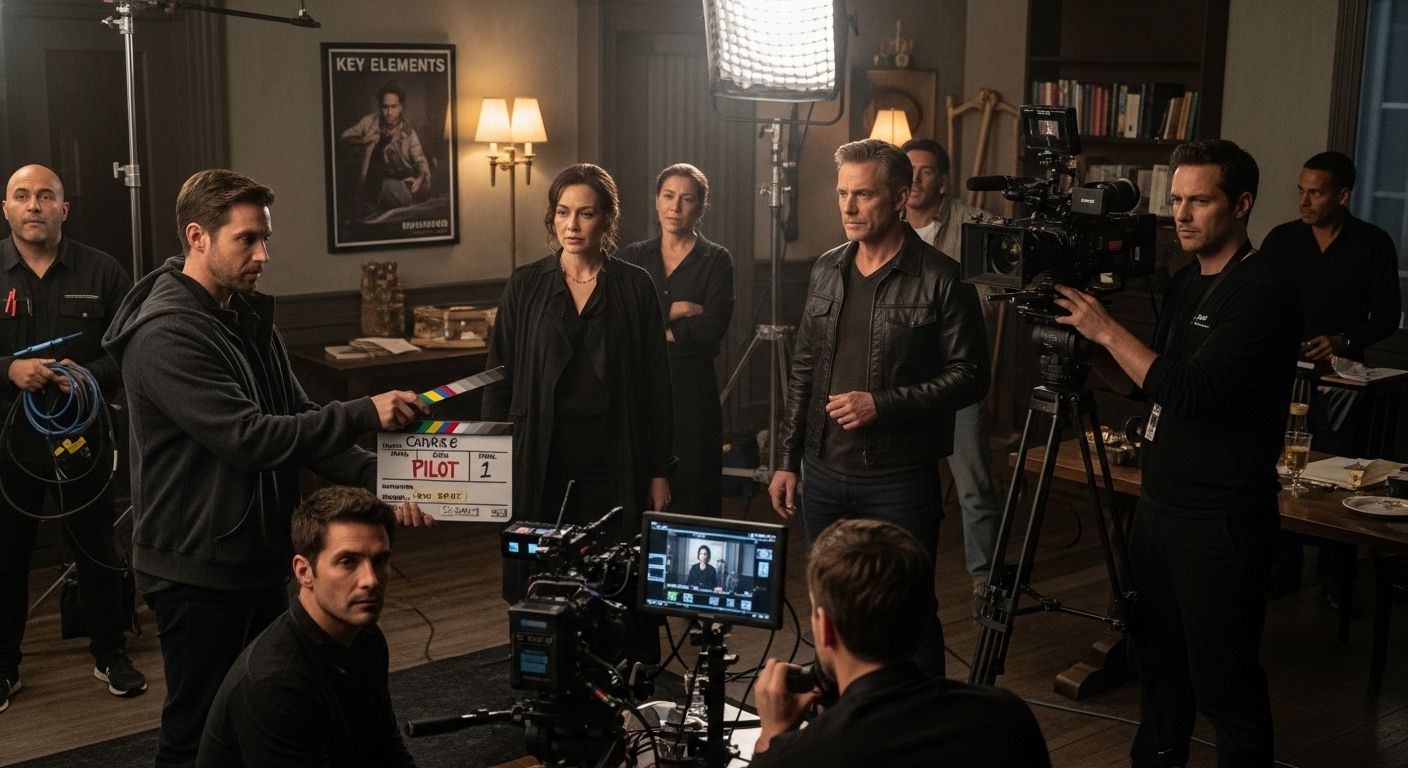
Beyond narrative, pilots must demonstrate technical and artistic excellence. This involves crafting a tightly structured episode that balances exposition, character introduction, and narrative momentum. Visual storytelling becomes crucial in communicating the series tone, style, and potential.
Want to explore how groundbreaking television series transform from initial concepts? Discover the intricate journey of series development and understand the nuanced strategies behind creating unforgettable television narratives.
The Role of Pilots in Streaming and Network Television
The television landscape has dramatically transformed, with streaming platforms and traditional networks adopting distinctly different approaches to pilot development. This evolution reflects changing viewer consumption patterns, technological advancements, and innovative content strategies that challenge conventional television production models.
To help clarify the traditional network and streaming approaches to TV pilots, here is a comparison of their evaluation and development processes.
| Approach | Key Process Steps | Evaluation Method | Typical Investment |
|---|---|---|---|
| Traditional Networks | Commission scripts, produce pilot, conduct audience/focus group testing, review | Manual, qualitative | $500,000 to several million |
| Streaming Platforms | Use data analytics, sometimes greenlight straight-to-series, skip test pilot | Analytics-driven, predictive | Varies, often full series |
Traditional Network Pilot Processes
According to Ampere Analysis, traditional television networks have experienced a significant decline in pilot episode orders. Networks historically relied on pilot episodes as crucial screening mechanisms, employing a methodical evaluation process that includes:
- Commissioning multiple pilot scripts
- Producing limited episode prototypes
- Conducting audience testing and focus group research
- Making final series greenlight decisions based on pilot performance
This traditional approach allowed networks to mitigate financial risks by thoroughly vetting potential series before full production commitments.
Streaming Platforms and Innovative Content Strategies
Streaming services have revolutionized content development by frequently bypassing traditional pilot models.
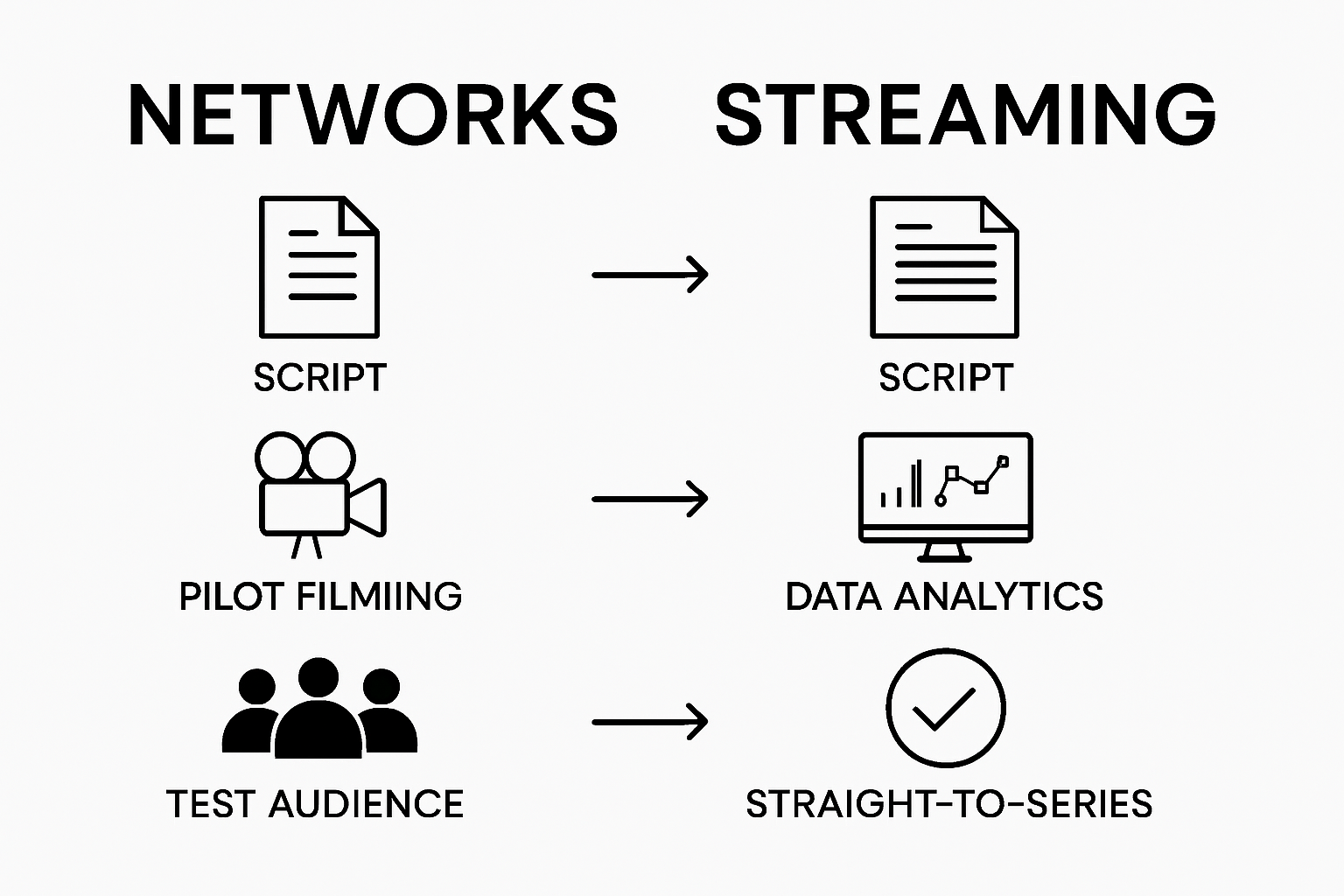 These platforms leverage sophisticated data analytics to predict series potential, often employing a ‘straight-to-series’ model that eliminates the conventional pilot stage.
Learn more about how television shows evolve from concept to screen and understand the intricate dynamics shaping modern entertainment production strategies.
Ready to Dive Deeper Into TV Pilots and Uncover What’s Next?
You have just learned how a TV pilot shapes the fate of an entire series by setting the stage, defining characters, and capturing attention right from the first episode. Many TV fans struggle to keep track of upcoming pilots, new premieres, and the ever-changing world of television. You want to be the first to know which shows make it past the challenging pilot phase and which ones are headed for your watchlist. If you are tired of searching multiple websites just to find reliable schedules, trending series, or the latest pilot updates, you are not alone.

Let SpareTimeTV.com be your trusted source for everything TV. Get instant access to TV guides, primetime schedules, and streaming updates — all tailored for passionate viewers like you. Ready to stay ahead and never miss a big pilot debut or a must-watch premiere? Visit our homepage right now, explore our blog posts on new TV productions, and take control of your viewing experience. Don’t let another show slip past your radar. Start exploring today.
Frequently Asked Questions
What is the primary purpose of a TV pilot?
A TV pilot serves as a proof of concept for a television series, showcasing the narrative potential, characters, and overall tone to producers and networks to decide whether to greenlight the full series.
What are the key elements that make a strong TV pilot?
A strong TV pilot typically includes compelling character dynamics, a central conflict that creates tension, a unique narrative world, and a structured storytelling approach that reflects the series’ overall tone and style.
How do network and streaming platforms differ in their approach to TV pilots?
Traditional networks often produce pilot episodes and conduct audience testing, while streaming platforms frequently use data analytics to opt for ‘straight-to-series’ models, bypassing the traditional pilot stage entirely.
Why are TV pilots considered high-stakes productions?
TV pilots represent significant financial investments, often costing hundreds of thousands to millions of dollars per episode, and serve as critical assessment tools to evaluate narrative potential, production quality, and audience appeal.