
What Is a TV Special? Complete Guide for Fans. Holiday events, live concerts, and surprise documentaries all have one thing in common: they draw in millions of viewers with content you can’t find in regular programming. TV specials have become major moments in entertainment, giving networks a way to spotlight unique performances and stories that go far beyond the ordinary. If you’ve ever wondered why nearly every network invests in these big productions, learning about the real purpose behind TV specials will change how you watch them.
Table of Contents
- Defining TV Specials And Their Purpose
- Major Types Of TV Specials Explained
- Unique Characteristics And Production Process
- How TV Specials Differ From Regular Series
- Common Pitfalls When Watching Or Recording
Key Takeaways
| Point | Details |
|---|---|
| Unique Programming Format | TV specials provide standalone content that breaks from traditional series, offering unique entertainment experiences. |
| Cultural Significance | These broadcasts serve to create memorable cultural moments and draw larger audiences for networks and streaming platforms. |
| Diverse Types | Common types of TV specials include holiday programming, musical performances, documentaries, and sporting event broadcasts. |
| Production Challenges | The production of TV specials involves significant planning, investment, and the potential for scheduling conflicts for viewers. |
Defining TV Specials and Their Purpose
TV specials are unique broadcast events that break away from standard television programming, offering viewers extraordinary content designed to capture widespread attention. According to Wikipedia, these standalone broadcasts interrupt regular programming to deliver distinctive entertainment experiences ranging from live performances to holiday-themed shows.
At their core, TV specials serve multiple strategic purposes within the entertainment landscape. They provide networks and streaming platforms an opportunity to attract larger audiences by presenting content that feels more significant and event-like than typical weekly programming. These broadcasts might feature rare musical performances, one-time comedy events, dramatic documentary explorations, or commemorative cultural celebrations that transcend ordinary scheduling.
The Paley Center for Media emphasizes that TV specials are not just about entertainment, but also about creating memorable cultural moments. They often represent significant investments by networks to produce high-quality, distinctive programming that stands out in an increasingly fragmented media environment. By offering something beyond standard fare, TV specials can spark conversations, draw massive viewership, and provide unique storytelling opportunities that traditional series formats cannot accommodate.
Some common types of TV specials include:
- Annual holiday programming
- Live musical performances
- Award ceremony broadcasts
- One-time documentary features
- Celebrity tribute shows
- Major sporting event coverages
Whether you’re a casual viewer or a dedicated entertainment enthusiast, understanding the purpose of TV specials can help you appreciate these unique broadcast moments that break through the noise of everyday television programming. As audiences continue to seek more personalized and extraordinary content, TV content genres guide can provide deeper insights into the evolving landscape of television entertainment.
Major Types of TV Specials Explained
TV specials come in a fascinating array of formats, each designed to capture audience attention through unique and compelling content. According to Wikipedia, these special broadcasts encompass diverse programming styles that deviate from standard television scheduling, offering viewers extraordinary entertainment experiences.
Holiday Specials represent one of the most recognizable categories of TV specials. These annual broadcasts typically feature themed programming around major cultural celebrations like Christmas, Halloween, or New Year’s Eve. They often include musical performances, comedic sketches, and narrative programs that capture the spirit of specific holidays.
 Some holiday specials have become beloved traditions, drawing massive audiences who tune in year after year to experience familiar and nostalgic content.
Musical and Performance Specials offer another prominent category of TV specials. These broadcasts provide platforms for unique live performances, concert events, award ceremonies, and talent showcases that go beyond regular programming.
Musicians, comedians, and performers can reach wider audiences through these one-time events that create memorable cultural moments.
Interestingly, Wikipedia highlights a unique historical example of TV specials: Saturday morning preview specials. These annual broadcasts were specifically designed to generate excitement among young audiences by introducing upcoming children’s programming, often featuring special hosts and guests to create anticipation for new shows.
Other notable types of TV specials include:
Here’s a summary of the main types of TV specials and their defining features:
| Type of TV Special | Typical Content | Frequency |
|---|---|---|
| Holiday Specials | Themed performances Comedic sketches Narrative stories | Annual tradition |
| Musical & Performance | Live concerts Award ceremonies Talent showcases | One-time or periodic |
| Documentary Features | In-depth reports Exclusive interviews Cultural explorations | Occasional |
| Celebrity Tribute Shows | Honors to celebrities Retrospectives Guest performances | Event-based |
| Sporting Event Broadcasts | Major games Championships Special matchups | Scheduled events |
| Comedy Events | Standalone comedy shows Special sketches | One-time |
| Series Preview/Promotion | New series introductions Cast appearances | Seasonal/occasional |
- Documentary feature specials
- Celebrity tribute shows
- Sporting event broadcasts
- One-time comedy events
- Extended episodes of popular series
- Professional wrestling spectaculars
For viewers seeking deeper insights into television programming formats, our guide on TV programming types can provide additional context about the evolving landscape of television entertainment.
Unique Characteristics and Production Process
TV specials stand out from standard programming through their distinctive production approach and unique creative characteristics. According to Wikipedia, these broadcasts are crafted to attract large audiences by offering content that breaks away from traditional television formats, involving intricate production strategies that distinguish them from regular series episodes.
Production Planning represents a critical phase in creating TV specials. Unlike standard series with predictable schedules, these broadcasts require meticulous preparation, often involving complex logistical arrangements. Networks invest significant resources in securing top talent, designing elaborate sets, and creating one-of-a-kind content that justifies interrupting regular programming. This might include assembling unique creative teams, negotiating with high-profile performers, and developing narratives or performances that cannot be replicated in standard episodic formats.
Interestingly, Wikipedia highlights a fascinating subcategory known as the “very special episode,” which goes beyond entertainment to address serious social issues. These specials are intentionally designed to educate viewers, tackle challenging topics, and create meaningful dialogue around important societal challenges. Such productions require careful scripting, sensitive handling of complex themes, and a commitment to raising awareness.
Key characteristics of TV special production include:
- One-time or annual broadcast events
- High-budget production values
- Unique narrative or performance formats
- Collaboration with specialized creative talents
- Potential for live or partially live broadcasting
- Strategic timing around cultural moments or holidays
For television enthusiasts seeking deeper insights into programming strategies, our guide on TV programming types offers comprehensive exploration of how networks craft compelling viewing experiences.
How TV Specials Differ From Regular Series
TV specials represent a unique form of television programming that fundamentally diverges from traditional series formats. According to Wikipedia, these broadcasts are designed to interrupt scheduled programming, offering viewers extraordinary content that breaks away from the predictable narrative structures of standard television series.
Narrative Structure is perhaps the most significant distinction between TV specials and regular series. While typical television shows follow consistent storylines across multiple episodes, TV specials exist as standalone events. They are not bound by the traditional episodic constraints, allowing creators unprecedented freedom to explore unique concepts, deliver one-time performances, or address specific cultural moments without the need to maintain ongoing character development or plot continuity.
Wikipedia highlights another critical difference through the concept of the “very special episode,” which demonstrates how specials can diverge from regular series by tackling serious social issues. Unlike standard episodes that prioritize entertainment, these specials intentionally shift focus to educational content, social awareness, and meaningful dialogue. This approach fundamentally challenges the conventional entertainment-first model of typical television programming.
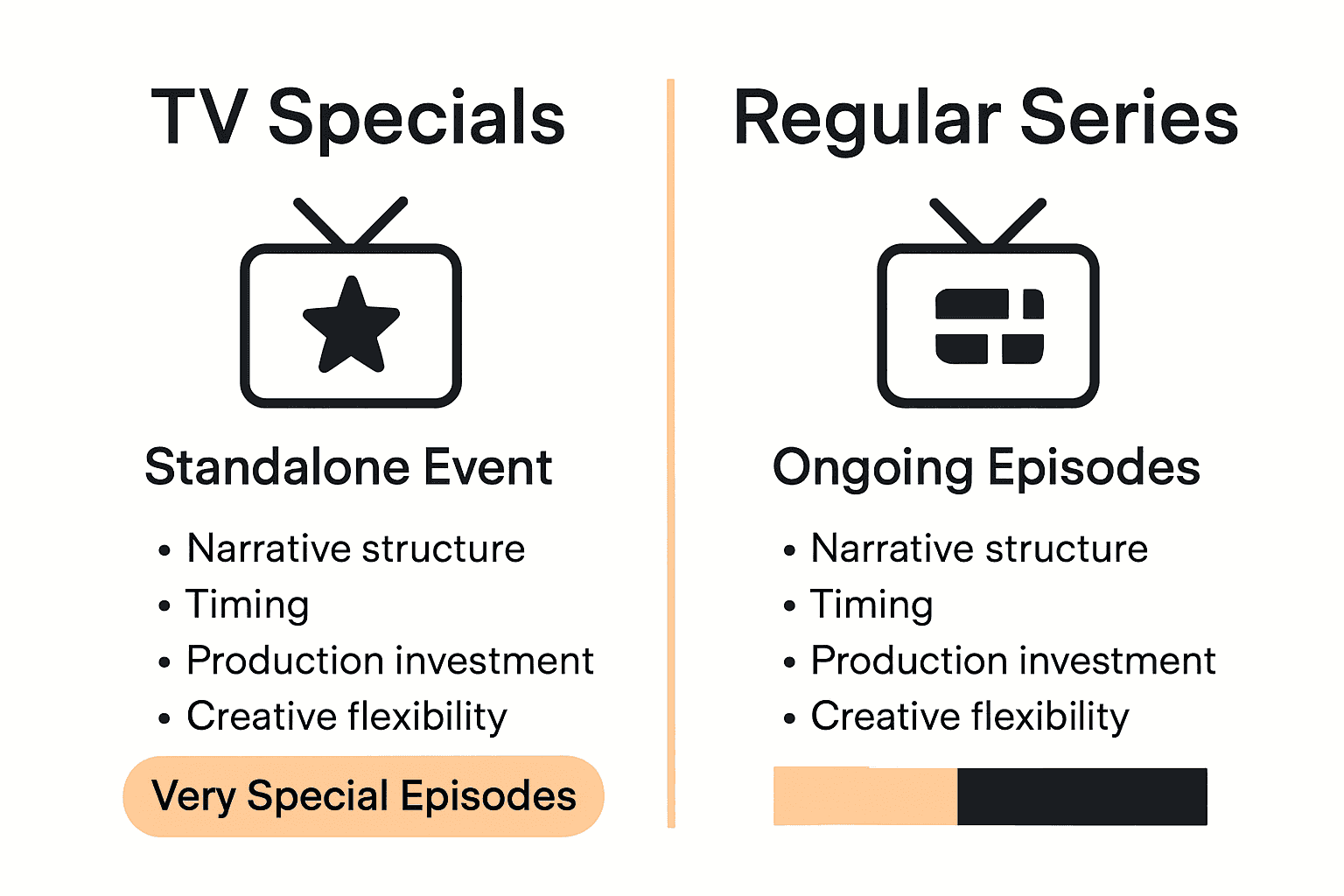
Key differences between TV specials and regular series include:
- Standalone nature vs. ongoing narrative
- Potential for interrupting regular scheduling
- Higher production investment
- Greater creative flexibility
- Unique thematic or performance-driven content
- Ability to address complex social topics
For television enthusiasts interested in understanding the nuanced world of TV programming, our guide on series regulars can provide additional context about how different types of television content are structured and produced.
Common Pitfalls When Watching or Recording
TV specials present unique challenges for viewers attempting to watch and record their favorite broadcasts. According to Wikipedia, these one-off events can create significant scheduling complications that catch even experienced television fans off guard.
Scheduling Conflicts emerge as the most prevalent issue for TV special viewers. Unlike regular series with predictable time slots, TV specials frequently interrupt standard programming without warning. This unexpected timing can create substantial recording difficulties, potentially causing viewers to miss critical moments or entire broadcasts. Streaming platforms and DVR systems sometimes struggle to accurately detect and record these non-standard programming events, leaving fans frustrated and potentially missing out on unique content.
Wikipedia reveals historical precedent for scheduling confusion, particularly with preview specials that often aired in unexpected time slots. Modern viewers face similar challenges, with networks frequently changing broadcast times for special events. This unpredictability requires viewers to remain vigilant and proactively check scheduling information to ensure they don’t miss their desired programming.
Common pitfalls viewers should watch out for include:
- Unexpected broadcast times
- Interruption of regular series programming
- Potential recording device compatibility issues
- Limited repeat broadcast opportunities
- Conflicting streaming platform availability
- Complex recording settings required
For television enthusiasts seeking to navigate these challenges more effectively, our guide on series regulars offers additional insights into understanding television programming intricacies.
Never Miss Another TV Special Again
TV specials offer unforgettable moments but their unpredictable scheduling can leave fans frustrated and missing out. If you have struggled to keep track of one-time broadcasts or holiday events that interrupt regular shows, you are not alone. From surprise air times to unique performances, understanding the full schedule and planning when to watch is key to enjoying these standout events without hassle.

Take control of your viewing experience with Sparetimetv.com, your go-to source for comprehensive TV guides covering primetime schedules and streaming premieres. Explore our detailed listings to find upcoming specials, festive broadcasts, and exclusive events alongside regular TV programming. Whether you want to catch a musical special or an important documentary feature, make sure you do not miss a moment by visiting Sparetimetv.com now and stay ahead of your favorite TV specials with up-to-date schedules and expert insights.
Frequently Asked Questions
What is a TV special?
TV specials are unique broadcast events that present extraordinary content, breaking away from standard television programming. They offer entertainment experiences such as live performances, holiday-themed shows, or documentary features designed to capture audience attention.
What types of contents are typically featured in TV specials?
TV specials often include holiday programming, musical performances, award ceremonies, one-time documentaries, celebrity tributes, and coverage of major sporting events, among other formats.
How do TV specials differ from regular television series?
TV specials are standalone broadcasts that do not follow ongoing narratives typical of regular series. They allow for greater creative flexibility, higher production values, and can address complex social topics or cultural moments without the constraints of episodic storytelling.
What are some common challenges when watching or recording TV specials?
Viewers may face scheduling conflicts, unexpected broadcast times, compatibility issues with recording devices, and limited opportunities for repeat broadcasts. It’s important to stay informed about scheduling changes to ensure you don’t miss your favorite specials.