
What is Binge Watching? Understanding the Trend
Binge watching has completely changed the way we watch TV. People are now sitting through up to 6 episodes in a single session, sometimes barely moving from the couch. Most think this is just a lazy habit or a quick way to pass the time. Turns out, binge watching is actually reshaping how we connect, relax, and even talk to each other.
Table of Contents
- Defining Binge Watching: What’s The Concept?
- The Psychological Appeal: Why Do We Binge Watch?
- The Impact Of Streaming Services On Binge Watching
- Cultural And Social Implications Of Binge Watching
- Future Trends: How Binge Watching Is Evolving
Quick Summary
| Takeaway | Explanation |
|---|---|
| Binge watching involves consecutive episodes | Viewers watch multiple episodes back-to-back, often without breaks, enhancing engagement in stories. |
| Streaming services encourage binge watching | Platforms use automatic queuing and personalized recommendations, creating a seamless viewing experience. |
| Emotional connections drive binge watching | Viewers seek emotional escape and connection through characters and narratives, influencing viewing habits. |
| Binge watching transforms social interactions | Shared viewing creates communities, shaping conversations and cultural experiences around series. |
| Future trends will focus on personalization | Advanced technologies like AI will tailor content based on individual preferences and viewing patterns. |
Defining Binge Watching: What’s the Concept?
Binge watching represents a modern media consumption phenomenon where viewers consume multiple episodes of a television series or streaming content in rapid, continuous succession. Unlike traditional television viewing patterns, binge watching transforms how people engage with visual storytelling, allowing unprecedented control over entertainment experiences.
The Core Definition
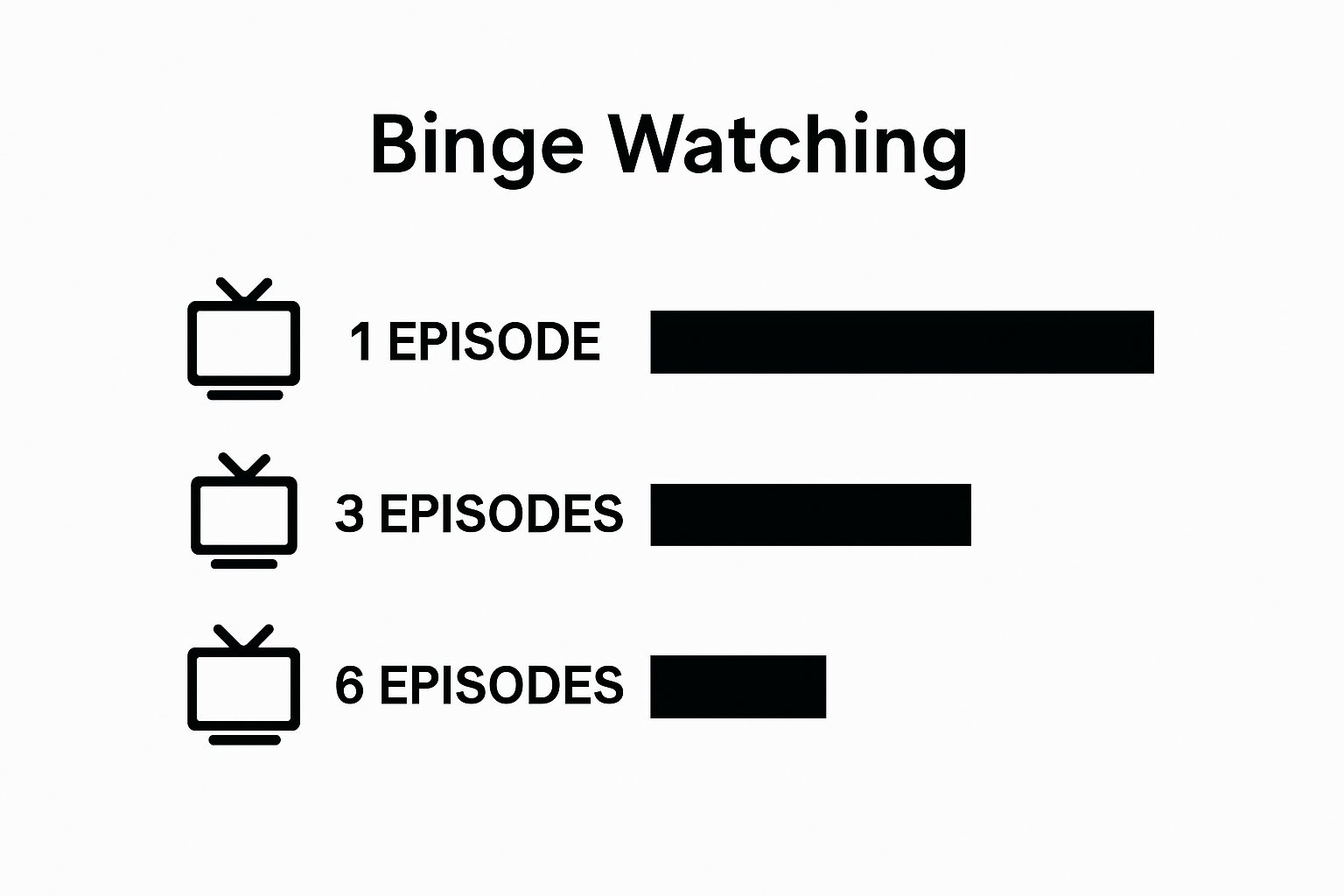
At its fundamental level, binge watching involves watching multiple episodes of a series back-to-back without significant interruption. Research published in the International Journal of Environmental Research and Public Health suggests that binge watching typically involves watching between 1 to 6 episodes in a single session, though individual definitions can vary.
Key characteristics of binge watching include:
- Consecutive episode consumption
- Minimal breaks between episodes
- Intentional, uninterrupted viewing experience
- Using streaming platforms that enable continuous playback
Psychological and Behavioral Dimensions
Binge watching transcends mere television consumption. It represents a complex interaction between technology, storytelling, and personal entertainment preferences. Viewers are drawn to this viewing style for multiple reasons, including narrative immersion, emotional connection with characters, and the convenience of modern streaming platforms.
The behavior reflects broader shifts in media consumption, where viewers prefer personalized, on-demand experiences. Unlike traditional broadcast schedules, binge watching empowers individuals to control their entertainment journey, choosing when and how they consume content.
Understanding binge watching requires recognizing it as more than a passive activity. It is an active engagement with storytelling, where viewers become deeply invested in narrative arcs, character developments, and the unique storytelling capabilities of modern television series.
The Psychological Appeal: Why Do We Binge Watch?
Binge watching is more than a casual entertainment choice. It represents a complex psychological phenomenon driven by multiple intrinsic and extrinsic motivations that reveal fascinating insights into human behavior and emotional engagement.
Emotional Escape and Psychological Comfort
Research published in Frontiers in Psychiatry reveals that binge watching often serves as a powerful emotional regulation mechanism. Viewers use continuous content consumption as a strategy to escape negative emotions, create temporary psychological distance from personal stressors, and immerse themselves in alternative narrative worlds.
Key psychological motivations for binge watching include:
- Emotional regulation and mood management
- Temporary stress relief
- Creating a sense of control in unpredictable personal environments
- Experiencing vicarious emotional experiences through characters
Narrative Immersion and Social Connection
Binge watching satisfies deep human needs for storytelling and social connection. By consuming multiple episodes consecutively, viewers develop intense parasocial relationships with characters, experiencing narrative arcs as if they were personal journeys. This immersive experience provides a sense of belonging and shared cultural experience.
Moreover, binge watching has transformed social interactions. Discussing plot developments, sharing recommendations, and participating in collective viewing experiences have become significant social rituals. Check out our guide on understanding television’s social impact to explore how media consumption shapes interpersonal dynamics.
Interestingly, the behavior reflects broader psychological patterns of seeking continuous engagement and immediate gratification. Modern streaming platforms capitalize on this by providing uninterrupted, personalized entertainment experiences that cater to viewers’ desire for instant narrative resolution and emotional satisfaction.
The Impact of Streaming Services on Binge Watching
Streaming services have fundamentally transformed entertainment consumption, creating an unprecedented ecosystem that enables and encourages continuous viewing experiences. These platforms have strategically designed interfaces and algorithms that make binge watching not just possible, but remarkably compelling.
Technological Design and User Experience
Research from First Monday reveals how streaming platforms intentionally engineer user experiences to promote prolonged viewing. Automatic episode progression, personalized recommendations, and minimalistic interfaces eliminate traditional viewing barriers, making continuous consumption seamlessly attractive.
Key technological features driving binge watching include:
- Elimination of commercial interruptions
- Automatic episode queuing
- Personalized content recommendations
- User-controlled viewing schedules
- Seamless cross-device viewing experiences
Content Strategy and Psychological Manipulation
Streaming platforms leverage sophisticated psychological strategies to maintain viewer engagement. Releasing entire series simultaneously creates an environment of narrative anticipation and instant gratification. Learn more about digital streaming dynamics to understand how these platforms revolutionize entertainment consumption.
The platforms capitalize on viewers’ inherent desire for narrative completion by creating cliffhangers, interconnected storylines, and serialized content that demands continuous watching. By understanding individual viewing preferences through advanced algorithms, these services craft hyper-personalized content experiences that feel almost irresistibly tailored to individual tastes.
Moreover, the accessibility of content across multiple devices has further normalized binge watching. Smartphones, tablets, smart TVs, and laptops provide unprecedented flexibility, allowing viewers to consume content anytime, anywhere, fundamentally reshaping traditional entertainment consumption patterns.
Below is a table summarizing the main technological features and corresponding psychological impacts of streaming services that drive binge watching behavior.
| Technological Feature | Psychological Impact |
|---|---|
| Automatic episode queuing | Encourages continuous viewing with little resistance |
| Personalized content recommendations | Increases engagement by matching viewers’ tastes |
| Elimination of commercial interruptions | Reduces distractions and promotes immersion |
| User-controlled viewing schedules | Empowers autonomy over entertainment choices |
| Seamless cross-device experiences | Allows convenience and flexibility |
| Simultaneous series releases | Fulfills desire for instant gratification |
| Minimalistic interfaces | Lowers barriers to starting another episode |

Cultural and Social Implications of Binge Watching
Binge watching has emerged as more than a mere entertainment trend. It represents a complex social phenomenon that reshapes interpersonal dynamics, communication patterns, and cultural experiences in profound and unexpected ways.
Transforming Social Interactions
Binge watching fundamentally alters how people connect, communicate, and share cultural experiences. Television series have become contemporary social currencies, with viewers forming communities around shared narrative experiences. Discussions about plot twists, character developments, and storyline predictions have transformed from casual conversations into sophisticated social rituals.
Key social transformations driven by binge watching include:
- Creation of global narrative communities
- Emergence of new social conversation topics
- Shared cultural references across geographic boundaries
- Enhanced emotional connection through collective viewing experiences
Psychological and Emotional Dimensions
Research from the National Institutes of Health reveals that binge watching carries complex psychological implications. While it offers opportunities for emotional escape and social connection, it simultaneously presents potential risks of isolation and mental health challenges.
Potential psychological impacts include:
- Temporary relief from personal stressors
- Risk of increased feelings of loneliness
- Disrupted sleep patterns
- Potential development of addictive viewing behaviors
Explore the evolving landscape of digital entertainment to understand how technological platforms are reshaping our social interactions. The phenomenon extends beyond individual viewing experiences, reflecting broader shifts in how societies consume, interpret, and discuss media content.
Binge watching has democratized storytelling, allowing viewers unprecedented access to narratives from diverse cultures and perspectives. It represents a significant cultural shift where entertainment consumption becomes a collaborative, global experience that transcends traditional media boundaries.
This table outlines the psychological motivations and potential risks associated with binge watching, as discussed in the article.
| Motivation or Impact | Brief Description |
|---|---|
| Emotional regulation | Using shows to manage mood and cope with stress |
| Narrative immersion | Deep engagement with ongoing storylines and character arcs |
| Social connection | Shared cultural experiences and discussion with others |
| Temporary relief | Short-term escape from personal challenges or worries |
| Loneliness risk | Extended viewing may lead to increased isolation |
| Sleep disruption | Binge sessions can negatively affect sleep patterns |
| Addictive behaviors | Danger of developing unhealthy, compulsive watching habits |
Future Trends: How Binge Watching is Evolving
Binge watching is rapidly transforming from a passive consumption model to an interactive, technologically sophisticated entertainment experience. As digital platforms continue to innovate, the future of content consumption promises unprecedented levels of personalization, immersion, and engagement.
Technological Convergence and Immersive Experiences
Research exploring emerging viewing behaviors reveals groundbreaking developments in virtual and augmented reality technologies that will revolutionize binge watching. Viewers can expect experiences that transcend traditional screen boundaries, allowing direct interaction with narrative environments.
Emerging technological trends include:
- Virtual reality narrative immersion
- Interactive storyline modification
- Real-time character engagement
- Personalized plot progression
- Multisensory viewing experiences
Artificial Intelligence and Personalized Content Curation
Artificial intelligence is poised to transform binge watching from a generic experience into a hyper-personalized entertainment journey. Advanced algorithms will analyze individual viewing patterns, emotional responses, and contextual preferences to craft uniquely tailored content recommendations. Learn more about digital streaming innovations to understand the potential of AI-driven entertainment.
AI-driven personalization will likely manifest through:
- Mood-based content suggestions
- Predictive viewing recommendations
- Adaptive narrative experiences
- Emotional response tracking
- Intelligent content sequencing
The future of binge watching represents a profound convergence of technology, storytelling, and individual psychology. As platforms become more sophisticated, viewers can anticipate entertainment experiences that are increasingly responsive, immersive, and tailored to their unique preferences.
Take Control of Your Binge Watching Experience
Are you tired of missing out on trending shows or struggling to keep up with the latest streaming premieres? The article uncovered how binge watching relies on having instant access to episodes, knowing premiere dates, and quickly finding what to watch next. If you want a smoother, more enjoyable binge watching journey, finding reliable and updated schedules is essential.

Make every viewing session count by exploring Sparetimetv.com. Stay on top of primetime schedules and upcoming releases so you never miss a new episode or recommended show. Act now to streamline your entertainment routine and discover curated lists, top-rated content, and daily updates. Start planning your perfect binge tonight.
Frequently Asked Questions
What is binge watching?
Binge watching is the practice of watching multiple episodes of a television series or streaming content back-to-back without significant interruptions, often on streaming platforms that facilitate uninterrupted playback.
Why do people binge watch shows?
People binge watch for various reasons, including emotional regulation, narrative immersion, and the desire for social connection. It allows viewers to escape negative emotions and engage deeply with characters and storylines.
How has binge watching changed with streaming services?
Streaming services have transformed binge watching by providing features like automatic episode queuing, personalized content recommendations, and the elimination of commercial interruptions, which enhance the binge watching experience.
What are the potential psychological effects of binge watching?
While binge watching can provide temporary stress relief and emotional escape, it may also lead to feelings of isolation, disrupted sleep patterns, and possible addictive viewing behaviors if done excessively.