
What is Linear TV? Understanding Its Role and Impact
Linear TV might sound like a relic in an era packed with endless streaming choices and binge-worthy marathons. Yet millions of viewers still spend hours every week tuned in to scheduled broadcasts. Streaming platforms promise flexibility and control but old-school linear TV holds a surprising superpower that even Netflix and Hulu struggle to match. This model creates real moments that entire communities experience live, together, turning ordinary nights into shared events you cannot just pause or rewind.
Table of Contents
- Defining Linear TV: What Sets It Apart?
- The Importance of Linear TV in Today’s Media Landscape
- How Linear TV Functions: Key Concepts and Technologies
- Comparing Linear TV with On-Demand and Streaming Services
- The Future of Linear TV: Trends and Evolving Practices
Quick Summary
| Takeaway | Explanation |
|---|---|
| Linear TV offers scheduled programming. | Viewers must tune in at specific times to watch shows, creating a structured viewing experience. |
| Linear TV supports community engagement. | It provides real-time information and fosters collective cultural experiences among audiences watching simultaneously. |
| The model relies on targeted advertising. | Networks generate revenues through strategic ad placements during programming, maximizing viewer engagement. |
| Technological advancements enhance broadcasting. | New technologies enable more interactive content and integration with streaming services, adapting to current viewer preferences. |
| Linear TV remains vital for live events. | Its importance in broadcasting news and live events ensures it maintains relevance despite the rise of digital platforms. |
Defining Linear TV: What Sets It Apart?
Linear TV represents a traditional television broadcasting model where content is scheduled and transmitted according to a predetermined timetable. Unlike modern streaming platforms, linear TV requires viewers to watch programs at specific broadcast times, creating a shared viewing experience tied to precise scheduling.
The Broadcast Schedule Mechanism
In the linear TV model, television networks control content distribution through carefully planned programming schedules. Viewers must tune in at exact times to watch their preferred shows, with no ability to pause, rewind, or start programs on demand. This fixed broadcast approach means that if you miss a show’s original airtime, you typically cannot watch it until a potential rebroadcast or through alternative recording methods.
Key Characteristics of Linear Television
Linear TV distinguishes itself through several fundamental characteristics:
- Scheduled Programming: Shows air at predetermined times set by networks
- Limited Viewer Control: Audiences cannot choose when to start or pause content
- Synchronized Viewing: Creates a collective experience where audiences watch simultaneously
Unlike modern streaming services that offer on-demand content, linear TV maintains a structured approach to media consumption. Networks design their schedules to maximize audience engagement, strategically placing popular shows during prime viewing hours. Learn more about television broadcasting strategies reveals how this model has fundamentally shaped media consumption for decades.
This table summarizes the most important characteristics that define Linear TV and distinguish it from other modern media formats.
| Characteristic | Description |
|---|---|
| Scheduled Programming | Shows air at predetermined times set by networks |
| Limited Control | Viewers cannot choose when to start, pause, or rewind content |
| Synchronized Viewing | Creates a shared, communal audience experience |
| Real-Time Information | Delivers news and live events instantly |
| Targeted Advertising | Utilizes scheduled programming to maximize advertising reach and engagement |
| Consistent Revenue | Generates predictable income through ads and subscriptions |
| Broadcast Mechanism | Operates via terrestrial, satellite, and cable transmission infrastructure |
While digital platforms have challenged linear TV’s dominance, it remains significant in certain contexts like live events, news broadcasting, and traditional network programming. Understanding the nuances of live TV can provide deeper insights into how broadcast technologies continue to evolve and maintain relevance in our increasingly digital media landscape.
The Importance of Linear TV in Today’s Media Landscape
Despite the rise of streaming platforms, linear TV continues to play a crucial role in media consumption, entertainment, and information dissemination. Its enduring significance stems from unique characteristics that digital platforms cannot entirely replicate.
Reliable Information and Community Connectivity
Linear TV remains a primary source of real-time information for millions of viewers. News broadcasts, live events, and breaking news coverage rely on traditional television networks to deliver timely and synchronized content. This model creates a shared cultural experience where communities simultaneously engage with critical information, fostering collective understanding and social connection.
Economic and Advertising Ecosystem
The linear TV model supports a robust economic ecosystem that extends beyond content delivery. Television networks generate substantial revenue through strategic advertising placements, targeting specific demographics during prime viewing hours. Explore the intricacies of network television programming to understand how these platforms maintain their economic viability.
Key advantages of linear TV in the current media landscape include:
- Immediate Mass Communication: Ability to reach large audiences simultaneously
- Targeted Advertising: Precise demographic targeting during specific programming
- Consistent Revenue Streams: Predictable advertising and subscription income models
According to research from the Television Bureau of Advertising, linear TV continues to demonstrate significant reach, with viewers spending substantial time engaging with broadcast content. This persistence highlights the medium’s adaptability and continued relevance in an increasingly fragmented media environment.
While digital platforms offer personalized experiences, linear TV maintains its unique position by providing structured, communal viewing experiences that connect audiences through shared cultural moments.
How Linear TV Functions: Key Concepts and Technologies
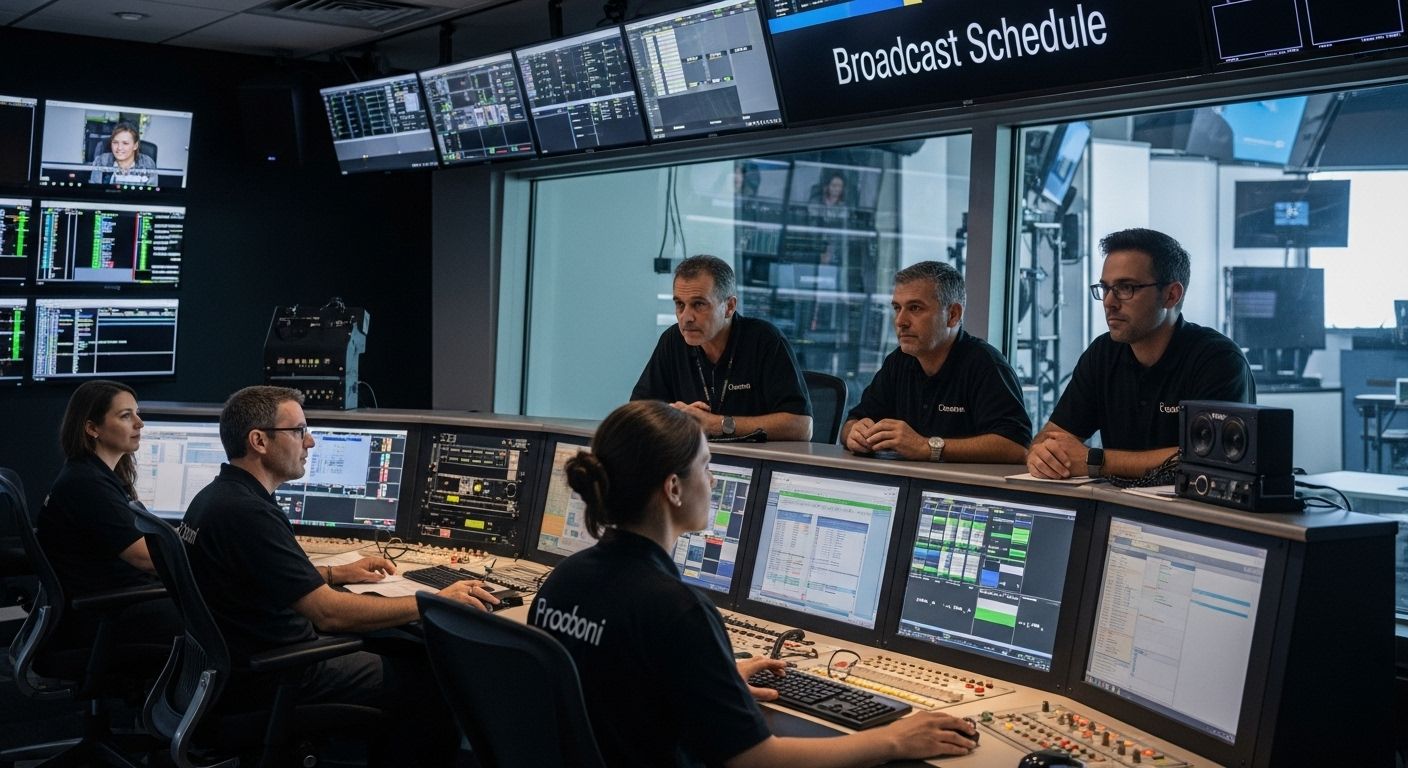
Linear TV operates through a complex technological infrastructure designed to broadcast content systematically across multiple transmission platforms. Understanding its fundamental mechanisms reveals the intricate processes behind traditional television broadcasting.
Broadcast Signal Transmission
The core of linear TV functionality relies on signal transmission technologies that convert audio and video content into electromagnetic waves. Television networks utilize specialized broadcasting equipment to encode and transmit signals through terrestrial, satellite, and cable infrastructure. These signals are then received by televisions equipped with appropriate tuners, enabling viewers to access predetermined programming.
Content Distribution and Scheduling
Television networks meticulously plan content distribution using sophisticated scheduling algorithms. Programming executives strategically arrange shows to maximize audience engagement, considering factors like demographic preferences, peak viewing times, and competitive programming. Learn more about network TV strategies to understand the complex decision-making behind content placement.
Key technological components of linear TV transmission include:
- Signal Encoding: Converting audio and video into transmittable electromagnetic waves
- Broadcast Infrastructure: Utilizing terrestrial, satellite, and cable transmission networks
- Receiver Technologies: Specialized tuners that decode and display broadcast signals
According to research exploring broadcast technologies, linear TV operates through a “push” distribution model where content is predetermined and transmitted at specific times. This approach contrasts with on-demand streaming platforms, maintaining a structured viewing experience that has defined television consumption for decades.
Modern linear TV continues to evolve, incorporating digital technologies that enhance signal quality, expand channel offerings, and improve viewer interaction while preserving the fundamental broadcast model that has connected audiences for generations.
Comparing Linear TV with On-Demand and Streaming Services
The media consumption landscape has dramatically transformed with the emergence of on-demand and streaming platforms, creating a complex ecosystem that challenges traditional linear television’s dominance. Understanding the key differences between these models reveals the evolving nature of media consumption.
Viewing Experience and Control
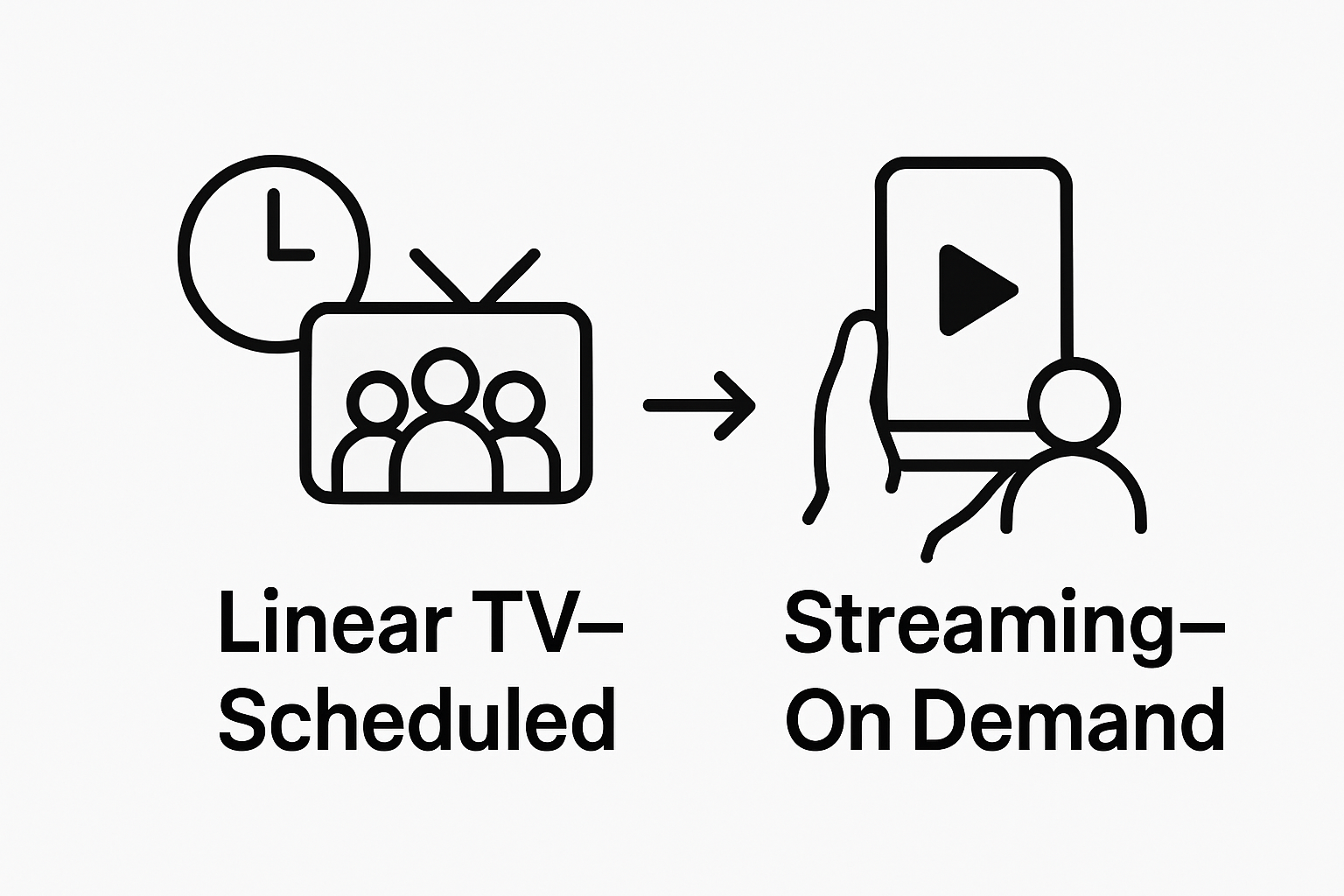
Linear TV offers a structured, scheduled viewing experience where audiences must adapt to predetermined broadcast times. In contrast, streaming services provide unprecedented viewer control, allowing users to choose what, when, and how they watch content. Explore the evolution of digital streaming to understand how technology has reshaped media consumption patterns.
Content Accessibility and Variety
Streaming platforms differentiate themselves through extensive content libraries and personalized recommendations. Unlike linear TV’s limited programming, these services offer:
- Unlimited Content Access: Complete libraries available 24/7
- Personalized Recommendations: Algorithmic content suggestions
- Multiple Device Compatibility: Viewing across smartphones, tablets, and smart TVs
According to research examining media consumption trends, the fundamental distinction between linear TV and streaming services extends beyond mere technological differences. While traditional television provides a communal, synchronized viewing experience, streaming platforms prioritize individual preferences and convenience.
The technological shift represents more than a simple distribution method change. It signifies a profound transformation in how audiences interact with media, moving from passive consumption to active, personalized content selection. This evolution challenges traditional broadcast models while simultaneously creating new opportunities for content creators and consumers alike.
Below is a comparison table illustrating key differences between Linear TV and Streaming Services to clarify their unique strengths and limitations.
| Aspect | Linear TV | Streaming Services |
|---|---|---|
| Programming Schedule | Fixed broadcast times; must watch at scheduled time | On-demand access; watch anytime |
| Viewer Control | Limited (cannot pause, rewind, or start on demand) | Full (pause, rewind, fast-forward, choose content) |
| Viewing Experience | Synchronized, collective community viewing | Personalized, individual viewing |
| Content Accessibility | Limited to what is aired at that time | Extensive libraries available 24/7 |
| Device Compatibility | Requires TV or compatible receiver | Available on multiple devices (TV, mobile, tablet) |
| Advertisement Model | Targeted, scheduled ads during programming | Fewer ads or subscription-based, sometimes ad-free |
The Future of Linear TV: Trends and Evolving Practices
Linear television is undergoing a profound transformation, adapting to changing technological landscapes and viewer preferences. As digital platforms challenge traditional broadcasting models, linear TV must innovate to maintain its relevance and audience engagement.
Technological Integration and Hybrid Models
Emerging broadcast technologies are reshaping linear TV’s future, enabling more interactive and personalized viewing experiences. Networks are increasingly adopting hybrid models that combine traditional broadcast techniques with digital streaming capabilities. Discover the latest developments in television technology to understand how the industry is navigating this complex transition.
Adaptive Strategies for Survival
Broadcasters are developing sophisticated strategies to compete with on-demand platforms. These approaches focus on leveraging unique strengths such as live programming, real-time news, and event broadcasting. Key adaptive strategies include:
- Enhanced Interactivity: Incorporating social media and real-time audience engagement
- Personalized Content Delivery: Using advanced data analytics for targeted programming
- Cross-Platform Integration: Developing seamless experiences across traditional and digital platforms
According to research examining broadcast industry trends, traditional TV is experiencing a significant transformation. The industry is moving beyond conventional broadcasting, embracing technologies like ATSC 3.0 that enable more dynamic and interactive content delivery.
The future of linear TV lies not in resistance to change, but in its ability to adapt, integrate new technologies, and provide unique value propositions that differentiate it from streaming platforms. By focusing on live events, community engagement, and innovative content delivery methods, linear television can continue to play a crucial role in the media ecosystem.
Ready to Master the Complex World of Linear TV?
If you find the strict broadcast schedules and limited control of linear TV overwhelming or frustrating, you are not alone. Many TV fans struggle to keep up with network timetables and miss out when their favorite shows or live events air. You want real-time updates, clear schedules, and confidence that you will never miss broadcast moments that matter. That is exactly why Sparetimetv.com exists — to help you make sense of structured programming and evolving TV landscapes. With regularly updated TV guides, comprehensive listings, and curated recommendations, you can finally take control of your viewing routine.
Stop letting scheduled programming dictate your entertainment. Visit Sparetimetv.com and discover easy-to-navigate primetime guides and detailed schedules for everything from network premieres to trending movies. Get quick access to what is airing now and upcoming, so you can spend less time searching and more time watching. Explore our guides today and bring clarity to your TV experience — because in the fast-moving world of television, the right information makes all the difference.
Frequently Asked Questions
What is Linear TV?
Linear TV is a traditional television broadcasting model where content is scheduled and transmitted according to a predetermined timetable, requiring viewers to watch programs at specific broadcast times.
How does Linear TV differ from Streaming Services?
Linear TV offers scheduled programming and limited viewer control, whereas streaming services provide on-demand access, allowing users to choose what, when, and how they watch content.
What are the key characteristics of Linear Television?
Key characteristics of Linear TV include scheduled programming, limited viewer control, and synchronized viewing experiences that create a collective audience engagement.
What role does Linear TV play in today’s media landscape?
Linear TV remains a significant source of real-time information and community connectivity, especially for live events and news broadcasting, while also supporting a robust advertising ecosystem.