
What is Network TV? Understanding Its Role in Entertainment
Network TV still beams into nearly every American home, shaping cultural touchstones and connecting millions coast to coast. Yet even now, it commands over 60 percent of live TV viewership despite the rise of streaming giants. Most people think streaming has left network television in the dust. The strange part is network TV is reinventing itself, blending tradition with digital tricks to stay right in the center of our screens.
Table of Contents
- Defining Network TV: What It Is And How It Works
- The Importance Of Network TV In The Entertainment Landscape
- Key Features Of Network TV: Programming And Audience Reach
- The Evolution Of Network TV In A Streaming World
- Understanding The Future Of Network TV: Challenges And Opportunities
Quick Summary
| Takeaway | Explanation |
|---|---|
| Network TV delivers synchronized national broadcasts | Unlike streaming platforms, network TV offers simultaneous viewing experiences that create shared cultural moments for audiences across the country. |
| Local affiliates enhance content distribution | National networks rely on local stations for broadcasting, allowing tailored programming and regional advertisements while maintaining wide coverage. |
| Ad revenues sustain traditional network economics | Despite digital competition, network television continues to generate significant advertising revenue, supporting jobs and the production ecosystem. |
| Programming blocks target diverse demographics | Networks strategically schedule programming to reach various audience segments, optimizing viewership during key time slots like prime time. |
| Network TV is adapting through technology | By integrating digital streaming and interactive features, network television is evolving to meet changing viewer preferences and remain competitive. |
Defining Network TV: What It Is and How It Works
Network television represents a foundational broadcasting model that has shaped entertainment and information distribution for decades. At its core, network TV refers to a system where a single broadcast network distributes programming simultaneously across multiple local television stations. Learn more about television’s evolution.
The Basic Infrastructure of Network Television
Network television operates through a structured system of national media corporations and local broadcast affiliates. The primary networks like ABC, CBS, NBC, and FOX create and distribute television programming, which local stations then broadcast to regional audiences. This infrastructure allows for widespread content distribution with local customization.
Key characteristics of network television include:
- Centralized content creation at the national network level
- Broadcast across multiple geographic regions simultaneously
- Reliance on local affiliate stations for transmission
- Adherence to specific broadcast schedules and programming blocks
To clarify the main features that distinguish network television, here is a table summarizing its key characteristics:
| Feature | Description |
|---|---|
| Centralized Content Creation | Programming is created and distributed from a national network headquarters. |
| Simultaneous Broadcasting | Content is aired across multiple regions at the same time, creating shared viewing moments. |
| Local Affiliate Transmission | Local stations broadcast network content, allowing for regional customization. |
| Adherence to Schedules | Programming follows fixed broadcast schedules and designated time slots. |
| Regulatory Licensing | Networks operate under FCC licenses requiring service of public interest and compliance. |
Broadcast Mechanics and Licensing
According to the Federal Communications Commission, television networks must be licensed to use public airwaves, operating under strict regulatory guidelines. These licenses mandate that broadcasters serve “public interest, convenience, and necessity.” Networks pay substantial fees and must meet specific content and transmission standards to maintain their broadcasting rights.
The traditional network television model involves complex negotiations between national networks and local affiliate stations. These agreements specify how network-produced content will be distributed, when it will air, and how local stations can integrate their own regional programming and advertising.
While streaming platforms have challenged traditional network television, the model remains significant in delivering live events, news programming, and scheduled entertainment to millions of viewers across the United States. Network TV continues to adapt, blending traditional broadcast methods with digital streaming capabilities to remain relevant in a rapidly changing media landscape.
The Importance of Network TV in the Entertainment Landscape
Network television has been a cornerstone of American entertainment, shaping cultural narratives and providing shared viewing experiences for generations. Explore the latest TV trends and understand how this medium continues to influence our media consumption.
Cultural and Social Impact
Network television plays a crucial role in creating collective cultural moments. Unlike fragmented streaming platforms, traditional networks provide simultaneous nationwide broadcasts that bring millions of viewers together. Shows like “Friends,” “Seinfeld,” and “ER” became more than just entertainment they were social phenomena that sparked conversations, influenced fashion, and reflected societal changes.
Key cultural contributions of network TV include:
- Creating shared national experiences
- Providing platforms for diverse storytelling
- Reflecting and sometimes challenging social norms
- Generating widespread public discourse
Economic Significance in Media
According to Pew Research Center, network television remains a powerful economic force in the media landscape. Despite challenges from cable and streaming services, traditional networks continue to generate substantial advertising revenue and maintain significant audience reach. Major networks invest millions in high-quality programming, creating content that attracts large viewerships and drives economic activity in the entertainment industry.
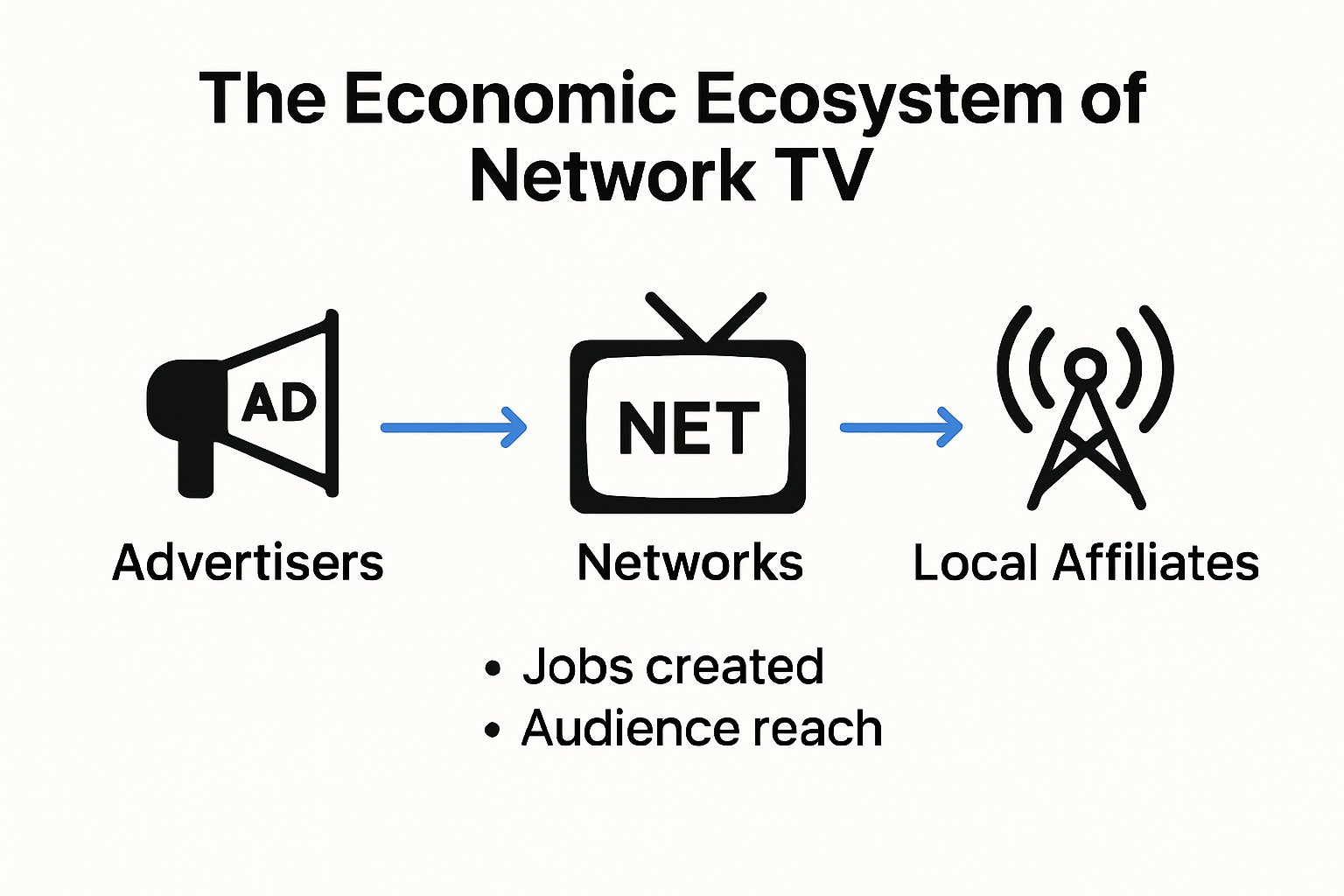
The economic model of network television extends beyond mere content delivery. It supports entire ecosystems of production companies, advertising agencies, and local broadcast stations. This intricate network creates jobs, drives innovation, and contributes significantly to the national economy.
While digital platforms have transformed media consumption, network television adapts by offering live events, breaking news, and marquee programming that cannot be easily replicated by on-demand services. Its ability to create immediate, widespread engagement remains a unique and valuable contribution to the entertainment landscape.
Key Features of Network TV: Programming and Audience Reach
Network television represents a sophisticated ecosystem of content delivery, characterized by unique programming strategies and extensive audience engagement. Check out our guide to trending shows to understand how networks continue to captivate viewers.
Programming Diversity and Scheduling
Network television distinguishes itself through carefully curated programming blocks that cater to different audience segments throughout the day. Prime time, typically spanning 8 to 11 PM, remains the most competitive and lucrative programming window, featuring flagship entertainment shows, dramatic series, and popular comedies.
Key programming characteristics include:

- Strategic time slot allocation
- Genre-specific scheduling
- Seasonal programming variations
- Targeted demographic programming
Audience Reach and Engagement
According to Nielsen Media Research, network television continues to maintain significant audience penetration across various demographic groups. Traditional networks leverage their extensive affiliate systems to broadcast content simultaneously across multiple regions, creating a unified national viewing experience that streaming platforms struggle to replicate.
Network television’s audience engagement strategies involve complex mechanisms of content development, marketing, and viewer retention. Unlike fragmented digital platforms, networks can create synchronized national conversations around specific programs, generating collective cultural moments that transcend individual viewing experiences.
The modern network television landscape adapts to changing viewer preferences by integrating digital streaming capabilities, on-demand content, and interactive viewing experiences. This hybrid approach allows traditional networks to remain competitive in an increasingly digital entertainment ecosystem, bridging traditional broadcast models with contemporary media consumption trends.
The Evolution of Network TV in a Streaming World
The television landscape has undergone a transformative journey, with network TV adapting to the digital revolution and emerging streaming platforms. Discover the latest media trends and understand how traditional broadcasting continues to reinvent itself.
Technological Adaptation and Hybridization
Network television has responded to streaming challenges by developing hybrid models that blend traditional broadcast techniques with digital distribution strategies. Modern networks now offer on-demand content, mobile streaming options, and multi-platform viewing experiences that extend beyond conventional television sets.
Key adaptation strategies include:
- Developing proprietary streaming platforms
- Creating digital-first content
- Implementing flexible viewing schedules
- Integrating interactive viewer experiences
Competing in the Digital Ecosystem
According to Nielsen Media Research, network television maintains its relevance by leveraging unique strengths that streaming platforms cannot easily replicate. Live programming, including sports events, breaking news, and national broadcast events, remains a critical differentiator for traditional networks.
Networks have strategically repositioned themselves by investing in high-quality, exclusive content production. By creating compelling original series and maintaining relationships with top-tier talent, they continue to attract audiences in an increasingly fragmented media environment.
The future of network television lies in its ability to seamlessly integrate traditional broadcasting principles with emerging digital technologies. By embracing innovation while preserving the communal viewing experience, networks are charting a dynamic course through the rapidly evolving media landscape.
Understanding the Future of Network TV: Challenges and Opportunities
The television industry stands at a critical crossroads, with network TV facing unprecedented transformations in audience expectations and technological capabilities. Explore emerging media technologies to understand the complex landscape of modern broadcasting.
Technological Disruption and Adaptation
Network television confronts significant challenges posed by digital streaming platforms, requiring fundamental reimagining of content delivery and audience engagement strategies. The traditional broadcast model must evolve to remain competitive in an increasingly fragmented media ecosystem.
Key challenges facing network television include:
- Declining linear viewership
- Rising production costs
- Increased competition from streaming services
- Changing viewer consumption habits
The following table organizes the major challenges and adaptation strategies discussed for network television in a rapidly changing media environment:
| Challenge/Strategy | Description |
|---|---|
| Declining Linear Viewership | Audiences are increasingly shifting away from traditional scheduled TV viewing. |
| Rising Production Costs | Expenses for creating high-quality original content are growing. |
| Competition from Streaming | Streaming services offer on-demand alternatives, intensifying viewer fragmentation. |
| Hybrid Models | Networks blend broadcast methods with digital streaming and on-demand options. |
| Multi-Platform Content | Content is made available across TV, web, and mobile devices to meet audience needs. |
| Live & Communal Experiences | Networks leverage live events and simultaneous nationwide programming as key strengths. |
Strategic Reinvention and Innovation
According to Pew Research Center, network television must continue developing innovative approaches to maintain relevance. This includes creating multi-platform content strategies, investing in high-quality original programming, and developing more personalized viewing experiences.
Networks are responding by implementing hybrid models that blend traditional broadcasting with digital streaming capabilities. By leveraging their established infrastructure and brand recognition, they can create unique value propositions that distinguish them from purely digital platforms.
The future of network television will likely be defined by its ability to balance technological innovation with the core strengths of traditional broadcasting: live events, communal viewing experiences, and trusted content curation. Successful networks will be those that can most effectively bridge the gap between established broadcasting principles and emerging digital consumption patterns.
Frequently Asked Questions
What is network television?
Network television refers to a system where a single broadcast network distributes programming simultaneously across multiple local television stations, allowing for widespread content distribution and local customization.
How does network TV operate?
Network TV operates through national media corporations that create and distribute programming, which local affiliate stations then broadcast to regional audiences. This model ensures that content reaches viewers across multiple geographic regions at the same time.
What are the key characteristics of network television?
Key characteristics include centralized content creation, simultaneous broadcasting across regions, reliance on local affiliates for transmission, and adherence to specific programming schedules.
How is network television adapting to digital platforms?
Network television is adapting by developing hybrid models that integrate traditional broadcast techniques with digital strategies, including offering on-demand content, mobile streaming, and interactive viewer experiences.