
Primetime is the magic window when TV networks pull in the biggest crowds and pull out all the stops. Most people picture a sleepy evening, but the reality is way more strategic. A single 30-second commercial during a top show in this slot can cost hundreds of thousands of dollars. This hour is not just about background noise and idle channel flipping. It is the engineered heart of television where fortunes are won or lost.
Table of Contents
- Defining Primetime: What Does It Mean?
- The Importance of Primetime in Television Programming
- How Primetime Affects Viewership and Ratings
- Primetime vs. Non-Primetime: Key Differences
- The Future of Primetime in the Streaming Age
Quick Summary
| Takeaway | Explanation |
|---|---|
| Primetime is 8-11 PM Eastern Time. | This timeframe coincides with peak viewer availability, maximizing audience engagement for networks. |
| Higher ratings lead to better programming decisions. | Networks prioritize shows with high ratings, influencing renewals, budgets, and promotional support. |
| Primetime programming earns premium advertising rates. | Due to concentrated viewership, advertisers pay significantly higher costs during these key hours. |
| Streaming changes traditional primetime dynamics. | On-demand content allows viewers to watch whenever they want, shifting how networks strategize programming. |
| Audience analysis is crucial for content creation. | Network decisions hinge on understanding viewer preferences and behavior, directly influencing show development and time slots. |
Defining Primetime: What Does It Mean?
Primetime represents the most coveted broadcasting period for television networks, a specific window when audience engagement peaks and viewership reaches its maximum potential.
The Temporal Boundaries of Primetime
Traditionally, primetime spans a specific evening period when most viewers are available and actively watching television. In the United States, this typically encompasses the hours between 8:00 p.m. and 11:00 p.m. Eastern and Pacific Time, or 7:00 p.m. to 10:00 p.m. Central and Mountain Time. These timeframes are not arbitrary but carefully selected based on audience availability and viewing patterns.
Why Primetime Matters
During primetime, television networks strategically schedule their most expensive, high-quality, and anticipated programming. The significance of these hours stems from several key factors:
- Maximum audience concentration
- Higher advertising rates
- Premium content placement
- Peak viewer engagement
Interestingly, according to Nielsen research, the most-watched moment during primetime occurs between 9:15 p.m. and 9:30 p.m., highlighting the nuanced nature of viewer behavior. Different demographic groups also exhibit variations in their viewing habits, with younger audiences (18-49) typically tuning in later during the evening.
Understanding primetime is crucial for comprehending how television networks strategize content delivery, maximize audience reach, and optimize advertising revenue. It represents more than just a time slot—it is a complex ecosystem of viewer preferences, network programming, and media economics.
The Importance of Primetime in Television Programming
Primetime represents far more than a simple broadcasting window—it is the strategic heartbeat of television networks, where programming, advertising, and audience engagement converge to create powerful media experiences. TV ratings for networks now and then reveal the critical role these hours play in the broadcasting ecosystem.
Economic Significance of Primetime
For television networks, primetime is an economic powerhouse. Advertising rates during these peak hours are dramatically higher compared to other broadcast times, reflecting the concentrated audience attention. Networks can charge premium rates because advertisers recognize the unparalleled opportunity to reach millions of viewers simultaneously. A single 30-second commercial during a popular primetime show can cost hundreds of thousands of dollars, underscoring the immense financial value of these programming slots.
Content Strategy and Audience Targeting
Primetime programming is meticulously designed to capture and retain viewer interest. Networks invest significant resources in developing high-quality shows that can attract and maintain audience engagement. According to research from the U.S. Government Accountability Office, major broadcasters produce approximately 76 to 84 percent of their primetime programming hours, demonstrating the strategic importance of this timeframe.
Key considerations for primetime content selection include:
- Demographic appeal
- Storytelling complexity
- Production quality
- Potential for audience retention
- Alignment with network brand identity
Moreover, primetime serves as a critical platform for cultural storytelling, social discourse, and entertainment innovation. It is not merely about filling broadcast hours but about creating shared experiences that resonate with diverse audience segments. Networks carefully curate programming that reflects contemporary social dynamics, entertainment trends, and viewer preferences, making primetime a dynamic and responsive medium of communication.
How Primetime Affects Viewership and Ratings
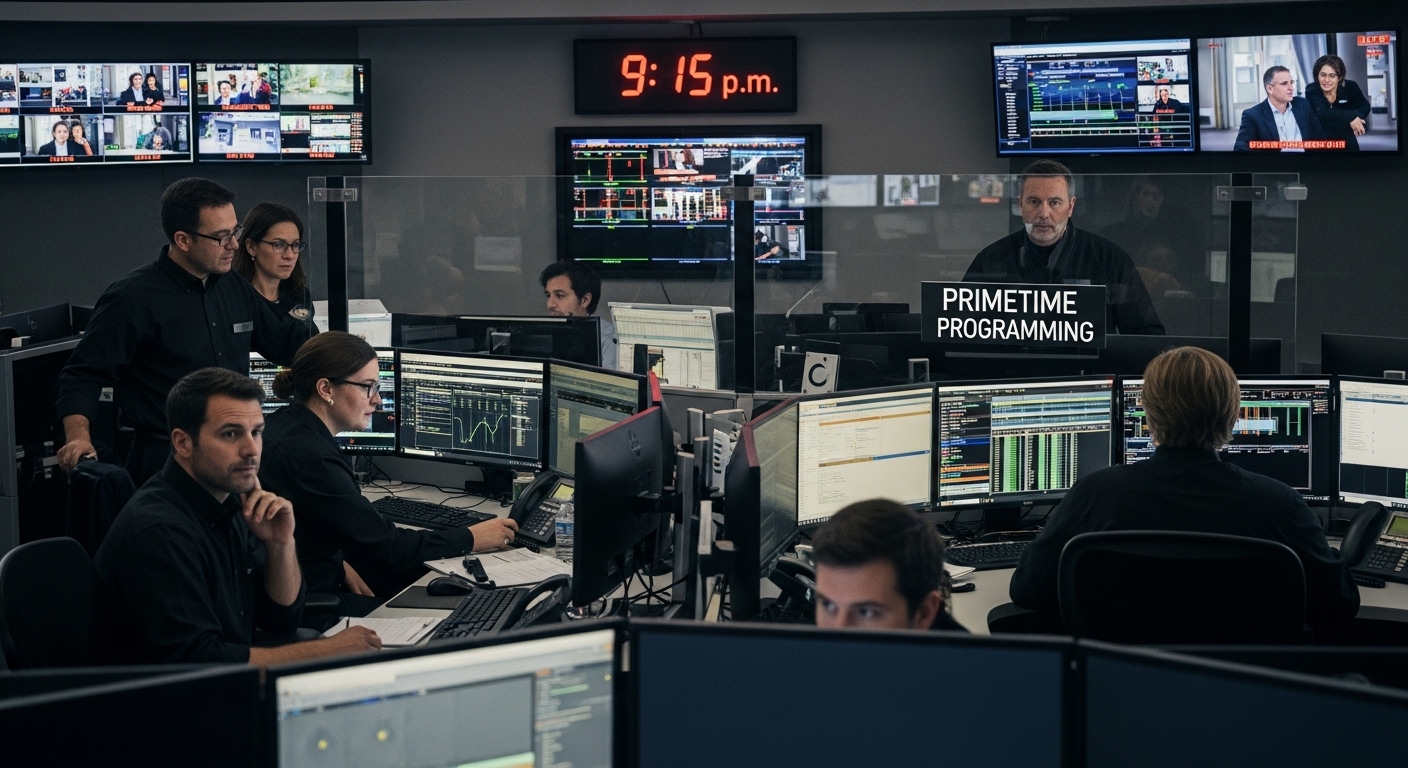
Primetime is the critical juncture where television networks transform audience attention into measurable success. Viewership and ratings during these hours become the primary currency of television programming, determining a show’s survival, network strategy, and advertising potential. TV ratings for networks now and then provide crucial insights into this complex ecosystem.
Measuring Audience Engagement
Ratings during primetime represent more than simple numerical data—they are a sophisticated reflection of audience preferences, demographic trends, and content effectiveness. Nielsen ratings, the industry standard, track several key metrics that reveal the intricate dynamics of viewer behavior:
- Total number of viewers
- Demographic breakdown
- Viewer retention rates
- Comparative performance across networks
These metrics help networks understand not just how many people are watching, but who is watching and how consistently they remain engaged throughout a program.
Impact on Programming Decisions
Primetime ratings directly influence critical network decisions. Shows with consistently high ratings receive renewed contracts, increased promotional support, and potentially more substantial production budgets. According to Nielsen research, networks carefully analyze minute-by-minute viewer data to understand exactly when audience attention peaks and wanes.
Networks use this granular information to make strategic choices about:
- Show scheduling
- Episode length
- Content style and complexity
- Potential series continuation or cancellation
The ratings game during primetime is ruthlessly competitive, with networks constantly adjusting their strategies to capture and maintain viewer interest. A single percentage point in ratings can mean millions of dollars in advertising revenue, making these metrics the lifeblood of television programming.
Below is a table summarizing how networks measure and use primetime ratings to make programming decisions based on data already discussed in the article.
| Metric | How It Is Used | Impact on Programming Decisions |
|---|---|---|
| Total Number of Viewers | Measures overall audience size | Determines potential advertising revenue |
| Demographic Breakdown | Analyzes who is watching (age, gender, etc.) | Guides show themes, casting, targeting |
| Viewer Retention Rates | Tracks how long audiences stay engaged | Informs episode pacing and show longevity |
| Minute-by-Minute Viewers | Reveals attention peaks and declines | Optimizes scheduling and episode structure |
| Comparative Network Data | Benchmarks performance against competitors | Drives renewal or cancellation choices |
Primetime vs. Non-Primetime: Key Differences
The television landscape is strategically divided into distinct broadcasting periods, each with unique characteristics and audience dynamics. Understanding the nuanced differences between primetime and non-primetime slots reveals the complex strategies networks employ to maximize viewer engagement. TV ratings for networks now and then provide critical insights into these programming variations.
Audience Composition and Behavior
Primetime represents a concentrated window of peak viewer attention, typically characterized by:
- Higher audience concentration
- Broader demographic representation
- More competitive programming
- Premium advertising rates
Non-primetime hours, by contrast, feature more fragmented viewership. Daytime and late-night slots attract specialized audience segments with distinct viewing preferences and lower overall engagement levels.

Content and Production Investment
The disparity between primetime and non-primetime programming is most evident in content quality and production resources. According to research from the U.S. Government Accountability Office, networks invest significantly more in primetime content, recognizing these hours as their primary revenue and reputation drivers.
Key production differences include:
- Higher budgets for primetime shows
- More sophisticated storytelling in primetime
- Greater talent recruitment for primetime slots
- More extensive marketing and promotional support
Non-primetime programming often serves alternative purposes such as niche content delivery, experimental formats, or targeted demographic programming. While these slots receive less financial investment, they play crucial roles in network strategy by serving specific audience segments and maintaining continuous channel engagement.
To clarify the distinctive characteristics and strategies associated with the TV industry’s two main scheduling windows, here is a comparison of primetime and non-primetime television periods.
| Feature | Primetime | Non-Primetime |
|---|---|---|
| Audience Concentration | Highest, broad demographic appeal | Lower, more fragmented segments |
| Programming Quality | Premium, high-budget, complex | Standard, niche, or experimental |
| Advertising Rates | Premium, significantly higher | Lower, less competitive |
| Typical Content Types | Network flagships, event TV, hits | Daytime talk, news, reruns, specials |
| Production Investment | Largest budgets, major talent | Modest budgets, smaller scale |
| Network Strategic Focus | Maximize ratings and revenue | Fill schedule, target small groups |
| Marketing Support | Extensive promotions, campaigns | Limited marketing efforts |
The Future of Primetime in the Streaming Age
The traditional concept of primetime is undergoing a radical transformation, challenged by the rise of streaming platforms and on-demand content consumption. The future of TV reveals a landscape where viewer control and personalized scheduling are rapidly replacing network-dictated viewing windows.
Disrupting Traditional Viewing Patterns
Streaming services have fundamentally redefined the meaning of primetime by introducing binge-watching and content-on-demand models. Unlike traditional television, these platforms eliminate the constraints of fixed broadcasting schedules, allowing viewers to:
- Watch entire series in single sessions
- Access content across multiple time zones
- Consume programming at their personal convenience
- Select from global content libraries
This shift represents more than a technological change—it is a fundamental reimagining of how audiences interact with television content.
Emerging Content Strategies
Networks and streaming platforms are adapting to this new paradigm by developing innovative content strategies. According to research examining broadcasting in the streaming era, the traditional primetime concept is fragmenting into multiple micro-primetime windows tailored to different demographic segments.
Key adaptations include:
- Releasing entire series simultaneously
- Creating shorter, more intense narrative arcs
- Developing content for global, not just local, audiences
- Utilizing advanced data analytics for content recommendation
While the linear primetime model is declining, the essence of appointment viewing remains. Streaming platforms now create their own “event television” moments through strategic release schedules and globally synchronized content launches, maintaining the communal excitement that once defined traditional primetime broadcasting.
Frequently Asked Questions
What is primetime in television?
Primetime refers to the peak viewing hours for television networks, typically from 8:00 p.m. to 11:00 p.m. Eastern and Pacific Time, and 7:00 p.m. to 10:00 p.m. Central and Mountain Time. This timeframe is crucial for maximizing audience engagement and viewership.
Why is primetime important for television networks?
Primetime is important because it allows networks to charge higher advertising rates due to increased viewer concentration. It is when they schedule their most anticipated and high-quality programming, making it a key period for advertising revenue and audience engagement.
How do primetime ratings affect television programming decisions?
Ratings during primetime influence critical decisions such as show renewals, scheduling, and production budgets. High ratings can lead to extended contracts and increased promotional support, while low ratings may result in cancellation or reduced budgets.
How is the concept of primetime changing with streaming services?
The rise of streaming services has transformed the idea of primetime by allowing on-demand content consumption. This shift enables binge-watching and viewing without traditional fixed schedules, prompting networks to adapt their content strategies to reach audiences across various viewing patterns.