
What is Syndicated Content? Understanding Its Impact
Syndicated content is everywhere in media, slipping seamlessly from one platform to another. Some television shows generate millions in additional revenue through syndication long after their original run. That sounds like a win for big networks, right? Not really. The real surprise is how syndication does not just keep content alive but actually gives audiences more access, more choice, and a stronger shared culture than ever before.
Table of Contents
- Defining Syndicated Content In Media
- The Importance Of Syndicated Content For Audiences
- How Syndicated Content Is Distributed And Monetized
- Types Of Syndicated Content In Entertainment
- The Future Of Syndicated Content In The Streaming Era
Quick Summary
| Takeaway | Explanation |
|---|---|
| Syndicated content expands audience reach | Licensing agreements allow creators to distribute their work across multiple platforms, increasing visibility. |
| Cost-effective for media organizations | Media companies can save resources by sharing content instead of producing new material for each platform. |
| Enhances information accessibility for audiences | Audiences benefit from streamlined access to diverse content, reducing the time spent searching. |
| Syndication maintains cultural connectivity | Consistent narratives across various media platforms help unify audience experiences and shared cultural stories. |
| Streaming changes syndication dynamics | The rise of streaming platforms enables personalized distribution and shifts how content is monetized and created. |
Defining Syndicated Content in Media
Syndicated content represents a strategic media distribution model where original content created by one entity is licensed and shared across multiple platforms, networks, or publications. This approach allows media organizations to efficiently expand their reach without generating entirely new material for each distribution channel.
The Core Mechanics of Content Syndication
At its fundamental level, syndicated content operates through a licensing agreement between a content creator and various media outlets. The original creator grants permission for their intellectual property to be republished, broadcasted, or distributed, typically in exchange for a predetermined fee or revenue sharing arrangement.
Key characteristics of syndicated content include:
- Enables widespread content distribution across multiple channels
- Provides cost-effective solutions for media organizations
- Allows original creators to monetize their work beyond initial publication
According to research from the International Journal of Communication, syndication represents a critical mechanism for information dissemination in modern media ecosystems. The process transforms content from a single-use asset into a flexible, reproducible resource that can generate value across different platforms.
Types of Syndicated Content
Syndicated content manifests in various formats, including news articles, television programs, radio shows, and digital media.
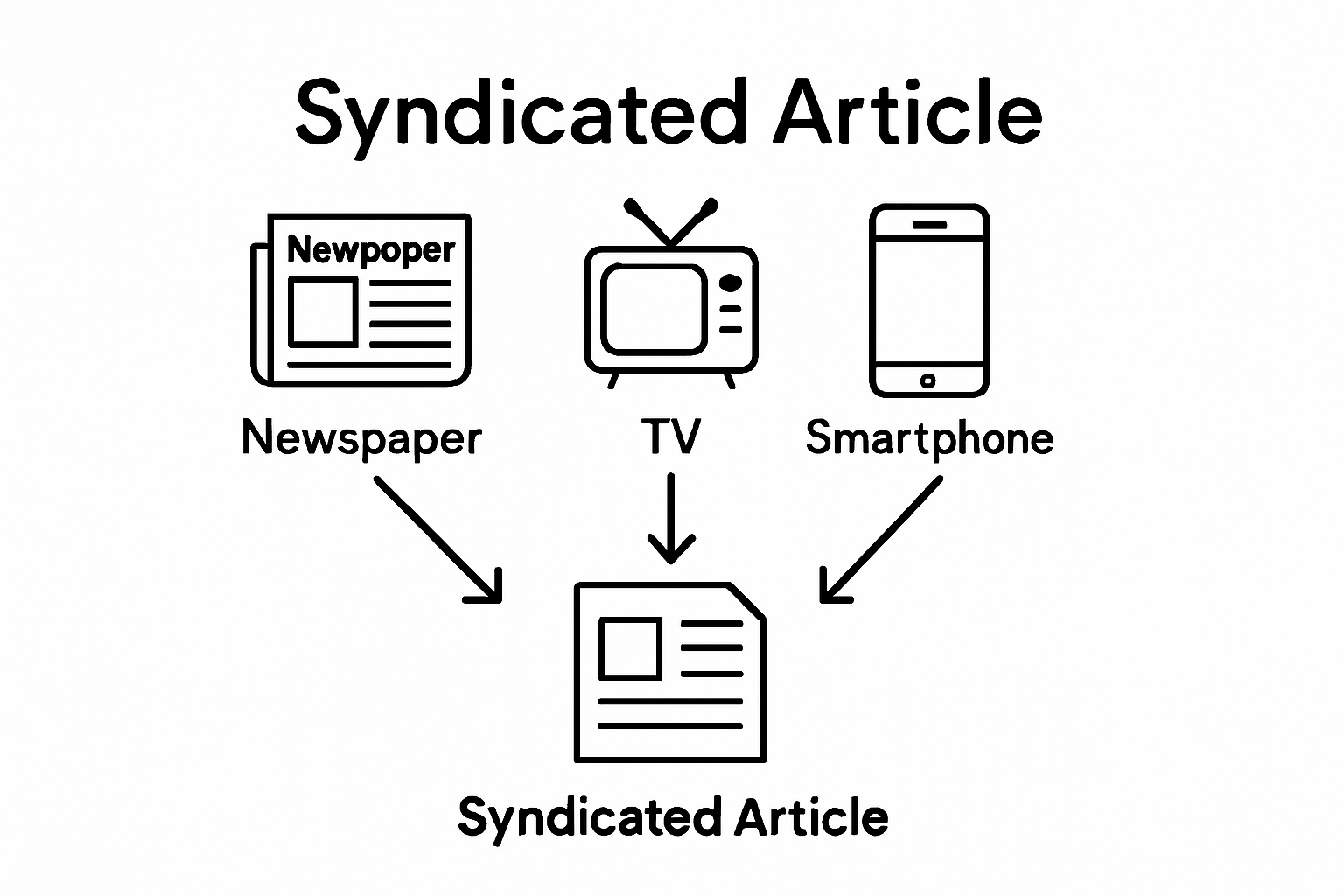 Newspapers might syndicate columnists, television networks might distribute popular series to international markets, and digital publications might share trending articles across multiple websites.
For audiences interested in understanding broader media distribution models, learn more about network broadcasting to complement your understanding of content syndication.
Below is a table summarizing the different types of syndicated content discussed in the article, highlighting their main formats and distribution contexts.
| Type of Syndicated Content | Format Examples | Typical Distribution Context |
|---|---|---|
| News Syndication | Columns, articles | Newspapers, digital publications |
| Television Program Syndication | Sitcoms, drama series, reality shows | Local TV stations, international TV |
| Radio Show Syndication | Talk shows, music programs | Regional/national radio networks |
| Digital Syndication | Web series, podcasts, news articles | Streaming platforms, websites, apps |
| Multimedia Syndication | Video clips, audio content | Online platforms, podcast networks |
| The symbiotic relationship between syndication and network distribution highlights the complex, interconnected nature of modern media landscapes. |
The Importance of Syndicated Content for Audiences
Syndicated content serves critical functions for audiences, providing them with diverse, accessible, and consistent information across multiple media platforms.
By streamlining content distribution, syndication offers significant benefits that enhance media consumption experiences and information accessibility.
Enhancing Information Accessibility
For audiences, syndicated content represents an efficient method of accessing high-quality information without searching multiple sources. By redistributing content across various platforms, media organizations enable consumers to encounter valuable stories, analyses, and perspectives they might otherwise miss.
Key audience benefits include:
- Increased exposure to diverse perspectives
- Reduced time spent searching for relevant content
- Access to specialized reporting from expert sources
Nielsen ratings research demonstrates how syndicated content significantly influences audience engagement and media consumption patterns. The broader the distribution, the more likely audiences are to encounter meaningful content.
Content Consistency and Cultural Connectivity
Syndicated content plays a crucial role in maintaining cultural narratives and shared information experiences. By providing consistent narratives across different media channels, syndication helps create a more connected information ecosystem.
 This approach allows audiences to engage with similar stories regardless of their preferred media platform, whether television, radio, print, or digital media.
According to research from the International Journal of Communication, syndication transforms content from isolated material into a flexible resource that generates value across multiple platforms. This process not only benefits media organizations but also provides audiences with a more integrated and comprehensive media experience.
How Syndicated Content is Distributed and Monetized
The distribution and monetization of syndicated content represent complex mechanisms that enable media organizations to generate revenue while expanding their content reach. These processes involve strategic licensing agreements, multiple revenue streams, and intricate distribution networks.
Distribution Channels and Strategies
Syndicated content moves through diverse channels, including traditional broadcast networks, cable television, digital platforms, and print media. Each distribution channel offers unique opportunities for content proliferation and audience engagement.
Key distribution strategies include:
- Territorial licensing for specific geographic markets
- Platform-specific content rights
- Multi-channel distribution agreements
Explore how TV shows generate revenue to understand the broader context of content monetization strategies. The intricate relationships between content creators, distributors, and platforms shape the economic landscape of media syndication.
Monetization Models
Content creators and media organizations employ several monetization approaches for syndicated content. These models range from fixed licensing fees to revenue sharing arrangements, enabling flexible financial structures that benefit multiple stakeholders.
Common monetization mechanisms involve:
- Upfront licensing payments
- Percentage-based revenue sharing
- Per-view or per-broadcast compensation
According to research from the International Journal of Communication, successful syndication requires nuanced negotiation of intellectual property rights and strategic content valuation. The goal is to maximize content value while maintaining broad distribution potential.
This table outlines some key monetization models for syndicated content, capturing the main methods for how revenue is generated and distributed based on the article.
| Monetization Model | Description | Example Use Case |
|---|---|---|
| Upfront Licensing Payments | Fixed payment for syndication rights | TV series sold to multiple networks |
| Percentage-Based Revenue | Content creator earns a share of revenues generated | Revenue split from online article ads |
| Per-view/Per-broadcast Fees | Payment each time content is aired or accessed | Fee for each TV station airing a show |
Types of Syndicated Content in Entertainment
Syndicated content in entertainment spans a diverse range of media formats, each offering unique opportunities for distribution and audience engagement. From television series to digital media, syndication has transformed how content reaches global audiences.
Television and Video Content Syndication
Television remains a primary platform for syndicated content, with multiple distribution models enabling shows to reach broader audiences. Sitcoms, drama series, and reality programs frequently leverage syndication to extend their market presence and generate additional revenue streams.
Key television syndication categories include:
- First-run syndicated programs created specifically for multiple markets
- Off-network syndication of existing television series
- International distribution of popular shows across different countries
Explore the best TV shows of all time to understand how successful series leverage syndication strategies. Many iconic shows have gained global recognition through strategic content distribution.
Digital and Multimedia Syndication
With the digital revolution, syndication has expanded beyond traditional broadcast mediums. Online platforms, streaming services, and digital media outlets now actively participate in content syndication, creating complex networks of content distribution.
Digital syndication encompasses:
- News articles and journalistic content
- Web series and digital original programming
- Podcasts and audio content distributed across multiple platforms
According to research from the International Journal of Communication, the digital landscape has dramatically transformed syndication models, enabling faster, more flexible content distribution across global audiences.
The Future of Syndicated Content in the Streaming Era
The streaming revolution has fundamentally transformed syndicated content distribution, creating unprecedented opportunities and challenges for media creators, distributors, and consumers. As traditional broadcast models give way to on demand platforms, content syndication is experiencing a profound digital metamorphosis.
Technological Disruption and Content Strategies
Streaming platforms are redefining how syndicated content is produced, distributed, and consumed. Unlike traditional models, digital platforms offer more granular data about audience preferences, enabling more targeted and personalized content strategies.
Key emerging trends include:
- Algorithmic content recommendation systems
- Personalized viewing experiences
- Global simultaneous content distribution
Learn the fundamentals of digital streaming to understand how technology is reshaping media consumption. The integration of artificial intelligence and data analytics is creating more sophisticated content syndication ecosystems.
Economic and Content Production Shifts
The streaming era is driving significant changes in content production economics. Media companies are increasingly investing in original content while simultaneously negotiating complex licensing agreements that span multiple platforms and regions.
Significant economic transformations include:
- Rise of platform exclusive content
- Shorter licensing windows
- More flexible international distribution models
According to research from the International Journal of Communication, the future of syndicated content will be characterized by increased flexibility, rapid technological adaptation, and more direct connections between content creators and global audiences.
Stay Ahead of the Syndication Game with Sparetimetv.com
Struggling to keep track of where and when syndicated content appears across TV networks and streaming platforms? The article highlights the modern challenge viewers face as content syndication scatters top-rated shows and movies throughout different channels and services. You want easy access to schedules, trending titles, and reliable guides so you never miss out on what matters most. Sparetimetv.com is expertly designed for TV enthusiasts who crave quick, accurate, and up-to-date information about syndicated releases, premiere dates, and broadcast times—all in one place.
Take control of your entertainment decisions now. Explore our primetime TV guides and movie schedules to discover what’s on, when, and where. Dive into curated lists of top ten rankings and keep up with today’s most talked-about syndicated content. Visit Sparetimetv.com and make your next viewing choice with confidence and ease.
Frequently Asked Questions
What is syndicated content?
Syndicated content is a media distribution model where original content is licensed and shared across multiple platforms, allowing for broader reach without creating new material for each channel.
How does the licensing agreement for syndicated content work?
The licensing agreement involves the original content creator granting permission to various media outlets to republish or distribute their content, typically in exchange for a fee or revenue-sharing arrangement.
What are the benefits of syndicated content for audiences?
Syndicated content enhances information accessibility by providing diverse perspectives, reducing search time for relevant material, and offering specialized reporting from expert sources.
How has streaming changed the syndication landscape?
The streaming era has transformed syndicated content distribution by allowing for more personalized content strategies, real-time audience data analysis, and quicker international distribution, reshaping how content is produced and consumed.