
What Is TV Ratings System? Complete Breakdown. More than 95 percent of television executives rely on ratings data to shape which programs reach your screen. TV ratings systems influence everything from the shows you watch to how much advertisers pay for airtime. Understanding how these systems work helps viewers make smarter choices and gives insight into the powerful role ratings play in shaping modern entertainment.
Table of Contents
- Defining TV Ratings Systems And Core Concepts
- Different Types Of TV Ratings And Methodologies
- How TV Ratings Are Measured And Reported
- Role Of Ratings In TV Industry Decision-Making
- Common Challenges And Criticisms Of TV Ratings
Key Takeaways
| Point | Details |
|---|---|
| Importance of TV Ratings | TV ratings systems provide essential guidelines for content assessment, helping parents make informed decisions about program suitability for children. |
| Diverse Methodologies | Rating systems utilize various methodologies, such as People Meters and online streaming analytics, to capture and analyze viewer behavior accurately. |
| Economic Influence | Ratings directly impact content development, advertising pricing, and programming decisions, serving as a significant financial guide in the television industry. |
| Challenges and Criticisms | Existing ratings systems face criticism for sample size limitations and demographic biases, impacting their credibility and effectiveness in measuring contemporary viewing habits. |
Defining TV Ratings Systems and Core Concepts
A TV ratings system is a structured framework designed to evaluate and communicate the content appropriateness of television programs for different audience demographics. Wikipedia highlights that these systems vary globally, with each country establishing unique guidelines to assess program suitability, particularly for younger viewers.
At its core, a TV ratings system serves multiple critical purposes. These systems help parents and guardians make informed decisions about the content their children consume, enable viewers to understand potential mature themes before watching, and provide broadcasters with a standardized method of content classification. Ratings typically consider factors like:
- Violence levels
- Sexual content
- Language complexity
- Thematic intensity
- Age-appropriate recommendations
In the United Kingdom, for instance, Television Viewer Ratings (TVRs) take a slightly different approach. Wikipedia explains that TVRs function as a standard metric for television advertising, where one TVR represents 1% of a target audience. This means if an advertisement achieves a Housewives’ TVR of 20, it indicates that 20% of all housewives viewed the specific ad.
Ratings systems worldwide have evolved to become increasingly nuanced, reflecting changing societal standards and viewer expectations. While some regions use simple age-based categorizations, others implement more detailed content descriptors that provide granular insights into program characteristics. For viewers seeking deeper context about how these systems impact media consumption, our guide on TV ratings impact offers comprehensive insights into this fascinating aspect of media communication.
Different Types of TV Ratings and Methodologies
TV ratings methodologies represent sophisticated systems designed to capture and analyze television viewership with increasing precision and depth. Wikipedia reveals the People Meter as a groundbreaking audience measurement tool that revolutionized how broadcasters understand viewer behavior. This innovative device connects to television sets and provides real-time data collection, with each household member assigned a personal ‘viewing button’ to track age and sex demographics.

Different rating methodologies offer unique insights into television consumption patterns:
- Diary Method: Traditional approach where viewers manually log their watching habits
- People Meter: Electronic tracking of real-time viewership
- Set Top Box Data: Collection of viewing information directly from cable and satellite receivers
- Online Streaming Analytics: Digital platforms tracking viewer engagement
Wikipedia introduces the Average Minute Audience (AMA) metric, which calculates the average number of viewers per minute during a television program. This sophisticated approach allows broadcasters and advertisers to understand precise audience engagement, measuring viewership across live, same-day, and delayed viewing periods.
Understanding these methodologies becomes crucial for viewers and industry professionals alike. Modern rating systems have evolved from simple percentage tracking to complex, multi-dimensional analysis that considers factors like demographic breakdown, viewing platform, and content type. For those seeking deeper insights into how networks interpret these ratings, our guide on TV ratings impact provides comprehensive exploration of this intricate media landscape.
How TV Ratings Are Measured and Reported
TV ratings measurement is a complex process that transforms viewer behaviors into actionable data for networks and advertisers. Wikipedia explains that the People Meter system represents a technological breakthrough in audience tracking. This innovative device connects to television sets and provides granular data collection, with each household member using a personal ‘viewing button’ that identifies their demographic details like age and sex.
The measurement process involves several critical steps:
- Sample Selection: Carefully choosing representative households
- Device Installation: Setting up monitoring equipment
- Data Collection: Tracking viewing habits in real-time
- Demographic Segmentation: Categorizing viewers by age, gender, income
- Statistical Analysis: Extrapolating sample data to broader populations
Wikipedia introduces the Average Minute Audience (AMA) metric, a sophisticated approach that calculates viewership by averaging the number of viewers per minute during a program. This method allows for nuanced understanding of audience engagement, capturing variations in viewership throughout different segments of a show.
Reporting these ratings involves transforming raw data into meaningful insights for broadcasters, advertisers, and content creators.
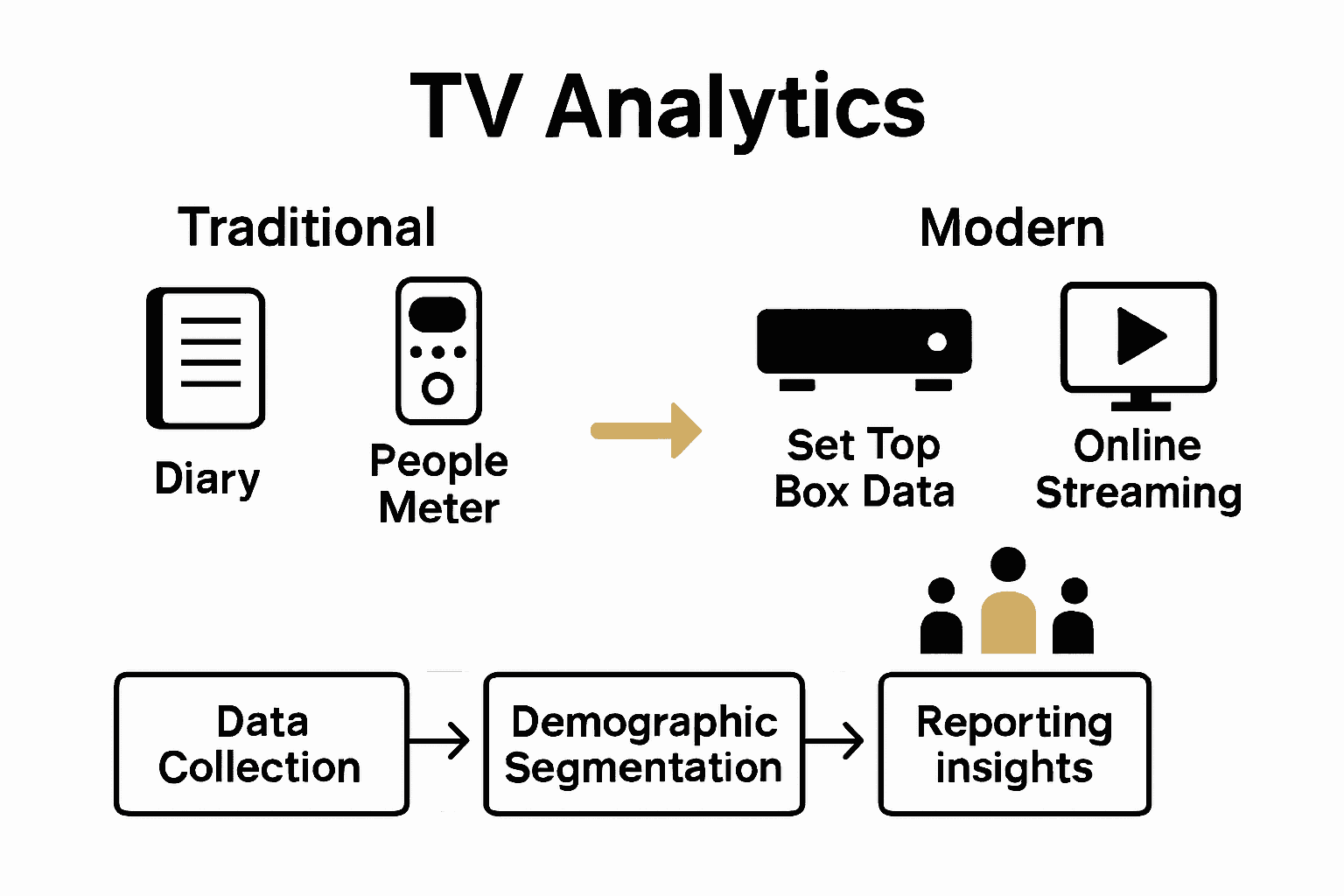 Modern reporting goes beyond simple total viewer counts, diving deep into demographic breakdowns, engagement patterns, and comparative performance metrics. For viewers curious about how networks interpret these complex measurements, our guide on Nielsen ratings offers an insider’s perspective on this intricate process.
Role of Ratings in TV Industry Decision-Making
TV ratings function as a critical economic compass for the entertainment industry, guiding pivotal decisions about content creation, programming, and advertising strategies. Francis Press reveals that ratings are influenced by a complex interplay of dynamic factors including politics, economy, and technological advancements, which collectively shape the television landscape and drive industry innovations.
The impact of ratings extends across multiple dimensions of television production:
- Content Development: Determining which shows receive continued funding
- Advertising Pricing: Setting rates based on viewer engagement
- Network Programming: Scheduling shows in optimal time slots
- Renewal/Cancellation Decisions: Evaluating show performance
- Creative Direction: Understanding audience preferences
PubMed highlights the nuanced role of ratings in content evaluation, with research demonstrating how rating systems help discriminate content based on critical factors like violence, sexual behavior, and substance references. This granular approach allows networks to make informed decisions about programming that balances audience interests with responsible content creation.
Ultimately, ratings represent more than just numbers—they are a sophisticated communication system between audiences and content creators. Networks use these insights to invest strategically, understanding that each rating point can translate into millions of dollars in potential revenue. For those eager to explore how television shows transform these metrics into financial success, our guide on TV show monetization provides an insider’s perspective on this intricate process.
Common Challenges and Criticisms of TV Ratings
TV ratings systems are not without significant flaws, presenting complex challenges that undermine their credibility and effectiveness. PubMed research highlights fundamental issues with content rating methodologies, particularly in how different programs are evaluated and classified across various content categories like violence, sexual behavior, and substance references.
Key criticisms of the current TV ratings landscape include:
- Sample Size Limitations: Small, potentially unrepresentative viewer panels
- Demographic Bias: Skewed data collection methods
- Measurement Inaccuracies: Difficulty tracking modern viewing habits
- Technological Gaps: Challenges in measuring streaming and time-shifted content
- Subjective Content Interpretation: Inconsistent content categorization
OurMental Health exposes a particularly concerning trend of sensationalism in ratings-driven content production. The television industry has been critiqued for deliberately emphasizing dramatic or controversial content to attract viewers, potentially compromising programming integrity and ethical standards.
These systemic challenges reveal the complex relationship between audience measurement and content creation. Ratings systems continue to evolve, struggling to accurately capture the nuanced viewing experiences of modern audiences across multiple platforms. For viewers interested in understanding how networks navigate these measurement challenges, our guide on TV networks’ historical strategies offers a comprehensive exploration of this intricate landscape.
Understand TV Ratings and Take Control of Your Viewing Experience
Navigating the complex world of TV ratings systems can feel overwhelming. With challenges like inconsistent content classifications and evolving measurement methods such as the People Meter and Average Minute Audience, it is hard to know which shows truly fit your preferences and values. If you want to avoid being caught off guard by unexpected mature themes or confusing ratings labels, it is essential to stay informed and have easy access to reliable, up-to-date TV schedules that factor in ratings details.

Discover a smarter way to plan your TV time with Sparetimetv.com. Our site offers comprehensive TV guides and detailed show information, helping you find programming that matches your interests while understanding the impact of ratings on content. Don’t wait until you’re frustrated by unclear rating systems — visit our homepage and explore how our curated listings and expert editorial insights can empower your entertainment choices today. For more on how TV ratings shape viewer decisions check out our detailed guide on the role of TV ratings and learn why understanding Nielsen ratings matters for every viewer.
Frequently Asked Questions
What is a TV ratings system?
A TV ratings system is a structured framework that evaluates and communicates the appropriateness of television content for different audience demographics, helping parents make informed decisions and providing viewers with insights about mature themes.
What factors do TV ratings consider?
TV ratings typically assess factors such as violence levels, sexual content, language complexity, thematic intensity, and age-appropriate recommendations when classifying programs.
How are TV ratings measured?
TV ratings are measured using various methodologies, including the People Meter, diary method, set-top box data, and online streaming analytics, which allow for real-time tracking and demographic segmentation of viewers.
What role do TV ratings play in the television industry?
TV ratings guide critical industry decisions, influencing content development, advertising pricing, scheduling, and renewal or cancellation of shows, thus serving as an economic compass for networks and advertisers.