
Reruns Explained: Complete Guide to TV Rebroadcasts. Did you know that over 70 percent of TV viewers have watched reruns of their favorite shows at least once? Reruns shape the way people connect with television, whether it is catching a missed episode or reliving a beloved series. Understanding how and why reruns work reveals much about the strategies behind programming, the economics of media, and the emotional bonds viewers form with familiar content.
Key Takeaways
| Point | Details |
|---|---|
| Reruns Serve Multiple Functions | Reruns allow networks to engage audiences during hiatuses and generate revenue through syndication. |
| Types of Syndication | There are three main types: first-run (originally produced shows), off-network (rebroadcast of popular shows), and clip shows (compilation episodes). |
| Benefits for Networks and Viewers | Reruns provide cost-effective programming for networks and comfort viewing for audiences, reducing decision fatigue. |
| Impact of Streaming on Reruns | Streaming platforms compete with traditional reruns by offering flexibility, yet both satisfy viewers’ desires for familiar content. |
Table of Contents
- What Are Reruns In Television Programming
- Major Types Of Reruns And Rebroadcasts
- How Reruns Benefit Networks And Audiences
- Economic And Legal Factors Behind Reruns
- Comparing Reruns With Streaming And On-Demand
What Are Reruns in Television Programming
A rerun is a television broadcasting strategy where a previously aired episode of a show is broadcasted again, allowing viewers to catch up on content they might have missed or enjoy watching their favorite programs multiple times. According to research on TV reruns, these repeated broadcasts serve multiple purposes in the television ecosystem.
Typically, reruns fall into two primary categories. First, networks air reruns during show hiatus periods to maintain audience engagement when new episodes aren’t available. Second, reruns are part of syndication packages, where shows are licensed to different networks or streaming platforms, expanding their potential viewership. Interestingly, terminology can vary globally – in the United Kingdom, a “repeat” might refer to a single episode aired outside its original timeslot, while “rerun” more commonly describes an entire series or season.
Rerun strategies benefit both television networks and viewers. For networks, reruns represent a cost-effective programming approach, filling scheduling gaps and generating additional revenue through advertising. For viewers, reruns offer opportunities to revisit beloved shows, catch missed episodes, or introduce new audiences to classic content. Whether you’re a casual viewer or a dedicated fan, reruns play a significant role in maintaining the longevity and accessibility of television programming.
If you’re curious about how networks strategically schedule these reruns, check out our guide on television show premieres to understand the broader programming landscape.
Major Types of Reruns and Rebroadcasts
Broadcast syndication is the primary mechanism through which reruns and rebroadcasts operate in television programming. According to research on TV ratings, there are three fundamental types of syndication that define how shows are redistributed and reaired.
The first type is first-run syndication, where programs are specifically produced to be distributed directly to multiple networks or local stations simultaneously. These shows are created with the intention of being broadcast across different markets, bypassing traditional network primetime slots. The second type is off-network syndication, which involves popular network shows being licensed and rebroadcast after their initial run. This allows successful series to continue generating revenue and reaching new audiences long after their original broadcast.
A unique subset of reruns includes clip shows, which compile memorable moments from a series into a single episode. These compilations serve multiple purposes: they provide nostalgic entertainment, offer new viewers a quick series overview, and help networks fill programming schedules cost-effectively. Public broadcasting syndication represents another important category, where educational and cultural programs are shared across different public television stations, extending their reach and educational impact.
Here’s a comparison of major types of reruns and syndication:
| Type of Rerun | Distribution Method | Typical Content Examples | Primary Purpose |
|---|---|---|---|
| First-Run Syndication | Direct to multiple stations | Game shows Talk shows | Wide reach Original content |
| Off-Network Syndication | Sold after initial broadcast | Popular sitcoms Dramas | Expand audience Revenue growth |
| Clip Shows | Compilation episodes | Highlight episodes Retrospectives | Cost savings Nostalgia factor |
| Public Broadcasting Syndication | Shared among public stations | Educational shows Documentaries | Educational access Broader impact |
For television enthusiasts curious about how these rebroadcast strategies work behind the scenes, our guide on clip shows offers deeper insights into this fascinating aspect of television programming.
How Reruns Benefit Networks and Audiences
Reruns create a unique symbiotic relationship between television networks and their viewers, offering substantial benefits to both parties. According to insights into how TV shows make money, these repeated broadcasts serve critical economic and entertainment purposes.
For television networks, reruns represent a cost-effective programming strategy. They can fill scheduling gaps, generate additional advertising revenue, and extend the commercial lifecycle of popular shows without investing in entirely new content production. This approach allows networks to maximize their existing programming assets while maintaining viewer engagement during periods when new episodes are not available.
From the audience perspective, reruns offer profound psychological benefits. According to research, rewatching familiar shows provides emotional regulation and comfort. Viewers experience a sense of narrative predictability that reduces decision fatigue in today’s overwhelming media landscape. These repeated broadcasts strengthen parasocial connections with beloved characters, creating a sense of continuity and emotional stability.
 Some viewers find reruns particularly valuable as a form of stress relief, offering a nostalgic escape and a predictable entertainment experience.
For those interested in understanding the deeper economics behind this programming strategy, our guide on syndicated content provides a comprehensive exploration of how television networks leverage reruns to create sustainable entertainment ecosystems.
Economic and Legal Factors Behind Reruns
The landscape of television reruns is deeply intertwined with complex economic and regulatory frameworks that have evolved significantly over decades. According to TV advertising insights, the legal and financial mechanisms governing reruns are far more nuanced than most viewers realize.
In the 1970s, the Federal Communications Commission (FCC) implemented critical regulations that dramatically reshaped television content distribution. The Financial Interest Syndication (Fin-Syn) rules were specifically designed to prevent networks from maintaining excessive control over program syndication. These regulations aimed to break up vertical integration, creating more opportunities for independent producers and preventing networks from monopolizing rerun rights. By limiting networks’ ability to own and exclusively control content, these rules fundamentally transformed how television shows could be redistributed and rebroadcast.
Economically, reruns represent a sophisticated revenue generation strategy. Television networks carefully calculate the financial potential of each show’s syndication rights, considering factors like audience popularity, historical viewership, and potential international market appeal. Some successful series can generate millions in revenue through strategic rebroadcast deals, effectively turning a single production investment into a long-term income stream. This economic model allows networks to maximize the value of their content library, creating financial sustainability beyond initial broadcast runs.
For those interested in understanding the intricate world of television content economics, our guide on how TV shows make money offers a deeper exploration of these fascinating financial mechanisms that power the entertainment industry.
Comparing Reruns With Streaming and On-Demand
The evolution of television consumption has dramatically transformed how audiences experience familiar content, with traditional reruns now competing directly against streaming platforms’ extensive libraries. Insights from cable versus streaming comparisons reveal a fascinating shift in viewer preferences and content consumption patterns.
Traditional reruns and streaming on-demand services offer distinctly different viewing experiences. Linear television reruns provide a shared, scheduled viewing experience with predetermined broadcast times, creating a sense of collective engagement. In contrast, streaming platforms offer complete flexibility, allowing viewers to watch any episode of a series at any time. However, research suggests that despite vast content libraries, viewers often gravitate toward familiar shows, with streaming platforms strategically designing interfaces that encourage revisiting known content through features like “Continue Watching” lists.
Psychologically, both reruns and streaming serve similar emotional needs. Comfort viewing remains a critical factor, with audiences seeking predictable narratives that reduce decision fatigue. Streaming platforms have recognized this tendency, often curating sections that highlight classic shows and fan-favorite series. This approach mirrors traditional rerun strategies, effectively bridging the gap between scheduled broadcasting and on-demand consumption.
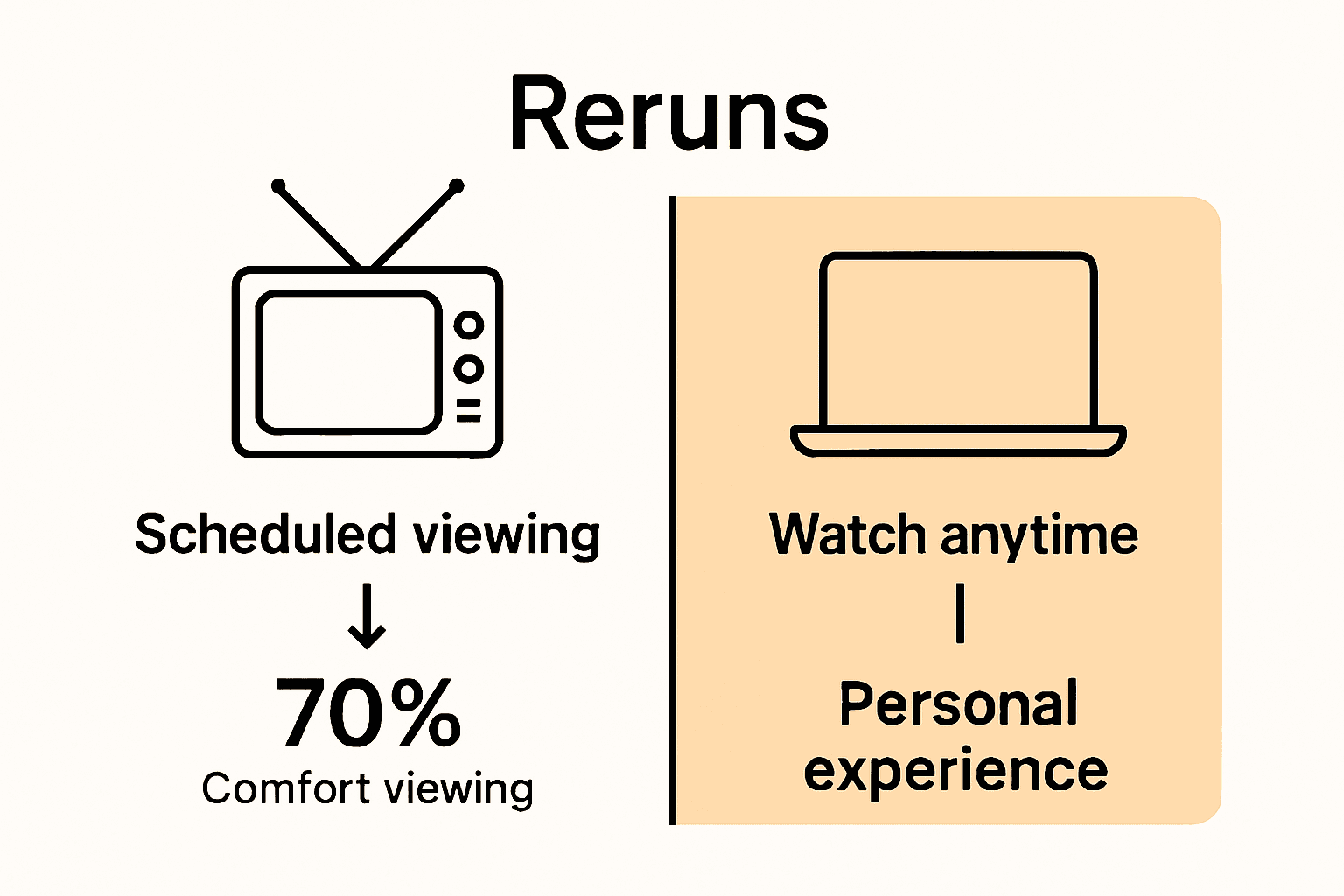 The key difference lies in control: streaming gives viewers total autonomy, while traditional reruns offer a more structured, communal viewing experience.
For those curious about how entertainment consumption continues to evolve, our guide on the future of TV provides an in-depth exploration of these transformative media trends.
Never Miss Your Favorites: From TV Reruns to New Releases
If you have ever felt frustrated trying to catch your favorite show during a rerun or struggled to find out when beloved series are back on the schedule, you are not alone. Many viewers want to revisit classic episodes, understand syndication, or simply pinpoint when a show will reappear. This guide explained the benefits and strategies behind TV reruns, but finding reliable, up-to-date broadcast information can still be tricky, especially as streaming options and network times change so fast.

Discover the solution with Sparetimetv.com. With our clear TV guides, structured schedules for primetime and streaming premieres, and curated lists of trending content, you can quickly find when and where reruns and new episodes air. Curious about how rebroadcasts fit into the wider TV landscape or want to see what is coming up next? Check current listings, deep-dive editorial guides, and ratings all in one place. Start now to make every moment in front of the screen count and get the information you want, exactly when you need it.
Frequently Asked Questions
What is a rerun in television programming?
A rerun is when a television network broadcasts a previously aired episode of a show again, allowing viewers to watch missed content or revisit their favorite programs.
How do reruns benefit television networks?
Reruns provide networks with a cost-effective way to fill programming schedules and generate additional revenue through advertising, without the need for new content production.
What are the different types of syndication related to reruns?
The major types include first-run syndication, where shows are produced for direct distribution; off-network syndication, which involves rebroadcasting popular shows after their original run; and clip shows, which compile highlights from a series.
How do reruns compare to streaming services?
While traditional reruns offer scheduled viewing experiences that foster collective engagement, streaming services provide on-demand access to episodes, allowing viewers to watch content at their convenience. Both cater to audiences seeking comfort viewing through familiar narratives.