
Why Are Reruns Aired: Complete TV Guide Insight. Did you know that more than 70 percent of television content watched in the United States includes reruns? These repeated broadcasts are far from filler. They shape what audiences remember and connect generations of viewers with classic and recent favorites. Understanding how reruns work unlocks hidden patterns in television, from boosting a show’s cultural legacy to building steady revenue for networks and streaming platforms alike.
Key Takeaways
| Point | Details |
|---|---|
| Reruns Serve Multiple Functions | Reruns fill programming slots, extend a show’s cultural lifespan, and generate advertising revenue by maximizing audience engagement. |
| Diverse Rerun Strategies | Networks utilize various rerun strategies, such as same-network and cross-network syndication, to optimize content distribution and audience reach. |
| Scheduling is Strategic | Rerun scheduling is carefully planned based on viewer demographics and seasonal patterns to maintain engagement and efficiency. |
| Economic Impact of Reruns | Reruns transform single broadcasts into recurring revenue streams, enhancing profitability for networks through strategic content monetization. |
Table of Contents
- Defining Reruns And Their Role In Television
- Types Of Reruns Across Networks And Platforms
- How Rerun Scheduling Works In The Industry
- Economic And Strategic Reasons Behind Reruns
- Viewer Benefits And Common Misconceptions
Defining Reruns And Their Role In Television
A rerun represents the strategic rebroadcast of a previously aired television episode, serving multiple critical functions in the media landscape. According to research, reruns enable networks to efficiently fill programming slots while providing audiences a second chance to experience content they might have missed during its original broadcast. TV Reruns of most popular shows on TV or Cable reveals that these repeated broadcasts are more than just convenient programming—they’re a sophisticated industry practice.
The core purpose of reruns extends beyond simple repetition. They play a crucial role in extending a television show’s cultural lifespan, allowing programs to reach broader audiences across different time zones and viewer schedules. Networks strategically use reruns to maximize viewership, generate additional advertising revenue, and maintain audience engagement with popular series even after their initial run has concluded.
Beyond practical programming needs, reruns serve significant audience and industry functions. They provide fans opportunities to rewatch favorite episodes, introduce new viewers to established series, and create consistent revenue streams through syndication. This practice also helps preserve television history, allowing classic shows to remain accessible and relevant long after their original production. Whether it’s a beloved sitcom from the 1990s or a critically acclaimed drama from a few years ago, reruns ensure that quality content continues to find and entertain audiences across generations.
Types Of Reruns Across Networks And Platforms
Television networks employ several distinct rerun strategies to maximize content value and audience engagement. The most common types include same-network reruns, where shows are repeated on their original channel, and cross-network syndication, which allows programs to reach broader audiences. Understanding these variations helps viewers appreciate how networks strategically repurpose content. What is Syndicated Content? Understanding Its Impact provides deeper insights into how content moves across different platforms.
According to research, there are specific thresholds for television series entering syndication. In U.S. television, shows typically need around 100 episodes to qualify for stripped syndication—a process that enables weekday reruns without repetitive content. This milestone allows networks to maximize revenue by selling episode packages to cable channels, streaming platforms, and local stations. Different rerun types include:
Here’s a comparison of the main types of reruns across networks and platforms:
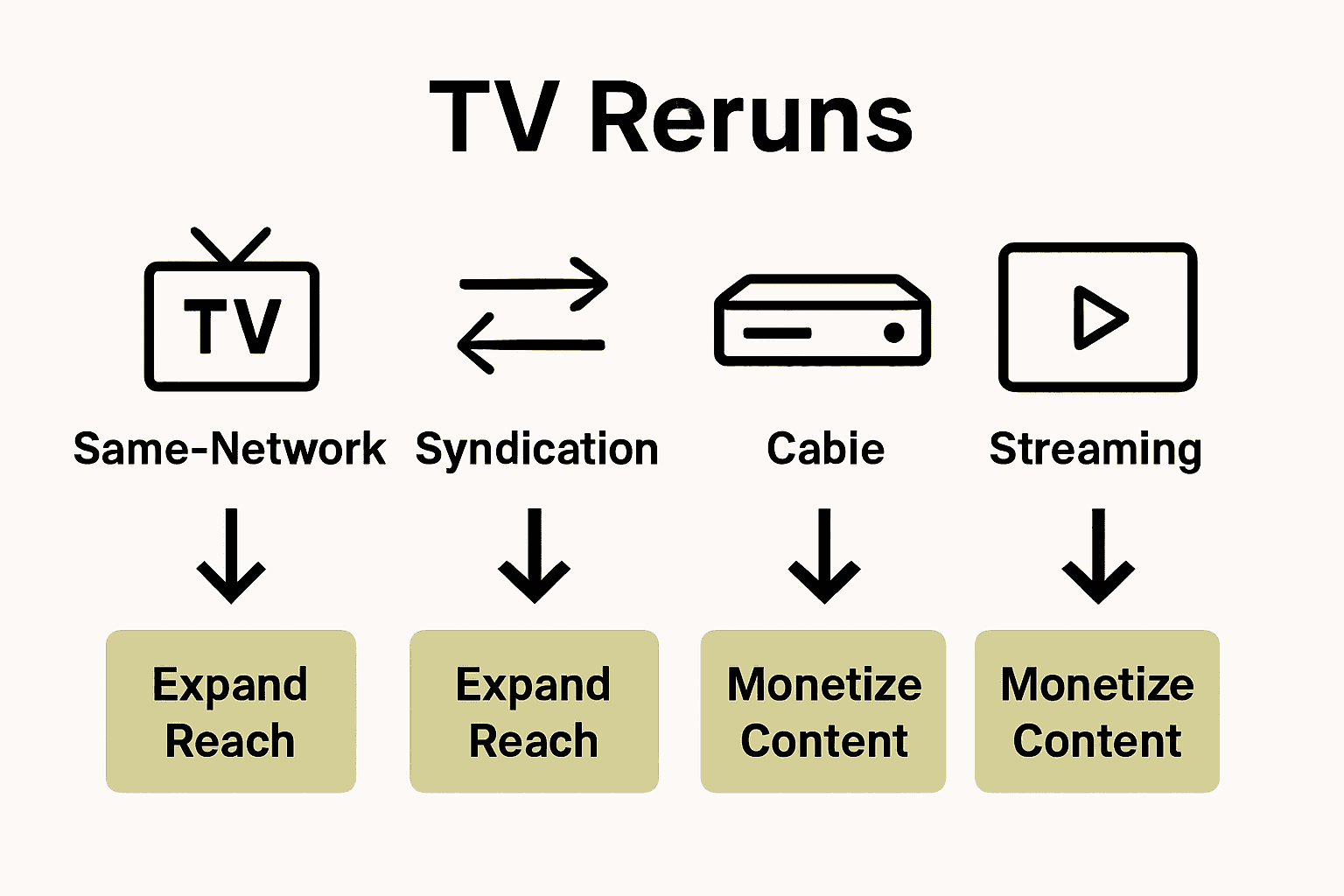
| Rerun Type | Where Aired | Primary Purpose | Example Usage |
|---|---|---|---|
| Same-Network Reruns | Original Channel | Fill off-peak slots Maintain viewership | Summer episodes Late night |
| Cross-Network Syndication | Different Networks | Expand audience Monetize content | Classic sitcoms on cable |
| Cable Network Reruns | Cable Channels | Acquire popular shows Reduce costs | Hit dramas on cable blocks |
| Streaming Platform Reruns | Digital Streaming Sites | On-demand access Archive preservation | Comedies on streaming services |
- Same-Network Reruns: Shows repeated on their original channel during off-peak hours
- Cross-Network Syndication: Programs sold to different networks for broader distribution
- Cable Network Reruns: Cable channels acquiring rights to popular shows from other networks
- Streaming Platform Reruns: Digital platforms licensing older series for their libraries
The evolution of media platforms has expanded rerun possibilities. Streaming services now play a crucial role in content recycling, offering viewers on-demand access to classic and recent shows. This approach not only preserves television history but also introduces new generations to beloved series, creating a continuous lifecycle for quality programming that transcends traditional broadcast boundaries.

How Rerun Scheduling Works In The Industry
Television scheduling is a sophisticated art form that transforms reruns from simple repetitions into strategic programming decisions. Networks carefully orchestrate when and how shows are rebroadcast, considering factors like audience demographics, time slots, and seasonal viewing patterns. TV Ratings for Networks Now and Then illustrates how these intricate scheduling strategies have evolved over time.
According to research, networks predominantly schedule reruns during off-peak periods or summer months when new programming is limited. This approach ensures continuous viewer engagement while efficiently utilizing available airtime. One notable industry practice is “burning off” episodes—a term describing the rapid airing of remaining episodes from canceled or low-rated series, typically placed in less visible time slots to fulfill contractual obligations.
Rerun scheduling involves several nuanced strategies:
- Filling primetime slots during network transition periods
- Maintaining audience connection with popular series
- Providing cost-effective programming alternatives
- Creating opportunities for new viewers to discover shows
Modern television networks have become increasingly sophisticated in their rerun strategies. Streaming platforms and cable networks now use advanced analytics to determine optimal rerun schedules, tracking viewer preferences, binge-watching patterns, and demographic engagement. This data-driven approach allows networks to maximize content value, keep audiences entertained, and generate additional revenue streams from existing programming.
Economic And Strategic Reasons Behind Reruns
The television industry relies on reruns as a critical financial strategy that transforms content from a one-time investment into a recurring revenue stream. Deficit financing has become a cornerstone of this approach, where networks minimize initial production risks by paying studios license fees lower than actual production costs. Why Television shows premiere in the fall? provides context for understanding how networks strategically plan their programming economics.
According to research, cable channels have historically depended on reruns of proven broadcast hits as a low-risk, lucrative business model. This strategy allowed networks to fill programming slots with familiar content while generating steady advertising revenue. However, the rise of streaming platforms has complicated this traditional approach, gradually reducing the pool of attractive rerun content and challenging existing economic frameworks.
The economic rationale for reruns extends across multiple dimensions:
- Maximizing return on production investments
- Generating additional advertising revenue
- Maintaining audience engagement during off-peak seasons
- Providing cost-effective programming alternatives
- Creating opportunities for new audience segments to discover shows
Modern media economics have transformed rerun strategies from simple content recycling to sophisticated content monetization. Streaming platforms and networks now use advanced analytics to precisely track viewer preferences, enabling more targeted rerun scheduling. This data-driven approach allows content owners to extract maximum value from their intellectual property, turning each episode into a potentially long-term revenue generator that extends far beyond its original broadcast window.
Viewer Benefits And Common Misconceptions
Reruns offer viewers far more than simple entertainment replay, providing a unique set of viewing advantages that many audiences overlook. 7 Key Benefits of Watching Documentaries highlights how repeated content can enhance viewer experience, a principle that extends across various television formats. Contrary to popular belief, reruns are not just lazy programming but a nuanced viewer service that allows deeper appreciation of complex narratives.
Viewers benefit from reruns in several unexpected ways. Watching a favorite show multiple times reveals subtle plot details, character motivations, and narrative nuances that might have been missed during the initial viewing. This repeated exposure creates a more comprehensive understanding of storytelling techniques, character development, and intricate storylines. Some viewers even develop a deeper emotional connection with characters through repeated viewing.
Common misconceptions about reruns include:
- Reruns are low-quality content
- They represent a lack of creativity
- Audiences are always frustrated by repeated shows
- Reruns have no educational or entertainment value
- Networks use them only to save money
Modern television consumption has transformed how viewers perceive reruns. Streaming platforms and on-demand services have normalized repeated viewing, making reruns an intentional viewing strategy rather than a programming necessity. Fans now deliberately rewatch series to catch missed details, understand complex narratives, and maintain connection with beloved characters. This shift demonstrates that reruns are not just a broadcast convenience, but an integral part of contemporary media consumption that respects viewers’ desire for deeper engagement with content.
Tired of Missing Your Favorite Shows? Discover a Smarter Way to Track TV Reruns and Premieres
Struggling to catch episodes when they air or frustrated by unpredictable rerun schedules? The article explains how reruns help networks keep audiences engaged, but as a viewer, it can feel confusing timing your own viewing around ever-changing broadcast and streaming schedules. Finding accurate, up-to-date listings is more important than ever for fans who want to avoid missing out on new releases, special airings, or hidden gems surfacing in reruns.

Let Sparetimetv.com be your reliable guide for navigating the world of television. Explore our easy-to-read TV Reruns guide for current schedules of popular shows, or dig into TV Ratings for Networks Now and Then to spot trending series you may have missed. Take charge of your viewing experience today and never be surprised by unexpected reruns again. Visit our site now for instant access to broadcast times, streaming premieres, and insider entertainment news.
Frequently Asked Questions
Why are reruns aired on television?
Reruns are aired to fill programming slots, extend a show’s cultural lifespan, and allow viewers who missed the original broadcast to catch up. They also help networks generate additional advertising revenue.
What types of reruns exist in the television industry?
There are several types of reruns: same-network reruns, cross-network syndication, cable network reruns, and streaming platform reruns. Each serves different purposes for audience reach and monetization.
How does rerun scheduling work in the television industry?
Rerun scheduling involves strategic decisions about when to air repeats, often during off-peak periods or summer months. This ensures ongoing viewer engagement and efficient use of airtime, allowing networks to maximize audience retention.
What are the viewer benefits of watching reruns?
Reruns provide viewers with the opportunity to rewatch favorite episodes, discover subtle details and character developments they may have missed, and appreciate complex narratives more deeply. They offer an engaging viewing experience that can enhance emotional connections with characters.