
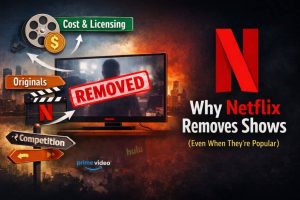
Why Netflix Removes Shows (Even When They’re Popular)
When a show disappears from Netflix, viewers often assume the same thing:
If people were watching it, why remove it?
That reaction makes sense. But Netflix does not make removal decisions based on popularity alone.
This page looks specifically at Netflix’s strategy. For the broader system behind streaming removals in general, see Why TV Shows Disappear From Streaming Services.
Quick Explanation
Netflix sometimes removes shows even when they are popular because popularity alone does not determine value. Netflix also looks at ownership, licensing costs, competition with its own originals, and whether the title still supports its larger content strategy.
What Makes Netflix Different?
Netflix is not just a streaming library. It is also:
- a global subscription platform
- a major content buyer
- a studio producing its own originals
- a service that constantly reshapes its catalog
That means Netflix does not simply ask, “Do people watch this show?”
It also asks:
- Do we own it?
- Does it help keep subscribers?
- Is it worth renewing the rights?
- Does it compete with content we control ourselves?
👉 That is why some popular shows still leave Netflix.
1️⃣ Netflix Often Prefers Owned or Exclusive Content
One of the biggest differences between Netflix and traditional TV is control.
If Netflix licenses a show from another studio, it does not fully control:
- how long it stays
- how much renewal costs
- where it may go next
But with a Netflix Original or exclusive title, the platform usually has more long-term value and stronger control over distribution.
That gives Netflix a reason to prioritize content it owns or controls more directly.
👉 Takeaway: Netflix has stronger incentives to keep content it controls, not just content people like.
2️⃣ Popular Does Not Always Mean Strategically Valuable
A show may be popular with existing viewers and still not be a priority for Netflix.
Netflix can evaluate a title in several ways, including:
- whether it attracts new subscribers
- whether it keeps people from canceling
- whether viewers complete the series
- whether the cost of keeping it still makes sense
So a show can perform well in a general sense, but still fall short in the areas Netflix values most.
👉 Takeaway: Netflix measures value differently than viewers do.
3️⃣ Licensed Shows Become Harder to Justify Over Time
Netflix built much of its early popularity on licensed content from outside studios.
But over time, that model changed.
Studios increasingly launched their own platforms and became less willing to let major titles stay on Netflix long-term. At the same time, Netflix had to decide whether paying to renew older licensed shows still fit its business model.
In many cases, the answer is no.
This is especially true when:
- the renewal price rises
- the studio wants the show back
- Netflix would rather invest in originals
👉 Takeaway: Licensed content becomes less secure as the streaming market gets more competitive.
4️⃣ Netflix Is Managing the Entire Catalog, Not One Show
Viewers usually think about one title at a time.
Netflix does not.
The platform is managing:
- thousands of titles
- global release calendars
- regional rights
- subscriber behavior across many markets
A show may leave Netflix not because it failed, but because the company is constantly making room for new priorities.
That can include:
- newer originals
- international content
- titles with stronger exclusivity
- content that better fits current strategy
👉 Takeaway: Netflix decisions are made at catalog level, not fan level.
5️⃣ Netflix Also Has to Think About Brand Identity
Netflix is no longer trying to be only a place that “has everything.”
It increasingly wants to be known for:
- Netflix Originals
- exclusive series
- global franchise titles
- content tied closely to its own brand
That means older licensed shows can become less important, even when they still have an audience.
👉 Takeaway: Brand strategy can matter as much as viewership.
6️⃣ Why Shows Sometimes Leave Without Much Warning
From the viewer side, removals can feel sudden.
But Netflix decisions often happen around:
- contract deadlines
- renewal windows
- ongoing negotiations
Those timelines are not always visible to the public.
So when a title disappears, it may feel abrupt even though the decision followed a longer business process.
👉 Takeaway: Sudden removal usually reflects contract timing, not random choice.
Netflix vs the Broader Streaming System
Your broader page explains why shows disappear from streaming services in general.
This page is narrower.
| Broader Streaming Question | Netflix-Specific Question |
| Why do streaming rights expire? | Why does Netflix choose not to keep a show? |
| How do licensed titles move between platforms? | Why would Netflix remove a popular show anyway? |
| Why do shows disappear from platforms? | How does Netflix decide what still fits its strategy? |
👉 This page is about Netflix’s decision-making, not just streaming removals in general.
Frequently Asked Questions
Why does Netflix remove popular shows?
Because popularity alone is not enough. Netflix also looks at cost, ownership, exclusivity, and long-term strategy.
Does Netflix own all the shows on its platform?
No. Many titles are licensed from studios for a limited time.
Why does Netflix focus so much on originals?
Because originals give Netflix more control, stronger branding, and longer-term value.
Can a removed show come back to Netflix?
Yes. A show can return if a new deal is made, though it may also move to another platform instead.
How This Connects to Other TV Industry Decisions
Netflix removals are part of a bigger system that includes:
- licensing deals
- platform competition
- actor and creator contracts
- changing TV economics
For more context, see:
- Why TV Shows Disappear From Streaming Services
- Why TV Shows Have Fewer Episodes Now Than in the Past
- Why TV Shows Take So Long Between Seasons Now
- How TV Show Actors Make Money
Final Takeaway
Netflix removes shows for more reasons than simple popularity.
A title may still leave the platform because Netflix is balancing:
- ownership
- renewal cost
- catalog strategy
- brand direction
- subscriber value
So when a show disappears from Netflix, the real question is usually not “Was it popular?”
It is:
Did Netflix still see it as worth keeping?
This topic is part of our guide explaining how television scheduling, economics, and production decisions work.
See the full overview in How TV Works.