
Complete Guide to Why Reruns Are Aired. Over half of all television viewing hours involve programs that have already aired before, revealing just how central reruns are to entertainment habits. Whether you missed an episode or crave the comfort of a familiar show, reruns offer a unique blend of convenience and nostalgia. Their influence shapes what networks air, how studios profit, and why certain series become unforgettable parts of pop culture.
Key Takeaways
| Point | Details |
|---|---|
| Economic Strategy | Reruns are crucial for networks to manage production costs and generate additional revenue through syndication. |
| Audience Engagement | Reruns maintain viewer interest and connection with popular series, effectively filling programming gaps. |
| Cultural Relevance | Reruns provide nostalgia and accessibility for diverse viewing habits, enhancing shared cultural experiences. |
| Programming Techniques | Networks employ strategic scheduling methods like stripping and hammocking to maximize rerun effectiveness. |
Table of Contents
- Definition Of Reruns In Television Broadcasting
- Types Of Reruns And Their Scheduling Patterns
- How Reruns Support TV Programming Strategies
- Economic Impact On Networks And Studios
- Viewer Demand And Cultural Influences
Definition Of Reruns In Television Broadcasting
Reruns are television episodes that have been previously broadcast and are aired again by networks, offering viewers a chance to watch beloved programs multiple times. According to research from TV Reruns of most popular shows, these repeated broadcasts serve multiple critical functions in television programming.
Traditionally, reruns emerged in the early television era when live broadcasts started being recorded for later transmission. This practice fundamentally transformed how audiences consumed media, allowing them to revisit favorite shows and networks to maximize the value of their original productions. As defined by academic sources, a rerun is essentially a rebroadcast of a previously aired television program, strategically used to fill programming slots and reach viewers who might have missed the initial airing.
The strategic importance of reruns extends beyond simple repetition. They represent a sophisticated programming technique that:
- Generates additional revenue through syndication
- Maintains audience engagement with popular series
- Provides cost-effective content for networks
- Introduces new generations of viewers to classic shows
Understanding reruns reveals their nuanced role in television broadcasting – they’re not just repeated content, but a calculated method of extending a show’s cultural impact and commercial viability.
Types Of Reruns And Their Scheduling Patterns
Syndication reruns and hiatus reruns represent the two primary categories of television episode repetitions. According to research from Understanding the Role of TV Schedules, these rebroadcast strategies help networks maintain viewer engagement and optimize programming efficiency.
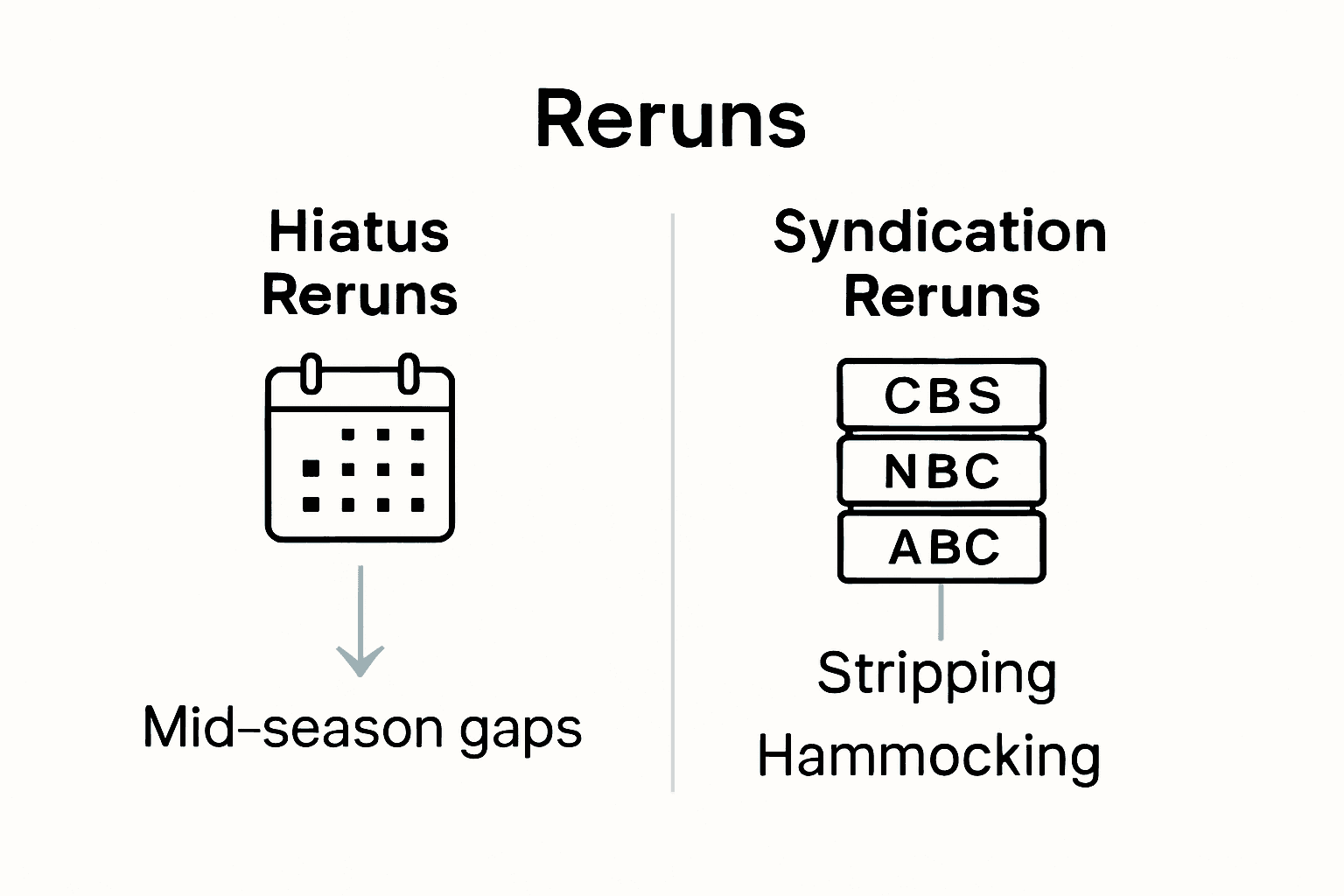
Hiatus reruns occur during a show’s natural break periods, such as mid-season or summer intervals, allowing networks to keep audiences connected to their favorite series. Syndication reruns, conversely, involve episodes being rebroadcast by different networks or at alternative timeslots, extending a program’s potential viewership and revenue streams.
Here’s a comparison of the two primary types of reruns and their typical scheduling patterns:
| Rerun Type | Description | Common Scheduling Techniques |
|---|---|---|
| Hiatus Reruns | Aired during show breaks or off-season | Mid-season gaps Summer intervals |
| Syndication Reruns | Broadcast by other networks or new timeslots | Stripping Hammocking Inheritance |
Networks employ sophisticated scheduling techniques to maximize rerun effectiveness:
- Stripping: Airing the same show at consistent daily timeslots
- Hammocking: Positioning reruns between popular programs to retain audience attention
- Inheritance: Strategically scheduling reruns alongside high-rating shows to capture viewer interest
These intricate scheduling patterns demonstrate how reruns are far more than simple repetitions – they’re calculated programming strategies designed to maintain viewer engagement, generate additional revenue, and keep beloved shows alive in the public consciousness.
How Reruns Support TV Programming Strategies
Television networks rely on reruns as a critical programming strategy, transforming seemingly repeated content into a sophisticated approach for audience engagement. By exploring how networks leverage reruns, we can understand their profound impact on how TV shows make money, revealing a complex ecosystem of content management and revenue generation.
According to research, reruns serve multiple strategic purposes beyond simple content repetition. They provide an economical solution for filling programming schedules, especially for cable and multichannel networks expanding their content offerings. By rebroadcasting familiar shows, networks can maintain viewer interest without incurring the substantial production costs associated with creating entirely new content.
The strategic benefits of reruns extend across multiple dimensions:
- Reduce programming expenses
- Maintain audience connection with popular series
- Generate additional revenue through repeated advertising
- Test audience reception for potential future seasons
- Bridge scheduling gaps between new program seasons
Moreover, reruns have adapted to changing viewer consumption patterns, seamlessly integrating with modern streaming and binge-watching trends. They represent more than just repeated episodes – they are a calculated approach to content management, audience retention, and financial optimization in the competitive television landscape.
Economic Impact On Networks And Studios
Deficit financing represents a crucial economic mechanism in television production, where networks strategically manage content costs through rerun strategies. Understanding how quality of TV series intersects with financial models reveals the intricate economic landscape of modern television broadcasting.
According to research, networks typically pay studios license fees that do not fully cover original production costs. This economic model relies heavily on syndication and reruns to help studios recoup their initial investments. The financial break-even point often occurs when a show reaches approximately 100 episodes, transforming reruns from a programming tactic into a significant revenue stream.
The economic benefits of reruns for networks and studios are multifaceted:
- Minimize production expenses by reusing existing content
- Generate continuous revenue through repeated broadcasting
- Extend the financial lifecycle of television series
- Create additional advertising opportunities
- Provide cost-effective programming alternatives
Moreover, reruns have become a sophisticated financial instrument in the television industry. They allow networks to maintain viewer engagement while simultaneously managing production budgets, effectively turning repeated content into a strategic economic asset that benefits both content creators and broadcasters.

Viewer Demand And Cultural Influences
Cultural consumption of television has dramatically transformed with the rise of digital platforms, making reruns more critical than ever in meeting viewer expectations. By exploring what is binge watching, we can understand how reruns now serve multiple viewer needs beyond traditional broadcasting.
Reruns have evolved to accommodate diverse viewing habits across different cultural contexts. In some regions, strategies like omnibus reruns or strategic timeslot repetitions help viewers catch up on missed content, demonstrating how television programming adapts to audience preferences. This flexibility allows networks to cater to varying schedules, work patterns, and entertainment consumption styles.
The cultural significance of reruns extends across multiple dimensions:
- Provide accessibility for viewers with time constraints
- Create shared cultural experiences across generations
- Allow deeper engagement with complex narrative storylines
- Offer nostalgia and comfort through familiar content
- Enable fans to revisit beloved characters and moments
Moreover, reruns represent more than simple content repetition. They are a dynamic cultural mechanism that bridges generational viewing preferences, transforms how audiences interact with media, and creates continuous narrative experiences in an increasingly fragmented entertainment landscape.
Easily Find Reruns and Stay Ahead of Your TV Favorites
Tired of missing the shows you love or getting lost in confusing rebroadcast schedules? The struggle with understanding reruns and their complex timing can take the fun out of watching television, especially when networks switch up hiatus reruns, syndication episodes, or use advanced scheduling. Whether you want to catch up on classics, discover when your favorite series airs next, or make the most of syndication reruns, finding accurate and complete guides can be a real challenge.

Don’t let another episode slip by. Visit Sparetimetv.com for the latest TV guides, up-to-date schedules, and insider tips on everything about reruns, primetime series, and trending movies. See what’s on now, set reminders for future broadcasts, and get trustworthy information sourced from major networks and streaming services. Take control of your screen time and never miss a moment again. Explore Sparetimetv.com today and experience the difference firsthand.
Frequently Asked Questions
What are reruns in television broadcasting?
Reruns are television episodes that have been previously aired and are broadcast again, allowing viewers to enjoy favorite shows multiple times.
Why are reruns strategically important for networks?
Reruns help networks generate additional revenue, maintain audience engagement, provide cost-effective content, and introduce new viewers to classic shows.
What are the different types of reruns?
The two primary types of reruns are syndication reruns, which air on different networks or at alternative times, and hiatus reruns, which occur during a show’s break periods.
How do reruns impact the economics of television production?
Reruns minimize production expenses, generate continuous revenue through repeated broadcasting, and help studios recoup initial investments in shows, extending the financial lifecycle of television series.