
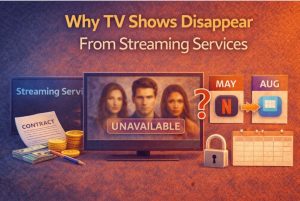
Why TV Shows Disappear From Streaming Services
If you’ve ever searched for a TV show on a streaming platform and suddenly couldn’t find it, you’re not alone.
Shows regularly disappear from services like Netflix, Hulu, or Prime Video—even if they were available just weeks before.
This can feel random, but it isn’t.
Streaming libraries are not permanent collections. They are built around contracts, licensing agreements, and platform strategy.
For a Netflix-specific version of this topic, see Why Netflix Removes Shows (Even When They’re Popular).
Quick Explanation
TV shows disappear from streaming services because licensing agreements expire, rights move between platforms, or services decide the content is no longer worth the cost. Streaming libraries are constantly changing based on contracts and business strategy.
What Most People Don’t Realize
Streaming platforms do not permanently own most of the shows they offer.
Instead, they:
- license content for a limited time
- renew contracts if it makes sense
- or remove the show when agreements expire
👉 Shows don’t disappear randomly—they follow contract timelines.
The Main Reasons Shows Disappear
1️⃣ Licensing Agreements Expire
Most streaming deals last:
- 1–3 years
- or a fixed contract period
When the contract ends:
- the platform must renew the deal
- or remove the show
If no agreement is reached, the show disappears.
👉 Takeaway: Expiration is the most common reason.
2️⃣ Rights Move to Another Platform
Studios often control where their content appears.
When a contract ends, they may:
- move the show to another streaming service
- keep it for their own platform
- sell it to a different market
This is why shows sometimes “move” instead of disappearing completely.
👉 Takeaway: Content follows ownership.
3️⃣ Platforms Decide It’s Not Worth the Cost
Even if a platform can renew a show, it may choose not to.
Streaming services evaluate:
- how many people watch the show
- whether it brings in new subscribers
- how much the licensing costs
If the numbers don’t justify the cost, the show is removed.
👉 Similar logic is explained in
Why TV Networks Cancel Shows With “Good Ratings”
👉 Takeaway: Availability depends on value, not just popularity.
4️⃣ Residual Payments and Contracts
Keeping a show on a platform can trigger ongoing payments to:
- actors
- writers
- producers
Removing a show may reduce these costs.
👉 Related to
How TV Show Actors Make Money
👉 Takeaway: Contracts affect availability.
5️⃣ Platform Strategy Changes
Streaming services constantly adjust their libraries.
They may remove shows to:
- promote original content
- reduce licensing expenses
- refresh the catalog
This helps platforms manage costs and keep their content lineup updated.
👉 Takeaway: Libraries are curated, not permanent.
Streaming vs Traditional TV (Key Difference)
| Traditional TV | Streaming |
| Reruns scheduled by networks | On-demand library |
| Shows rotate slowly | Shows added/removed frequently |
| Limited viewer control | Viewer expects constant access |
👉 Streaming changes availability expectations—but not the business model behind it.
Do Shows Ever Come Back?
Yes. A show that disappears can:
- return after a new licensing deal
- appear on a different platform
- move to international services
Streaming availability is often cyclical.
👉 Takeaway: Removal is not always permanent.
Frequently Asked Questions
Why did a show disappear from Netflix suddenly?
Because the licensing agreement expired and was not renewed.
Do streaming services own all their shows?
No. Many shows are licensed temporarily from studios.
Why do shows move between platforms?
Because rights are sold or transferred after contracts end.
Can a show return after being removed?
Yes. It may return later or appear on another service.
Final Takeaway
TV shows disappear from streaming services because the system is built on contracts, not permanence.
Platforms constantly adjust their libraries based on:
- licensing agreements
- costs
- strategy
- viewer demand
In streaming, availability is always temporary—even for popular shows.
This topic is part of our guide explaining how television scheduling, economics, and production decisions work.
See the full overview in How TV Works.