
Streaming Services Explained: Benefits and Key Uses. Over 80 percent of households in the United States now use at least one streaming service, reshaping how people watch TV and movies. The switch from cable to online platforms is more than a trend; it’s a shift that puts countless options right at your fingertips. As entertainment choices grow, understanding how streaming works and why it stands apart helps you make the most of your viewing experience.
Table of Contents
- What Are Streaming Services And How They Work
- Types Of Streaming Platforms Explained
- Core Features And Viewing Advantages
- Comparing Streaming To Traditional TV
- Cost, Risks, And Common Mistakes
Key Takeaways
| Point | Details |
|---|---|
| Flexibility of Streaming | Streaming services provide on-demand content access, allowing users to watch anytime, anywhere, and avoid fixed schedules. |
| Variety of Platforms | Different streaming platforms cater to various needs, from subscription services to ad-supported options and niche content. |
| Cost Management | Viewers should track expenses and be aware of potential hidden costs and content fragmentation to avoid subscription overload. |
| Technological Advancements | The use of CDNs and adaptive bitrate streaming enhances the viewing experience by ensuring smooth playback across devices. |
What Are Streaming Services and How They Work
Streaming services have transformed how we consume entertainment, offering an innovative way to watch movies, TV shows, and other digital content without traditional downloading methods. According to Virgin Media, streaming is a method of transmitting audio and video files over the internet in real time, enabling immediate content access.
Streaming Technology works through a fascinating process of data transmission. When you select a movie or show, the service breaks the content into small data packets that are sent from servers directly to your device. These packets are temporarily stored in a buffer, allowing for seamless playback without waiting for an entire download. T-Mobile highlights that this process relies on two critical technologies:
- Content Delivery Networks (CDNs): Distribute data across multiple servers to minimize transmission delays
- Adaptive Bitrate Streaming: Dynamically adjusts video quality based on your internet connection speed
The magic of streaming lies in its real-time delivery. Unlike traditional media consumption, where you’d wait for an entire file to download, streaming lets you start watching almost instantly. Modern streaming platforms leverage sophisticated algorithms to ensure smooth, uninterrupted viewing experiences across various devices like smartphones, smart TVs, tablets, and computers. For an even deeper understanding of how these platforms operate, check out our guide on understanding the role of streaming services.
What sets streaming apart is its flexibility and convenience. Users can pause, rewind, or switch between different content without complex downloading processes. Whether you’re watching a blockbuster movie, a documentary, or catching up on your favorite TV series, streaming services have made entertainment more accessible and personalized than ever before.
Types of Streaming Platforms Explained
Here’s a comparison of major types of streaming platforms:
| Platform Type | Payment Model | Content Examples | Key Benefit |
|---|---|---|---|
| Subscription-Based | Monthly/annual fee | Netflix Amazon Prime | Large libraries No ads |
| FAST (Ad-Supported) | Free with advertisements | Pluto TV Tubi | No cost Wide availability |
| Live TV Streaming | Monthly fee | Sling TV YouTube TV | Real-time channels Sports |
| Niche Content | Subscription or free | Crunchyroll Shudder | Specialized programming |
Streaming platforms have evolved dramatically, offering viewers multiple ways to consume digital content. According to Wikipedia, over-the-top (OTT) media services deliver video and audio content directly to viewers via the internet, bypassing traditional cable or satellite providers. These services have transformed how we access entertainment, making content available across various devices like smart TVs, smartphones, and streaming devices.
Streaming Platform Categories can be broadly divided into several key types:
- Subscription-Based Services: Platforms like Netflix and Amazon Prime that require monthly payments
- Free Ad-Supported Streaming Television (FAST): As highlighted by Wikipedia, these platforms offer content without subscription fees, generating revenue through advertisements
- Live TV Streaming Services: Platforms that provide real-time broadcast channels over the internet
- Niche Content Platforms: Specialized services focusing on specific genres or content types
FAST platforms like Pluto TV and Tubi represent an increasingly popular streaming model, providing users with a wide range of programming without requiring a paid subscription. These services have democratized content access, allowing viewers to enjoy movies, TV shows, and live broadcasts completely free of charge. For a more comprehensive understanding of these platforms, explore our guide on types of streaming services every viewer should know.
The streaming landscape continues to evolve, with each platform type offering unique advantages. Whether you prefer comprehensive libraries, live content, or specialized programming, there’s a streaming service designed to meet your entertainment needs. The key is understanding the different types of platforms and choosing the one that best matches your viewing preferences and budget.
Core Features and Viewing Advantages
Streaming services have revolutionized how we consume entertainment, offering unprecedented flexibility and convenience. According to T-Mobile, these platforms provide immediate access to a vast range of media content, enabling real-time delivery across multiple devices without traditional download requirements.
Key Advantages of streaming services include:
- Unparalleled Convenience: Watch content anytime, anywhere
- Multi-Device Compatibility: Access shows on smartphones, tablets, smart TVs
- Personalized Viewing Experience: Tailored recommendations and user profiles
- On-Demand Content: Instant access to thousands of movies and shows
As highlighted by T-Mobile, these services offer remarkable mobility, allowing users to consume content on the go. This flexibility means you’re no longer tied to traditional broadcast schedules or physical media. To understand more about exclusive streaming content that makes these platforms unique, check out our guide on exclusive content.
However, streaming isn’t without challenges. Users must consider factors like internet stability, potential subscription costs, and the need to manage multiple platforms to access all desired content. Despite these considerations, streaming services continue to transform entertainment consumption, offering unprecedented control and convenience for modern viewers.
Comparing Streaming to Traditional TV
The entertainment landscape has dramatically transformed with the rise of streaming services. According to Wikipedia, over-the-top (OTT) media services now deliver content directly to viewers via the internet, effectively bypassing traditional broadcast, cable, and satellite television systems. This fundamental shift represents more than just a technological change—it’s a complete reimagining of how we consume media.
Key Differences between streaming and traditional TV include:
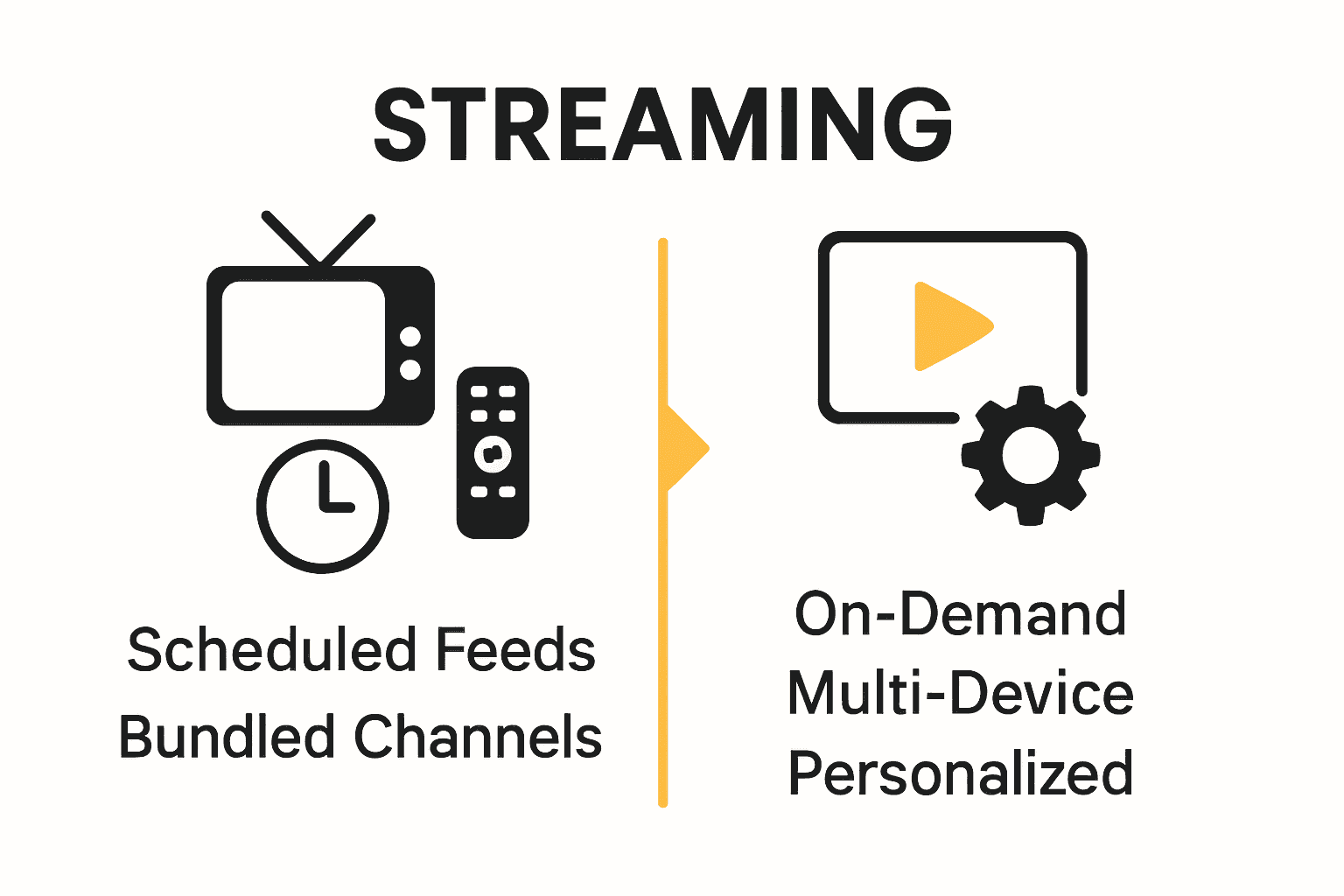
- Scheduling Flexibility: Streaming allows on-demand viewing vs. fixed broadcast times
- Content Access: Unlimited library vs. limited channel lineup
- Cost Structure: Pay-per-service vs. comprehensive cable packages
- Viewing Experience: Personalized recommendations vs. linear programming
Free ad-supported streaming television (FAST) platforms, as noted by Wikipedia, are bridging the gap between traditional and modern viewing experiences by offering live TV channels and on-demand content without paid subscriptions. For a deeper exploration of how these models differ, explore our guide comparing cable and streaming.
While traditional TV once dominated entertainment consumption, streaming services have fundamentally disrupted the media landscape. They offer unprecedented control, allowing viewers to choose what, when, and how they watch. Traditional TV now competes with platforms that provide personalized, flexible, and often more affordable entertainment options—a testament to the rapidly evolving digital media ecosystem.
Cost, Risks, and Common Mistakes
Streaming services have become increasingly complex, with financial considerations that can quickly spiral if not managed carefully. According to Tom’s Guide, cumulative monthly streaming costs can potentially exceed $100 when subscribing to multiple top-tier ad-free plans, leading to a trend of strategic ‘subscription churning’ among viewers.
Common Streaming Pitfalls include:
- Subscription Overload: Accumulating too many simultaneous services
- Hidden Costs: Additional fees for premium content or account sharing
- Unexpected Billing: Automatic renewals and price increases
- Content Fragmentation: Needing multiple subscriptions to access desired shows
Kiplinger highlights a significant recent trend where major streaming platforms have tightened account sharing policies, introducing additional fees for users wanting to share accounts outside their household. Netflix, for instance, now charges extra for external users on Standard and Premium plans. For more insights into managing these evolving streaming landscapes, check out our comprehensive guide on streaming services.
Navigating the streaming ecosystem requires strategic planning. Smart viewers now approach subscriptions like financial investments, carefully tracking costs, rotating services, and taking advantage of promotional offers.
 The key is flexibility—being willing to pause, switch, or cancel subscriptions based on your current viewing preferences and budget constraints.
Take Control of Your Streaming Experience Today
Feeling overwhelmed by the growing number of streaming services and confusing subscription options is common. This article highlights the challenges of subscription overload, hidden fees, and content fragmentation that many viewers face. If your goal is to enjoy your favorite TV shows and movies without battling scheduling conflicts or missing new releases, understanding streaming platforms is just the first step.
Discover how to simplify your viewing with clear schedules and trusted recommendations. Sparetimetv.com is designed specifically for TV enthusiasts like you. We offer detailed TV guides, including primetime lineups and streaming premieres, so you never miss a moment. Whether you want to explore top trending shows on Netflix or keep up with new movie releases, our site helps you cut through the clutter effortlessly.
Start maximizing your streaming benefits right now by visiting Sparetimetv.com. Access up-to-date schedules, curated top ten rankings, and insightful editorial posts that keep your entertainment choices smart and stress-free. Don’t let the complexity of streaming services hold back your viewing pleasure. Explore our comprehensive streaming guides and exclusive content insights today to stay ahead of all streaming trends.
Frequently Asked Questions
What are streaming services?
Streaming services are platforms that allow users to watch movies, TV shows, and other digital content over the internet in real time without needing to download them first.
How do streaming services work?
When you select content on a streaming platform, the service breaks it into small data packets sent directly to your device. These packets are temporarily stored to allow seamless playback, enabling immediate access to the content.
What are the different types of streaming platforms?
Streaming platforms can be categorized into subscription-based services (like Netflix and Amazon Prime), free ad-supported platforms (like Pluto TV and Tubi), live TV streaming services, and niche content platforms that focus on specific genres or content types.
What are the main advantages of using streaming services?
The key advantages of streaming services include unparalleled convenience, multi-device compatibility, personalized viewing experiences, and instant access to a vast library of on-demand content.
Recommended
- 7 Types of Streaming Services Every Viewer Should Know – Sparetimetv
- What Is a Streaming Platform? Complete Breakdown – Sparetimetv
- Understanding the Role of Streaming Services in Entertainment – Sparetimetv
- What is Digital Streaming? Understanding the Basics – Sparetimetv
- How Much Data Does YouTube Use? Streaming Guide Oct-2025 | SimCornerUSA How Much Data Does YouTube Use? Streaming Guide Oct-2025 | SimCornerUSA