
Why Watch Live TV: Complete Guide for Enthusiasts. Watching live TV feels different from anything else. When you see a breaking news story or a championship game as it happens, you know you are part of the moment. Over 70 percent of viewers prefer real-time broadcasts because of their immediacy and excitement. With so many options now—cable, streaming, and traditional broadcast—there is plenty of confusion about what really counts as live TV. Here you will find clear answers to common myths and a look at what truly makes live television unique.
Table of Contents
- Defining Live TV And Common Misconceptions
- Types Of Live TV: Broadcast, Cable, Streaming
- Benefits And Interactive Features Of Live TV
- Cost Analysis And Alternatives To Live TV
- Live TV In The Age Of Streaming Platforms
Key Takeaways
| Point | Details |
|---|---|
| Definition of Live TV | Live TV is a real-time broadcasting medium that connects viewers with current events and can include slight edits through transmission delays for quality control. |
| Transmission Methods | Live TV can be accessed via broadcast, cable, streaming, and IPTV, each offering unique features and costs, catering to diverse viewer preferences. |
| Benefits of Interactivity | Modern live TV promotes viewer engagement through interactive features like live commenting and community connections, enhancing the overall experience. |
| Shift Towards Streaming | Streaming platforms are increasingly favored for their content diversity and lower costs, representing over 44% of total TV usage in the U.S. as of May 2025. |
Defining Live TV and Common Misconceptions
Live television represents a dynamic broadcast medium where content is transmitted in real-time as events unfold, offering viewers an immediate and unfiltered window into current happenings. According to Wikipedia, live broadcasts encompass diverse programming including news, sports, and special events, creating an immersive viewing experience that connects audiences directly with ongoing moments.
Contrary to popular belief, live TV isn’t always completely unedited. While the core transmission occurs in real-time, broadcasters often implement slight transmission delays to manage potential unexpected scenarios. This strategic approach allows networks to maintain broadcast integrity and quickly address any unforeseen issues that might arise during live programming.
The landscape of live television has dramatically evolved with technological advancements. Modern viewers now encounter multiple ways to experience live content, including traditional broadcast methods and emerging over-the-top (OTT) media services. Wikipedia highlights that while OTT platforms can offer live streaming, they fundamentally differ from conventional live TV by providing extensive on-demand content and utilizing internet-based transmission infrastructure.
Key characteristics that distinguish live TV include:
- Immediate, real-time transmission
- Unscripted and unpredictable content
- Direct audience connection with ongoing events
- Potential for slight broadcast management delays
Whether you’re a sports enthusiast catching a championship game or a news junkie following breaking stories, live TV continues to offer an unparalleled viewing experience that streaming platforms cannot fully replicate. Learn more about live broadcasts to deepen your understanding of this dynamic media format.
Types of Live TV: Broadcast, Cable, Streaming
Live television offers viewers multiple transmission methods, each with unique characteristics and viewing experiences. According to Wikipedia, these delivery methods include broadcast TV, which transmits signals over airwaves to antennas; cable TV, delivering content through coaxial cables to subscribers; and streaming services, providing live content over internet-connected devices.
Broadcast TV represents the traditional method of television transmission, utilizing radio waves to send programming directly to home antennas. This method remains popular for local news, sports events, and network programming, offering free access to viewers within signal range. Unlike newer technologies, broadcast TV requires minimal additional infrastructure beyond a basic antenna.
Cable and streaming technologies have significantly expanded live TV’s reach and functionality. Wikipedia highlights Internet Protocol Television (IPTV) as a sophisticated form of live TV that uses internet protocols to deliver content, distinguishing itself by offering both live and on-demand services over broadband networks. Explore the nuanced differences between cable and streaming services to understand how these technologies continue to reshape our viewing experiences.
Key characteristics of live TV transmission methods:
Here’s a comparison of live TV transmission methods:
| Transmission Method | Delivery Mechanism | Key Features | Typical Cost |
|---|---|---|---|
| Broadcast TV | Over-the-air signals | Free local channels Minimal equipment Unscripted events | Free (after antenna purchase) |
| Cable TV | Coaxial cables to home | Subscription packages Wide channel range Premium options | $150-$200/month |
| Streaming Services | Internet-based, OTT | On-demand & live options Multiple devices Flexible plans | $85-$120/month |
| IPTV | Internet protocol networks | Live + on-demand Interactive features Advanced technology | Varies by provider |
- Broadcast TV: Free, over-the-air signals
- Cable TV: Subscription-based, wide channel selection
- Streaming Services: Internet-based, flexible viewing options
- IPTV: Advanced internet protocol content delivery
Each transmission method offers unique advantages, allowing viewers to choose the approach that best suits their preferences, budget, and technological capabilities. The evolution of live TV continues to provide more diverse and personalized entertainment experiences.
Benefits and Interactive Features of Live TV
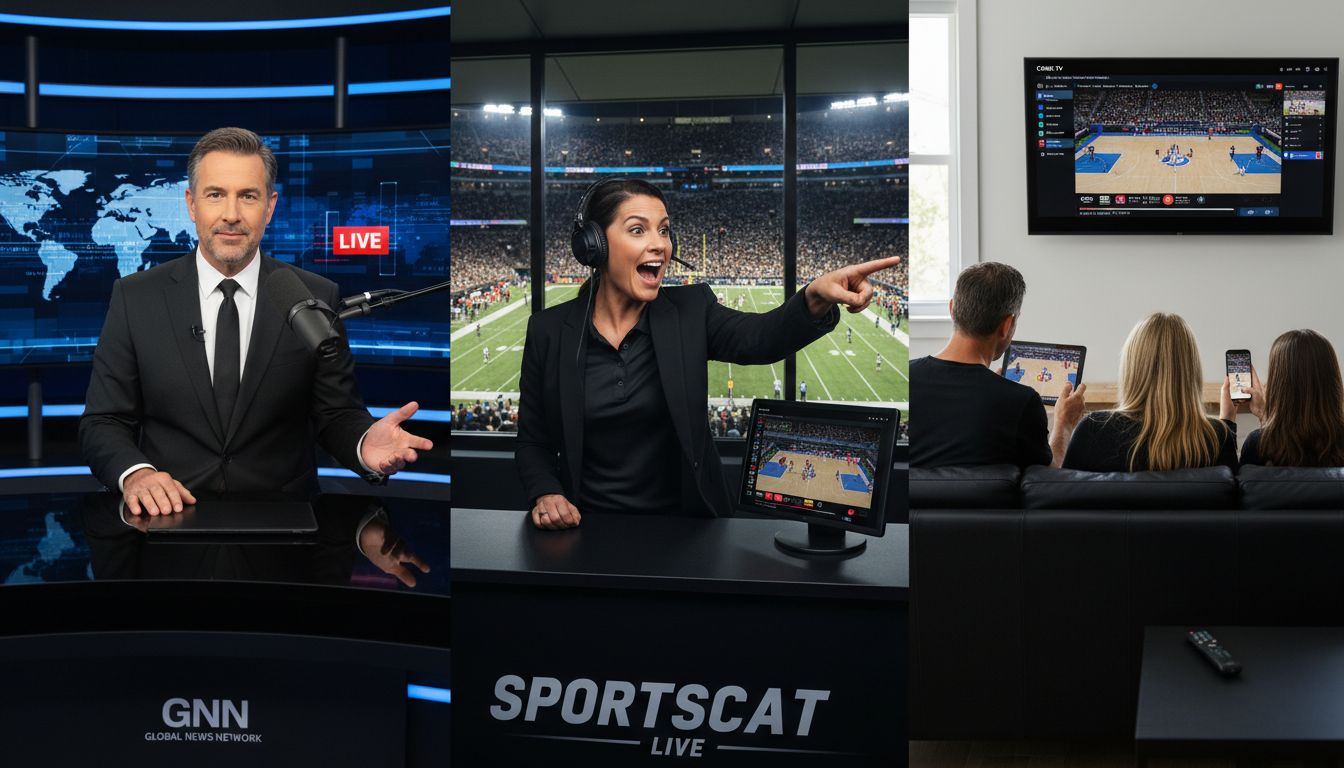
Live television has evolved far beyond simple passive viewing, transforming into an interactive and engaging medium that connects audiences in real-time. According to research from IAB, consumers are increasingly drawn to live content for its immediacy and interactive elements, which foster a powerful sense of community and participation.
The interactive features of modern live TV extend well beyond traditional broadcast models. Real-time engagement tools have become central to the viewing experience, allowing audiences to interact simultaneously with content and other viewers. Research from arxiv highlights innovative interactive features like live commenting, virtual gifting, and fan group chats that transform television from a one-way communication channel into a dynamic social platform.
These interactive capabilities provide multiple benefits for viewers:
- Instant Feedback: Viewers can share reactions in real-time
- Community Connection: Create shared experiences with other viewers
- Enhanced Entertainment: Multiple layers of engagement beyond passive watching
- Personal Interaction: Direct connection with content creators and hosts
Learn more about the evolving role of TV event nights to understand how interactive features are reshaping entertainment consumption. The future of live TV is not just about watching—it’s about experiencing content together, breaking down traditional barriers between viewers and creators.
Cost Analysis and Alternatives to Live TV
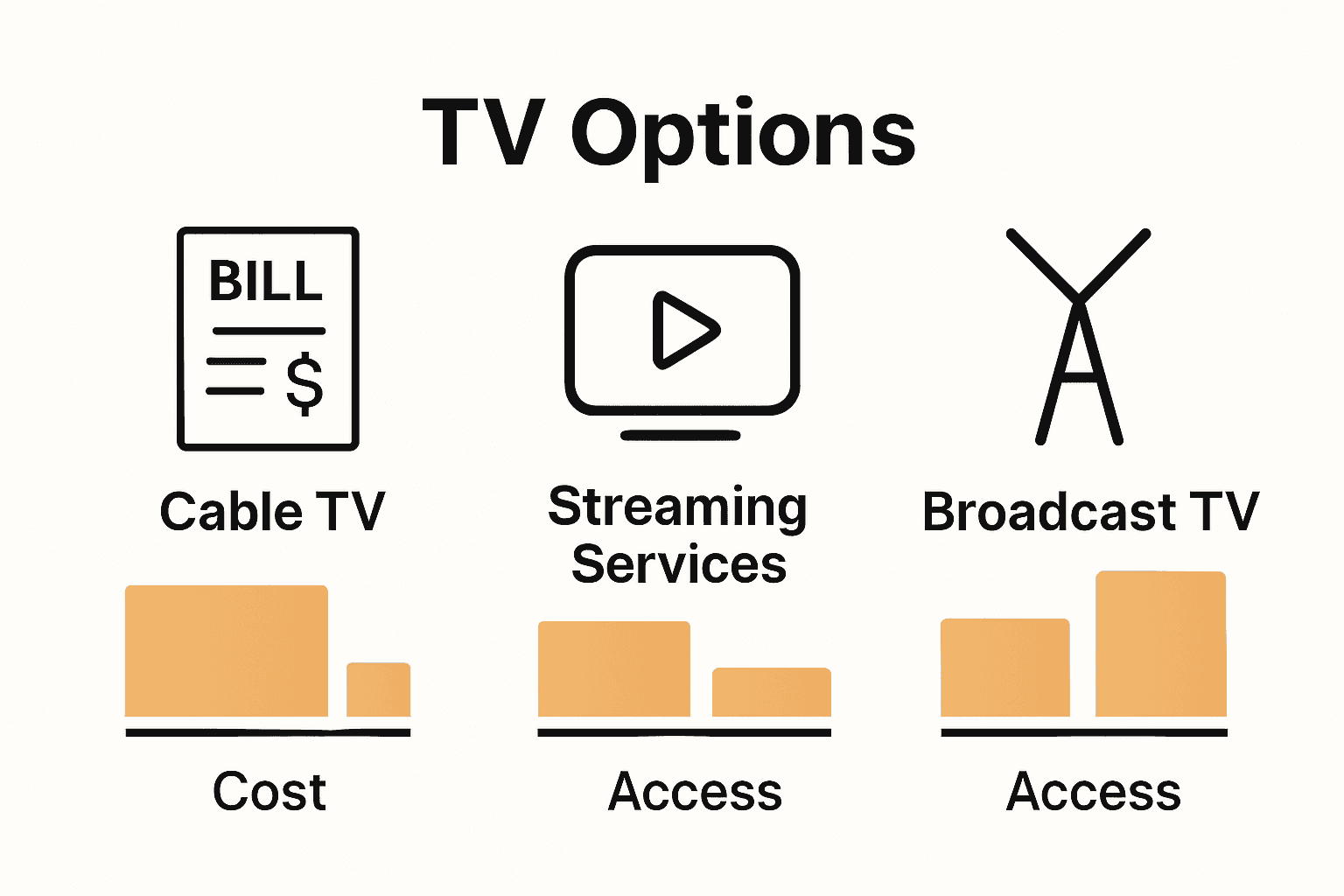
Navigating the landscape of television consumption has become increasingly complex, with multiple viewing options challenging traditional live TV models. According to Otium Financial Planners, streaming services are rapidly gaining ground, already accounting for 44.3% of total TV usage in the U.S. and surpassing conventional cable and broadcast platforms.
Subscription costs play a crucial role in viewers’ entertainment choices. CTV for Me reveals that traditional cable packages, especially those with premium channels and sports networks, can exceed $150-$200 monthly. In contrast, streaming alternatives offer more budget-friendly experiences, with monthly expenses typically ranging from $85 to $120 depending on selected services.
Comparing entertainment options requires careful consideration of several factors:
- Streaming Services: Flexible, lower-cost alternatives
- Cable TV: Comprehensive channel packages
- Broadcast TV: Free local programming
- Hybrid Options: Combining multiple platforms
Explore how TV shows generate revenue to understand the economic dynamics driving these entertainment platforms. The future of television consumption is about finding the right balance between cost, content variety, and personal viewing preferences.
Live TV in the Age of Streaming Platforms
The television landscape has undergone a dramatic transformation, with streaming platforms fundamentally reshaping how audiences consume content. According to Reuters, streaming services captured 44.8% of total TV usage in the U.S. in May 2025, marking the first time these platforms have surpassed traditional broadcast and cable television.
The shift towards streaming platforms isn’t just about convenience—it’s about content diversity and flexible viewing experiences. Nielsen’s research reveals that 72.4% of TV viewing now occurs on ad-supported platforms, with streaming services accounting for 42.4% of viewership. This dramatic change reflects viewers’ growing preference for personalized, on-demand entertainment options.
Key characteristics of this new television ecosystem include:
- Instant Access: Watch content anytime, anywhere
- Personalized Recommendations: Algorithmic content suggestions
- Multiple Device Compatibility: View on smartphones, tablets, TVs
- Cost-Effective Alternatives: Lower prices compared to traditional cable
Learn more about streaming services and their benefits to understand how these platforms are revolutionizing entertainment consumption. The future of television is no longer about scheduled programming, but about giving viewers unprecedented control over their entertainment experience.
Discover the Ultimate Live TV Experience Tailored Just for You
Watching live TV can feel overwhelming with so many options and transmission methods to choose from. Whether you struggle to find precise broadcast times or want to stay ahead of premiere dates for your favorite shows, these challenges can take away from the excitement of real-time viewing. The article highlights how live TV offers immediacy and interactive engagement but navigating schedules and platform differences is key to making the most of it.
At Sparetimetv.com, we understand your passion for live and streaming TV and the frustration that comes with missing out on must-see events. Our comprehensive TV guides deliver up-to-date primetime schedules, streaming premieres, and movie listings all in one place. Imagine effortlessly planning your viewing with clear, structured data and curated top ten lists so you never miss a moment of live broadcasts or streaming firsts.
Take control of your entertainment now and explore how easy it is to keep up with all your live TV interests by visiting Sparetimetv.com.

Ready to enhance your live viewing? Dive into detailed scheduling, explore trending TV shows, and find fresh streaming premieres all tailored for enthusiasts like you at live TV and streaming schedules. Don’t wait – turn every watch party into a front-row experience and never miss another episode or event again.
Frequently Asked Questions
What is live TV?
Live TV refers to real-time broadcast programming such as news, sports, and events. It connects viewers directly with ongoing happenings and may include slight delays for management purposes.
How does live TV differ from streaming services?
Unlike streaming services, which offer extensive on-demand content and flexibility, live TV focuses on real-time broadcasts, making it ideal for event-driven viewing experiences.
What are the advantages of watching live TV?
The advantages include immediate access to real-time events, the ability to interact with content and other viewers, and a sense of community during live broadcasts that enhances the entertainment experience.
What are the main types of live TV delivery methods?
The main types include broadcast TV, which uses over-the-air signals; cable TV, which delivers content via coaxial cables; streaming services that provide internet-based content; and IPTV, which uses internet protocols for delivery.